Family Planning Association of Malawi (FPAM) with other consortium partners is implementing activities of Nzatonse III project in Ntcheu and Neno districts. The project aims at Strengthening Public-Private Partnership in Sexual and Reproductive Health and Rights and its goal is to improve knowledge and acceptance of modern family planning (FP) methods and improve access to sexual and reproductive health and rights services using a rights-based and gender-sensitive approach.
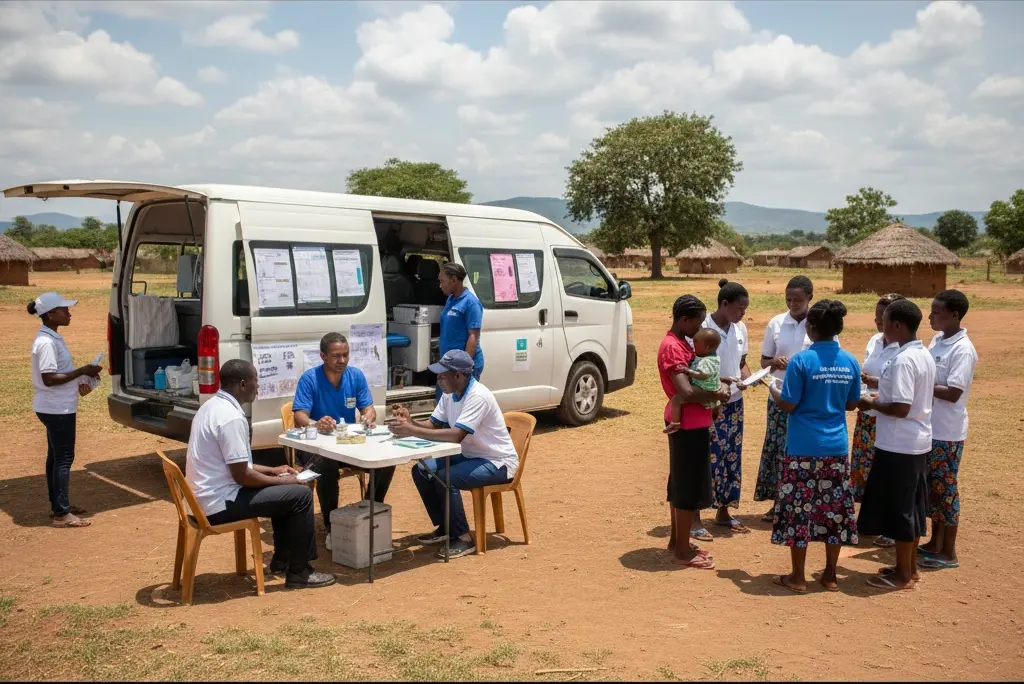
The project targets Youth and Women and men in hard to reach rural areas. FPAM provides Integrated Sexual Reproductive Health and Rights services using three models namely; static clinics in both districts, three teams who provide mobile outreach services in hard to reach areas in the districts, and community based services through Community Reproductive Health Promoters (CRHPs), Community Based Distribution Agents (CBDAs) and peer educators including Youth Action Movement (YAM) structures.
This is a continuation of the N’zatonse Project where it builds on the deliverables of phase I and II. N’zatonse III aims at improving access and use of Sexual Reproductive Health (SRH) services in rural areas while ensuring that the behaviour of the target population is better adapted to the needs of individuals as well as the nation. In addition to serving men and women in the reproductive age (15-49), the project have a special focus on unmarried and nulliparous youths (aged 10-24 years), improving their access to long acting and reversible contraceptives (LARC).
The overall project goal of the N’zatonse III Project is to ensure that access to and use of high quality essential health package (EHP) services is improved, especially in the area of sexual and reproductive health. Of the three expected project outputs, FPAM contributes towards output1which ensures access to quality, affordable SRHR services in rural areas.
The N’zatonse III project is implemented in Ntcheu and Neno where it has existing structures which were set up and strengthened under N’zatonse I and II. The project is implemented through static, mobile outreach and Community based models. The project implementation started in March 2020 and will end in December 2020.