


Circumcision Styles & Cosmetic Outcomes
Circumcision can settle into different cosmetic patterns depending on anatomy, technique, and how much skin is removed. This guide outlines the four most commonly discussed cosmetic outcomes — high, low, loose, and tight — in clear, respectful language.
If you’re unsure about your circumcision style
Many people notice differences in scar placement, skin looseness or tightness, or how the remaining skin moves after circumcision. These variations are common, and clinicians see all of them regularly.
This page explains the most frequently seen cosmetic outcomes in a simple, non‑judgmental way so you can understand what you’re observing and why results differ from person to person.
Circumcision Styles: High, Low, Loose & Tight
In one sentence:
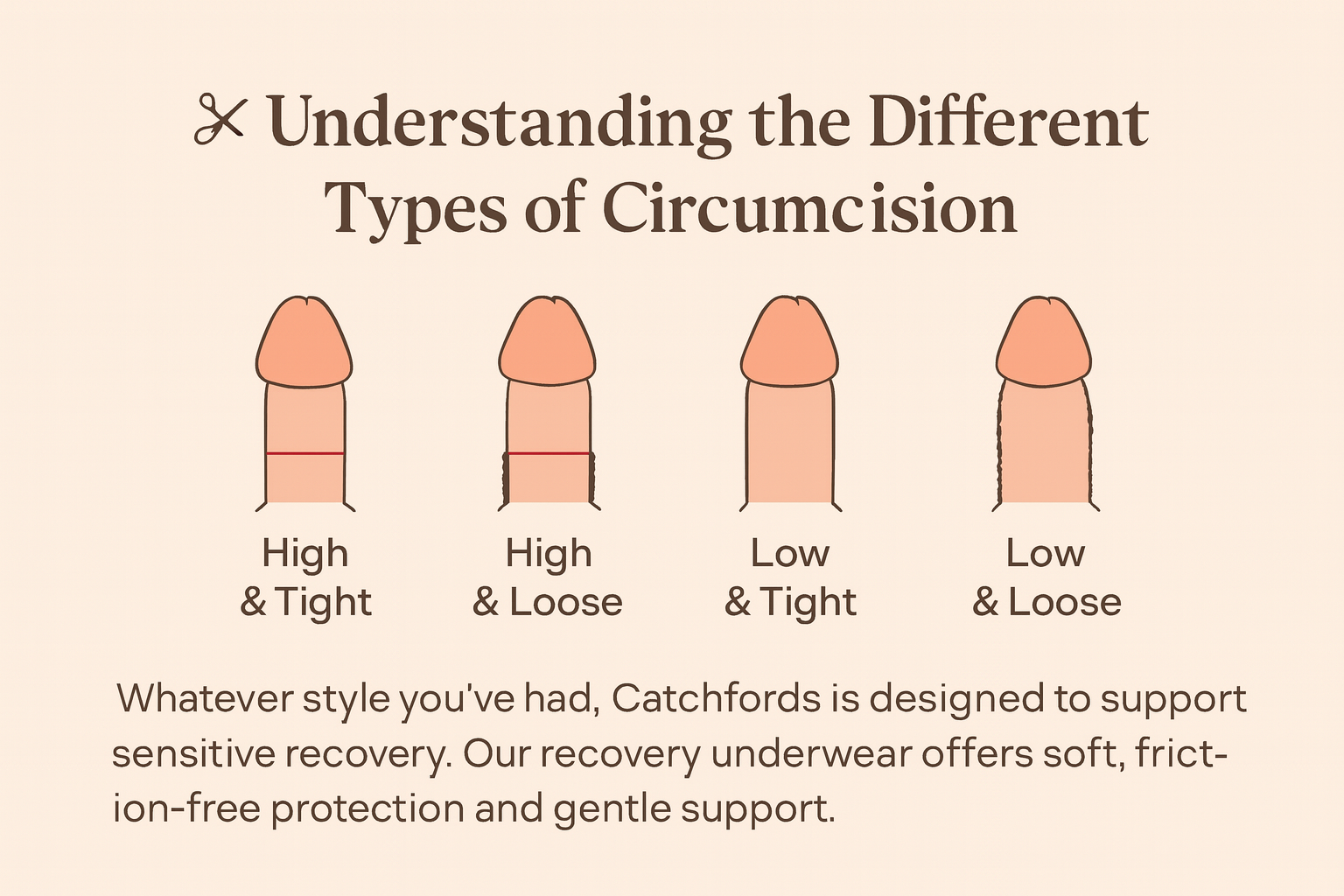
Circumcision style usually describes where the scar sits (high vs. low) and how much skin is left behind (loose vs. tight), creating four commonly described cosmetic outcomes: high & loose, high & tight, low & loose, and low & tight.
Adult circumcision and circumcision revision are often described in terms of “style”. Clinics and patient resources commonly refer to four main styles based on how much inner and outer foreskin is removed: low and loose, low and tight, high and loose, and high and tight. These are not strict medical categories, but they are widely used by surgeons and patients when talking about cosmetic appearance after healing.
The final look can depend on anatomy, the amount of skin removed, whether the frenulum is preserved or released, and how the area heals over time. Some people are drawn to a very snug, “high and tight” result, while others prefer a softer or more natural‑looking style such as “low and loose”.
How common are different circumcision style requests?
Relative interest in circumcision styles in adult cosmetic consultations (illustrative)
There are no large population studies ranking circumcision styles by popularity. However, some cosmetic circumcision clinics and patient discussions suggest that requests for a “high and tight” look may be especially frequent, with notable interest in “low and loose” for a more natural appearance. Styles like high & loose or low & tight are also chosen, but seem to appear less often in cosmetic style conversations.

This chart is illustrative, not an exact measurement. It summarizes general patterns described by some adult circumcision clinics and patient discussions, where “high and tight” is often highlighted, “low and loose” is commonly mentioned for a more natural look, and other combinations come up less frequently.
What “high” vs. “low” means
“High” and “low” usually describe where the circumcision scar ends up on the shaft. A high style places the scar further from the glans, with more outer shaft skin showing between the scar and the glans. A low style places the scar closer to the glans, often preserving more inner foreskin and creating a more blended transition.
These terms are not strictly standardized, but they help patients and surgeons talk about whether they would prefer the scar to sit nearer the glans (low) or further away (high). Anatomy, foreskin length, and any underlying disease of the foreskin also influence what is realistically achievable.
What “loose” vs. “tight” means
“Loose” and “tight” describe how much total skin remains and how the shaft skin moves after healing. A looser style leaves more skin, which may sit in small folds when soft but still moves comfortably when erect. A tighter style removes more skin, keeping the shaft skin smoother and more closely fitted.
Surgeons generally prioritize a result that is safe and functional first, then tailor the appearance to the person’s cosmetic goals as much as anatomy allows. Very tight results can carry a risk of tension or discomfort if too much skin is removed, while very loose results may not match what some patients expect cosmetically.
Common style goals
People who prefer a snug, defined look
May ask for a “high and tight” style with a smooth, close‑fitting shaft.
Often want the glans to remain fully exposed in both soft and firm states.
May be seeking revision after a previous circumcision they feel was too loose for their preferences.
People who prefer a softer, natural look
May ask for “low and loose” so the scar sits closer to the glans with more relaxed skin.
Often want less dramatic contrast between inner and outer skin.
May prioritize comfort and movement over a very tight cosmetic line.
Other factors that shape the final style
The chosen style is only one part of the outcome. The frenulum (whether preserved or released), any scarring from previous procedures, buried penis or penoscrotal webbing, and overall body habitus can all change how the result appears in real life compared to diagrams.
The chosen style is only one part of the outcome. The frenulum (whether preserved or released), any scarring from previous procedures, buried penis or penoscrotal webbing, and overall body habitus can all change how the result appears in real life compared to diagrams.
When to ask more questions
It can be helpful to ask extra questions if you are unsure which style most closely matches your goals, or if you are considering revision after a previous circumcision. A specialist can explain what is realistically possible with your anatomy and outline potential risks and benefits of aiming for a tighter or looser result.
In summary: Circumcision style is often described using four common combinations: high and tight, high and loose, low and tight, and low and loose. Cosmetic clinics and patient resources frequently mention strong interest in “high and tight” and ongoing interest in “low and loose” for a more natural look, while other styles are discussed less often. The most appropriate style for any individual depends on anatomy, medical reasons for circumcision, and careful discussion with an experienced surgeon about goals and limitations.
How Circumcision Style Can Affect Sensation and Comfort
Sensation after circumcision varies from person to person. Factors such as which tissues are removed, where the scar sits, how tight or loose the remaining skin feels, and how nerves adapt over time can all influence how stimulation is perceived. Research generally finds that overall sexual function and satisfaction remain stable for many people, though some notice differences in where or how they feel sensation.
Inner vs. Outer Tissue and Sensitivity
The foreskin includes both inner mucosal tissue and outer shaft skin. Some clinicians and studies suggest that inner mucosal areas may respond more strongly to fine touch, while outer skin may feel slightly different. When more inner tissue is removed, sensation may shift toward the glans and remaining shaft skin instead.
Key idea: different tissues respond differently to touch, so the balance of what remains can shape the pattern of sensation.
Why Research Doesn’t Give One “Right” Answer
Studies on circumcision and sensation often report that many people experience similar overall sexual satisfaction before and after circumcision. Because anatomy, expectations, and surgical techniques vary widely, no single style can be assumed to feel “better” for everyone.
Important context: individual experience matters more than any one universal conclusion.
High vs. Low: What May Change
In many modern techniques, a “low” style places the scar closer to the glans and may preserve more inner mucosal tissue. A “high” style places the scar farther away and may remove more of that tissue. Because of this, some people and clinicians speculate that a lower cut may retain more naturally sensitive areas, though real‑world pleasure involves far more than one specific region of skin.
Takeaway: scar position can influence which tissues remain, but sensation is multifactorial.
Tight vs. Loose: Movement, Friction, and Comfort
A tighter style can change how the skin moves and how friction is felt during daily activity or intimacy. A looser style may allow more glide and reduce direct friction on the glans. Some people prefer the closer contact of a tighter result, while others prefer the mobility and comfort of a looser one.
Comfort, confidence, and the absence of irritation tend to matter more than choosing one “most sensitive” style.
In Short: Circumcision style can influence where and how sensations are felt, but overall satisfaction varies widely. Anatomy, healing, expectations, and day‑to‑day comfort all play a role in how someone experiences their result.

Common Cosmetic Questions About Circumcision Styles
Many people compare their circumcision result to others and wonder whether their scar placement, skin movement, or color is “normal.” These questions are extremely common — and most differences fall within the typical range.
“Why is my scar higher or lower?”
Scar height reflects how much inner vs. outer tissue was removed. Both higher and lower scars are common and usually relate to anatomy and technique.
“Why is the scar a different color?”
Inner mucosal tissue naturally looks different from outer shaft skin. A visible color transition is normal.
“Why does my skin bunch when soft?”
Looser styles naturally fold when relaxed and smooth out when firm. It’s usually normal unless it causes discomfort.
“Does style affect sensitivity?”
Sensation varies between individuals. Style can shift where sensation is felt, but long‑term comfort and the absence of irritation matter more than scar position alone.
If you notice pain, tightness, or restricted movement, a urologist can help assess whether anything needs attention.

When to Seek Medical Advice
Most differences in circumcision style — scar height, skin looseness, color contrast, or how the skin moves — fall within a wide range of normal variation. Still, there are times when checking in with a doctor can be helpful, especially if something feels uncomfortable or unexpected.
How surgeon technique influences the result
Surgeons vary in how they balance inner and outer foreskin removal. Some favor a higher scar with more inner mucosal tissue preserved; others prefer a lower, blended look. These differences reflect training, technique, and the goals discussed before surgery — not necessarily a sign of a problem.
Your anatomy shapes the final appearance
Skin elasticity, foreskin length, frenulum thickness, natural color variation, and how the skin attaches to the shaft all influence the final cosmetic outcome. Two people can receive the same technique and still heal with different styles — this is common and expected.
When it’s worth checking with a doctor
- Persistent discomfort or tightness that affects movement
- Bleeding that doesn’t stop or returns repeatedly
- Possible signs of infection (increasing redness, swelling, or discharge)
- Difficulty cleaning due to tight or immobile skin
- A sudden change in appearance that feels concerning
If you’re unsure whether your result is within the normal range, a urologist can help explain what you’re seeing and whether anything needs attention. Many concerns turn out to be part of normal healing or natural variation.
Recovery, Aftercare & Day‑to‑Day Comfort
The first few weeks after circumcision or revision can involve swelling, sensitivity, friction, and changes in how the skin moves. Many people find that thoughtful aftercare helps the area feel supported and more comfortable as healing progresses.
What to expect during healing
It’s common for the scar to appear more noticeable at first, with temporary swelling or unevenness. Skin may feel tighter or looser than expected until the tissues settle. Many people see the cosmetic style becoming clearer between 6–12 weeks, with gradual changes continuing for several months.
Managing movement and friction
Daily movement, clothing seams, and moisture can make the area feel more sensitive. Reducing friction may help limit irritation and make day‑to‑day activities more comfortable. Supportive, breathable underwear can offer additional comfort during this stage.
Keeping the area clean
Gentle hygiene is important. Many clinicians recommend rinsing with warm water, patting dry, and avoiding harsh soaps or scrubbing. Ointments or dressings should only be used if advised by a healthcare professional. Clean, soft fabric against the skin can help reduce irritation during this period.
Many people find that wearing supportive, low‑friction recovery briefs helps reduce rubbing and makes everyday movement more comfortable while the skin settles. Breathable fabric and a stable fit can offer added comfort during this period.
Catchfords exists — to restore dignity when you feel exposed.
Our Nonfriction™ insert gently cushions sensitive skin, creating a protective barrier against clothing. It supports recovery and helps you return to life free from embarrassment, irritation, or soreness.
Frequently Asked Questions
Is a high or low circumcision better?
Neither is medically “better.” A high style usually preserves more inner mucosal tissue, while a low style removes more of it and places the scar closer to the glans. The best choice depends on anatomy, comfort, and the cosmetic look someone prefers.
Does circumcision style affect sensitivity?
Sensation varies from person to person. A higher style may preserve more inner mucosal tissue, which some people find responsive to fine touch. A lower style removes more of that tissue, shifting sensation toward the glans and outer shaft skin. Overall comfort and the absence of pain matter more than any single style.
Can I choose my circumcision style before surgery?
Yes. Most surgeons discuss style preferences during the consultation. They consider your anatomy, how much skin can be safely removed, and whether the frenulum will be preserved or released. Clear communication helps ensure expectations match what is surgically achievable.
Can circumcision style be changed later?
Sometimes. Revision circumcision can adjust scar height, remove additional skin, or create a tighter or looser appearance. However, anatomy and previous scarring limit how much change is possible. A urologist can explain what can realistically be improved.
Why does my circumcision look different from diagrams online?
Real anatomy varies widely. Skin elasticity, foreskin length, frenulum thickness, and natural color differences all influence the final appearance. Diagrams simplify these variations, but real results reflect your unique anatomy and how your tissues settle over time.
Is loose or tight more comfortable?
Comfort depends on personal preference. A looser style allows more skin movement and may feel softer when relaxed. A tighter style creates a smoother, more defined look but can feel restrictive if too much skin is removed. Most people are comfortable once everything has settled.
How long until the final cosmetic result is visible?
Most people see their final style between 6–12 weeks, though subtle refinements continue for several months. Swelling, color changes, and small irregularities are normal early on and usually settle with time.
When should I talk to a doctor?
If you experience persistent pain, tightness that limits movement, bleeding that doesn’t stop, signs of infection, or difficulty with hygiene, it’s worth checking in. Most concerns turn out to be normal healing or natural variation, but a clinician can give clear guidance.
We undertsand that everyone’s issues can be particular and unique. Each person experiences their recovery differently.

Talk to your doctor to see what treatment options are best for you.

There are large communities of men willing to share their experiences and incites, who have gone through it too. Catchfords included.