


Frenuloplasty: Before, During & After the Procedure
In one sentence:
A frenuloplasty is a small procedure that lengthens a tight frenulum to reduce pain, improve movement, and prevent repeated tearing — something urologists perform safely and routinely.
Frenuloplasty is offered when the frenulum — the thin band of tissue under the glans — is too short or tight, causing pulling, discomfort, or tearing when the skin moves. Many people live with these symptoms for years before learning there is a simple surgical option. Knowing what to expect before, during, and after the procedure can make the whole process feel far less worrying.
How common is frenuloplasty in adults?
Adults who have frenuloplasty vs. total adult male population (North America – approximate)
Clinical estimates suggest that 1–5% of adult men undergo a frenuloplasty at some point in their lives. Many more have tight frenulum symptoms but never mention them to a doctor.
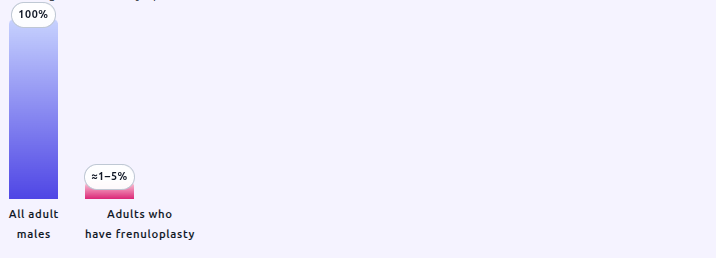
This chart is illustrative, not an exact measurement. Prevalence varies by study, age group, and whether individuals seek medical evaluation.
Why frenuloplasty is recommended
Doctors usually suggest frenuloplasty when a tight frenulum is clearly affecting comfort, movement, or confidence. Some people are born with a shorter frenulum, while others develop tightness after growth, inflammation, or small injuries that heal with scar tissue. The procedure aims to relieve this tension without removing the foreskin.
Common reasons people need frenuloplasty
Milder issues
- A pulling sensation under the glans during movement or erections.
- Tightness when the skin is gently retracted.
- Downward bending of the penis when the frenulum is under tension.
More noticeable issues
- Pain or sharp discomfort during erections or sexual activity.
- Small tears or brief bleeding at the same spot on the frenulum.
- Recurrent soreness or sensitivity that affects daily life or confidence.
- Difficulty cleaning comfortably because the skin cannot move enough.
What happens if it is not treated?
A tight frenulum is usually not dangerous, but ongoing tension can lead to repeated small tears that heal with more scar tissue, making the frenulum even tighter over time. Some people start avoiding normal movement or intimacy because of pain, which can affect hygiene, relationships, and self‑confidence.
How doctors decide if frenuloplasty is right for you
Assessment is straightforward. A doctor examines the frenulum, checks how far the skin can move, and looks for signs of scarring or previous tears. They also ask about pain, bleeding, and how symptoms affect daily life. Tests are rarely needed unless there are signs of infection or another underlying condition.
Treatment options before and alongside surgery
Not everyone needs surgery right away. Depending on symptoms and severity, doctors may suggest conservative measures first, or they may recommend a frenuloplasty as the most effective and lasting solution.
Conservative options
- Gentle hygiene and avoiding friction or irritation.
- Doctor‑guided stretching strategies in selected cases.
- Treating inflammation or infection if present.
Procedural options
- Frenuloplasty (reshaping and lengthening the frenulum).
- Simple frenulum release in some cases.
- Other surgical options if there are additional foreskin issues.
When to seek medical advice
You should speak with a healthcare provider if you experience ongoing pain, repeated tearing, difficulty cleaning, or worry about the way the skin moves or bends. Doctors see tight frenulum and frenuloplasty cases often and can explain safe, effective options in a straightforward way.
In summary: Frenuloplasty is a common, minor procedure used to treat a tight frenulum that causes pulling, pain, or small tears. It is usually easy for doctors to assess whether it is right for you, and options range from simple care to this brief surgery that can significantly improve comfort and movement.

What to Expect Before, During & After a Frenuloplasty
A frenuloplasty is quick and low‑risk. These three stages outline what most people experience before, during, and after the procedure so you know what to expect and feel more at ease.
Before the Procedure
Brief exam to confirm the frenulum is the issue
Clear explanation of the procedure and benefits
Normal shower the morning of surgery
Supportive briefs recommended afterward
Local anaesthetic — sedation rarely needed
During the Procedure
Local anaesthetic numbs the area quickly
A small cut releases the tight frenulum
Stitches lengthen the tissue for better movement
Procedure takes about 10–20 minutes
Most describe it as “pressure, not pain”
After the Procedure
Mild swelling or sensitivity for a few days
Temporary burning or tightness when urinating
Brief discomfort during spontaneous erections
Most daily activities resume in 2–4 days
Full healing in 4–6 weeks as stitches dissolve
These stages reflect common experiences, not strict rules. If symptoms worsen or something feels unusual, contact your healthcare provider.


What a Frenuloplasty Feels Like: Before & During
Most people feel a mix of relief and nerves before a frenuloplasty. The procedure is quick and usually easier than expected. These sections capture the most common experiences leading up to and during the procedure.
Relief About Finally Fixing the Tightness
Many people feel calmer once they know the tightness has a straightforward solution and a clear plan.
Common feeling: “I just want this fixed so I can stop worrying.”
Nervous but Reassured After the Consultation
The idea of surgery can feel intimidating, but most people feel reassured when they hear how simple and quick the procedure is.
Typical thought: “I’m nervous, but the doctor made it sound simple.”
More Aware of the Tightness
Once you know what’s causing the pulling, it often feels more noticeable. This doesn’t mean it is suddenly worse — just that you’re more aware of it.
Worry About How Recovery Will Feel
It’s normal to worry about pain afterward, but most people are surprised by how manageable the first few days actually are.
The Numbing Injection
The local anaesthetic may sting briefly. Once it takes effect, the rest of the procedure feels like pressure rather than pain.
Most common description: “The numbing was the only part I really felt.”
Pressure, Not Pain
Most people feel gentle movement or tugging, but the area stays comfortably numb throughout.
Over Sooner Than Expected
The cutting and stitching take only a few minutes. Many people are surprised when they hear, “All done.”
“It was over faster than I expected.”
What Recovery Feels Like After a Frenuloplasty
Recovery is usually smooth and predictable. These sections describe the most common sensations in the days and weeks after a frenuloplasty, and how things typically change once healing is complete.
Early Swelling and Bruising
Mild swelling and bruising are normal in the first few days. The area often looks more dramatic than it feels.
Typical reaction: “It feels swollen, but not scary.”
Temporary Discomfort During Erections
Spontaneous erections can cause pulling or stinging, especially in the first 1–2 weeks. This usually settles as healing progresses.
Day‑to‑Day Improvement
Most people notice steady progress — less swelling, easier movement, and more comfort each day.
“It gets better every day.”
Full Healing by Week 4–6
Stitches dissolve on their own, and most people feel fully healed within about 4–6 weeks.
Before: Pulling With Any Movement
A tight frenulum can cause tension and pulling during cleaning, erections, or everyday movement.
After: Comfortable, Natural Movement
Once healed, the area has more length and flexibility, allowing movement without pulling or sharp pain.
Common outcome: “The skin finally moves comfortably.”
Before: Worry About Re‑Tearing
Recurrent small tears can make people anxious about stretching or moving the skin too far.
After: No More Sudden Sharp Pain
The risk of re‑tearing drops significantly, and most people feel more confident and comfortable once healing is complete.
Comfort Matters During Recovery
After a frenulum procedure — or even after a small tear — the area can feel more sensitive than usual. Light friction from everyday underwear can rub against the healing tissue, making it harder to move comfortably or return to normal routines.
Doctors often recommend soft, low‑friction support during the early healing phase. The goal isn’t compression — it’s gentle protection that keeps the area calm, reduces irritation, and helps you feel more confident as you heal.
Why support helps:
Reduces rubbing on healing tissue
Keeps the area stable during movement
Helps prevent irritation from seams or fabric
Supports comfort during daily activities
The right support doesn’t replace medical care — it simply makes recovery more comfortable.
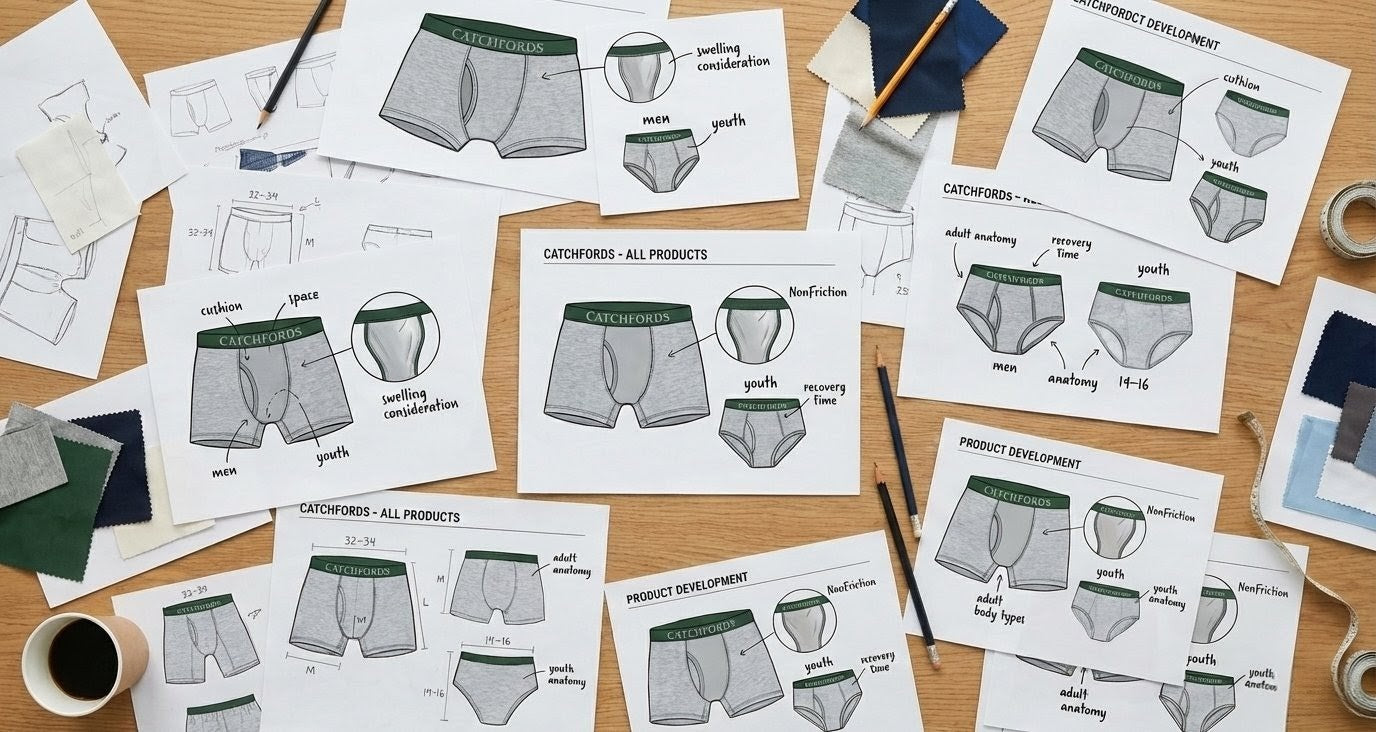
Catchfords exists — to restore dignity when you feel exposed.
Our Nonfriction™ insert gently cushions sensitive skin, creating a protective barrier against clothing. It supports recovery and helps you return to life free from embarrassment, irritation, or soreness.
Frequently Asked Questions About Frenuloplasty
Is a frenuloplasty a major surgery?
No. A frenuloplasty is considered a minor procedure. It is usually done under local anaesthetic, takes only 10–20 minutes, and most people go home the same day. Recovery is typically smooth and predictable.
Will the procedure be painful?
The numbing injection may sting briefly, but the procedure itself should not be painful. Most people describe feeling pressure or movement, not sharp pain. Mild soreness afterward is normal and usually improves quickly.
How long does recovery take?
Most people return to normal daily activities within 4-7 days. Swelling and sensitivity improve steadily over the earlier weeks. Full healing usually takes 4–6 weeks, with stitches dissolving naturally.
When can I resume sexual activity?
Doctors typically recommend avoiding sexual activity — including masturbation — for 4–6 weeks. This allows the stitches to dissolve and the tissue to heal fully without risk of re‑tearing.
What if I get an erection during healing?
Spontaneous erections are normal and may feel uncomfortable for the first 1–2 weeks. This usually does not harm the stitches. Discomfort tends to lessen as swelling goes down.
When should I contact a doctor after the procedure?
You should reach out if you notice increasing redness, pus, fever, or bleeding that doesn’t stop. These issues are uncommon, but it’s important to check if something doesn’t feel right.
We undertsand that everyone’s issues can be particular and unique. Each person experiences their recovery differently.

Talk to your doctor to see what treatment options are best for you.

There are large communities of men willing to share their experiences and incites, who have gone through it too. Catchfords included.