


Tight Frenulum (Frenulum Breve): Complete Guide
A calm, clear explanation of what a tight frenulum is, how doctors treat it, and what recovery usually looks like.
If you’re worried about a tight frenulum
Many boys, teens, and men notice tension, pulling, or pain under the head of the penis and worry something is “wrong”. A tight frenulum (frenulum breve) is a common medical issue, and doctors see it regularly.
This page explains the basics in clear, respectful language, so you can understand what might be happening and how it is usually treated.
What is the frenulum?
The frenulum is a small band of tissue on the underside of the penis, just below the head. It helps connect the foreskin to the head and guides how the skin moves.
In many people, the frenulum is flexible and allows comfortable movement. In others, it can be shorter or tighter, which is called frenulum breve (tight frenulum).
What is a tight frenulum (frenulum breve)?
A tight frenulum means the band of tissue is too short or not flexible enough for normal movement of the foreskin or skin around the head of the penis. This tightness can create pulling, bending, or pain, especially when the skin is stretched.
Some people notice this in everyday life, during cleaning, or later when the penis is erect. It can also become more obvious after growth or changes in the foreskin.
Common signs and symptoms
Not everyone has the same experience, but these are some common signs of a tight frenulum. Only a doctor can confirm what is going on.
Pulling or tension
A feeling that the skin is being pulled downward or held back by a tight band of tissue.
Pain with stretching
Discomfort or pain when the skin around the head is stretched.
Curving or bending
The penis may bend downward when the skin is tight, especially when the frenulum is under tension.
Small tears or bleeding
In some cases, the frenulum can tear, leading to brief bleeding and soreness.
Is a tight frenulum dangerous?
A tight frenulum is usually not dangerous, but it can be very uncomfortable and affect daily life. The important step is to talk to a trusted doctor, so they can explain what is going on and suggest options.
When should you see a doctor?
You should seek medical advice if you notice any of the following:
- Ongoing pain or pulling from the frenulum area.
- Bleeding from a small tear that keeps happening again.
- Difficulty cleaning properly because the skin cannot move comfortably.
- Concern that the shape or movement has changed and you are worried.
If you are a teen, it can feel difficult to talk about this. You can start by speaking to a parent, guardian, or another trusted adult and ask for help to book a doctor’s visit.
Tight Frenulum (Frenulum Breve): Causes, Symptoms & Treatment Options
In one sentence
A tight frenulum (frenulum breve) is when the small band of tissue under the glans is too short or inflexible, causing pulling, pain, or small tears — a common issue that doctors can treat safely and effectively.
Frenulum breve means the frenulum — the thin band of tissue under the glans — is shorter or less flexible than usual. This can cause pulling, discomfort, or tearing when the skin moves. Many people are born with a shorter frenulum, while others develop tightness after growth, inflammation, or small injuries that heal with scar tissue.
How common is frenulum breve in adults?
Adults with frenulum breve vs. total adult male population (North America – approximate)
Clinical estimates suggest that 3–10% of adult men experience a tight frenulum that causes pain, pulling, or limited movement. Many never mention it to a doctor, so the true number may be higher.
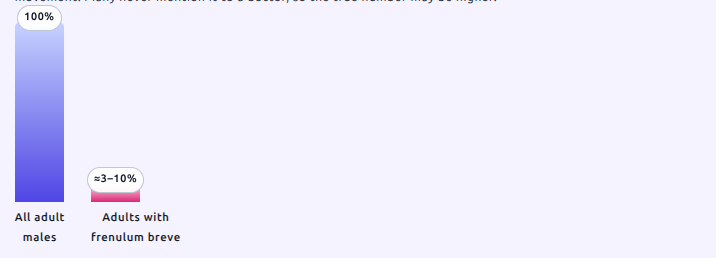
This chart is illustrative, not an exact measurement. Prevalence varies by study, age group, and whether individuals seek medical evaluation.
Why the frenulum becomes tight
A tight frenulum can be present from birth or develop later. Growth during puberty, inflammation, or repeated small tears can reduce flexibility over time. Some people also experience tightness if the foreskin is naturally snug, increasing tension on the frenulum.
Common symptoms
Milder tightness
- A pulling sensation under the glans
- Tightness when the skin moves
- Downward bending when the frenulum is under tension
More noticeable tightness
- Pain when the skin stretches
- Small tears or brief bleeding
- Recurrent soreness or sensitivity
- Difficulty cleaning comfortably
Possible complications
A tight frenulum is usually not dangerous, but repeated tension can lead to small tears that heal with scar tissue, making the frenulum even tighter. Some people avoid normal movement because of pain, which can affect hygiene or confidence.
How frenulum breve is diagnosed
Diagnosis is straightforward. A doctor examines the frenulum, checks flexibility, and looks for signs of scarring or previous tears. Tests are rarely needed unless inflammation or infection is suspected.
Treatment options
Treatment depends on symptoms and severity. Many people benefit from simple approaches, while others may need a minor procedure.
Conservative options
- Gentle hygiene and avoiding irritation
- Doctor‑guided stretching strategies
- Treating inflammation if present
Procedural options
- Frenulum release (simple cut to reduce tension)
- Frenuloplasty (reshaping the frenulum)
- Other surgical options if combined with foreskin issues
When to seek medical advice
Speak with a healthcare provider if you experience ongoing pain, repeated tearing, difficulty cleaning, or worry about the shape or movement of the skin. Doctors see this issue often and can explain safe, effective options.
In summary: Frenulum breve is a common condition where the frenulum is too short or tight, causing pulling, pain, or small tears. It affects an estimated 3–10% of adult men and is usually easy for doctors to diagnose and treat. Options range from simple care to minor procedures that improve comfort and movement.

Profils de Symptom Patterns of Frenulum Breve
People experience a tight frenulum in different ways. These four patterns describe the most common experiences and can help you understand what you may be feeling. Only a doctor can confirm a diagnosis.nt un frein court de différentes façons. Ces quatre profils résument les expériences les plus souvent rapportées et peuvent aider à mieux comprendre ce que vous ressentez. Seul un professionnel de la santé peut poser un diagnostic.
Mild Tightness
A slight pulling sensation under the glans
Tightness only when the skin moves fully
No tearing, bleeding, or lasting soreness
Moderate Tightness
Noticeable pulling during movement
Downward bending when the frenulum is under tension
Occasional discomfort during daily activities
Recurrent Tearing
Small tears at the frenulum that heal and reopen
Brief bleeding or sharp pain when stretched
Sensitivity that lingers for several days
Functional Limitation
Movement of the skin feels restricted or painful
Downward bending that feels forced or uncomfortable
Difficulty cleaning comfortably due to tightness
These patterns are not “stages” and do not indicate progression. They simply describe how frenulum breve commonly presents. If tightness causes pain, tearing, or limits daily comfort, it’s a good idea to speak with a healthcare professional.


What Frenulum Breve Can Feel Like Day-to-Day
Many people with a tight frenulum describe the experience in simple, everyday terms. These aren’t medical categories — just real, relatable ways the tightness shows up in daily life.
“A gentle pull that never fully relaxes”
Some people notice a subtle tug under the glans — not painful, just always there. It may feel more noticeable during movement or when the skin stretches.
“It stings for a few days, then feels okay again”
Small tears can heal quickly, but the area may feel sensitive for a while. Many people describe a cycle of “fine → sore → fine again.”
“A bend that feels like it shouldn’t be there”
When the frenulum is tight, the penis may bend downward when the skin is pulled. This can feel strange or uncomfortable, even if it isn’t painful.
“Cleaning is fine… but stretching feels sharp”
Daily hygiene is usually comfortable, but stretching the skin further can create a sharp, sudden discomfort that goes away once the tension stops.
If any of these feel familiar, you’re not alone — these are common experiences for people with frenulum breve.
What Doctors Look For During an Examination
A medical exam for frenulum breve is simple, quick, and usually not uncomfortable. Doctors check only a few key things to understand what is causing the tightness.
Frenulum Length & Flexibility
- How long the frenulum is
- How easily it stretches
- Whether it causes pulling or bending
Signs of Previous Tearing
- Small healed tears or scar tissue
- Areas that look sensitive or irritated
- Whether tearing happens repeatedly
Movement of the Skin
- How the skin moves over the glans
- Whether movement feels restricted
- If bending occurs when stretched
Comfort & Sensitivity
- Where discomfort is felt
- Whether pain occurs with gentle movement
- Any sensitivity that affects daily life
Doctors do not perform any invasive tests for frenulum breve. The exam is visual and gentle, and you can ask questions at any time.
Frequently Asked Questions
Is a tight frenulum dangerous?
Usually not. Frenulum breve is common and often just causes discomfort or pulling. The main concern is repeated tearing, which can create scar tissue and increase tightness over time. A doctor can explain whether simple care or a minor procedure is appropriate.
Can frenulum breve get better on its own?
In some younger patients, growth and natural changes can improve flexibility. In adults, tightness often stays the same unless treated. Only a healthcare professional can say what is likely in your situation.
Is frenulum breve the same as phimosis?
No. Phimosis affects the foreskin opening, while frenulum breve affects the band of tissue underneath the glans. Some people have both, but they are different conditions with different treatments.
Does frenulum breve always require surgery?
No. Treatment depends on symptoms. Some people only need conservative care, while others benefit from a minor procedure such as a frenulum release or frenuloplasty. These procedures are typically quick and have short recovery times.
Who should I see about a tight frenulum?
You can start with a family doctor or general practitioner. They may examine the area and, if needed, refer you to a urologist — a doctor who specializes in urinary and male genital conditions.
How do I talk to a parent or trusted adult about this?
It can feel awkward, but you don’t need to explain everything in detail. Many people simply say they’re experiencing discomfort in the skin and would like to see a doctor. A trusted adult can help book the appointment and support you through the process.
Comfort Matters During Recovery
After a frenulum procedure — or even after a small tear — the area can feel more sensitive than usual. Light friction from everyday underwear can rub against the healing tissue, making it harder to move comfortably or return to normal routines.
Doctors often recommend soft, low‑friction support during the early healing phase. The goal isn’t compression — it’s gentle protection that keeps the area calm, reduces irritation, and helps you feel more confident as you heal.
Why support helps:
- Reduces rubbing on healing tissue
- Keeps the area stable during movement
- Helps prevent irritation from seams or fabric
- Supports comfort during daily activities
The right support doesn’t replace medical care — it simply makes recovery more comfortable.
Catchfords exists — to restore dignity when you feel exposed.
Our Nonfriction™ insert gently cushions sensitive skin, creating a protective barrier against clothing. It supports recovery and helps you return to life free from embarrassment, irritation, or soreness.
We undertsand that everyone’s issues can be particular and unique. Each person experiences their recovery differently.

Talk to your doctor to see what treatment options are best for you.

There are large communities of men willing to share their experiences and incites, who have gone through it too. Catchfords included.