

Glans Irritation: Redness, Dryness, Itching & Skin Conditions Explained
In one sentence:
Glans irritation can come from friction, moisture, dryness, soaps, condoms, lubricants, or skin conditions — this guide explains every common cause, what symptoms typically look like, and practical ways to reduce discomfort safely.
Many men experience irritation of the glans at some point in their lives — whether circumcised or uncircumcised. Redness, dryness, itching, burning, peeling, or a shiny appearance can feel alarming, especially when the cause isn’t obvious. Most irritation comes from everyday factors like friction, sweat, soaps, or mild skin reactions, while others relate to common skin conditions. This guide breaks down every major cause in clear, non‑medical language so you can understand what’s happening and what typically helps.
Why the Glans Is Prone to Irritation
The glans is one of the most sensitive areas of the body. It contains dense nerve endings and thin skin that reacts quickly to changes in moisture, friction, temperature, and products like soaps or lubricants. Because of this, even small shifts in your daily routine can lead to noticeable irritation.
Irritation does not automatically mean infection or a serious condition — in most cases, it reflects how the skin responds to contact, moisture, or environmental triggers.
- The glans can dry out quickly, especially after washing or exposure to air.
- Sweat and moisture can trap heat and cause redness or itching.
- Friction from underwear or movement can create micro‑irritation.
- Soaps, detergents, condoms, and lubricants can trigger skin reactions.
- Skin conditions like dermatitis, eczema, or psoriasis can appear on the glans.
Because the glans reacts strongly to even mild triggers, irritation often feels more intense than irritation elsewhere on the body.
Common reasons glans irritation develops (at a glance):
- Friction: Rubbing from underwear, walking, sex, or masturbation.
- Moisture imbalance: Sweat, humidity, or trapped moisture under the foreskin.
- Dryness: Over‑washing, harsh soaps, or air exposure.
- Skin reactions: Soaps, detergents, condoms, lubricants, or skincare products.
- Skin conditions: Dermatitis, eczema, psoriasis, or other non‑infectious irritation.
Why Glans Irritation Feels So Intense
Irritation on the glans often feels sharper, hotter, or more uncomfortable than irritation on other parts of the body. This is because the skin is thin, highly sensitive, and reacts strongly to friction, moisture, and temperature changes.
Three reasons glans irritation feels so strong:
- High sensitivity: The glans contains dense nerve endings that amplify discomfort.
- Constant contact: Clothing, movement, and moisture expose the glans to ongoing friction.
- Skin reactivity: The glans responds quickly to dryness, heat, sweat, and chemical products.
These sensations can be uncomfortable or worrying, but they are commonly reported — and most irritation improves once the underlying trigger is reduced.
Ces sensations peuvent être inconfortables ou inquiétantes, mais elles sont couramment rapportées — et la plupart des irritations s’améliorent une fois le déclencheur réduit.
How Common Are Different Types of Glans Irritation?
Approximate self‑reported patterns from men experiencing glans irritation (all causes)
Glans irritation can come from many sources — friction, moisture, dryness, soaps, condoms, lubricants, or skin conditions. These estimates reflect common patterns men report when describing irritation, redness, itching, or discomfort.
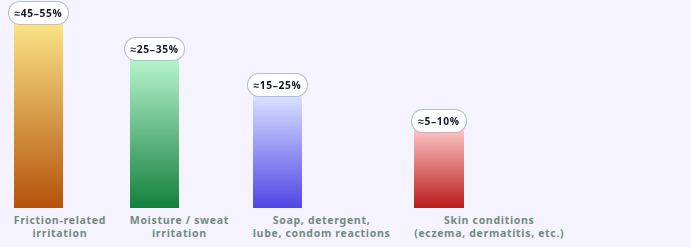
These percentages are illustrative and based on common self‑reported patterns from men describing glans irritation. They are not diagnostic and individual experiences vary widely.
Understanding How Glans Irritation Behaves
Instead of guessing, these simple visual tools help you make sense of where you feel irritation, how it behaves, and which patterns it most closely follows — without diagnosing or replacing medical advice.
A. Sensitivity Zones (Without a Diagram)
Different areas of the glans often feel irritation in different ways.
Zone 1
Rim / Crown Area
Often feels more reactive to rubbing from underwear edges.
Can feel “zingy” or sharp during walking or sitting.
Common place for friction‑related flare‑ups.
Zone 2
Top Surface
May feel dry, tight, or slightly shiny during irritation cycles.
Can show redness or burning after soaps or detergents.
Often where general sensitivity is most noticeable.
Zone 3
Underside / Frenular Area
More likely to feel sore, stretched, or “pulled.”
Can be sensitive during erections or certain movements.
Irritation here may feel deeper or more focused.
B. Why the Glans Reacts So Strongly
These factors work together — which is why irritation can feel intense even from small triggers.
Thin skin barrier
Less protection against friction and products.
High nerve density
Small changes can feel big.
Moisture shifts
Too dry or too damp increases reactivity.
Constant contact
Clothing, movement, and daily activity.
Product exposure
Soaps, detergents, lubricants, condoms.
C. Common Misconceptions About Glans Irritation
These are general patterns, not medical rules — but they often help reduce unnecessary worry.
“Shiny skin always means infection.”
Reality
Shiny skin often appears during irritation cycles, especially with moisture or product reactions. It can be a surface response, not automatically an infection.
“Redness always means balanitis.”
Reality
Redness is commonly linked to friction, sweat, or dryness. Many men see redness after walking, exercise, or new products without having balanitis.
“Burning after showering means something serious.”
Reality
Burning after showering is often related to scented soaps, body washes, or residue. The glans is highly sensitive to fragrances and detergents.
“If it comes and goes, it must be an STD.”
Reality
Many irritation patterns are cyclical — changing with heat, sweat, dryness, and activity. Flare‑ups that come and go are extremely common.
D. Snapshot Patterns Men Commonly Describe
These aren’t diagnoses — just familiar patterns that help you recognize your own experience.
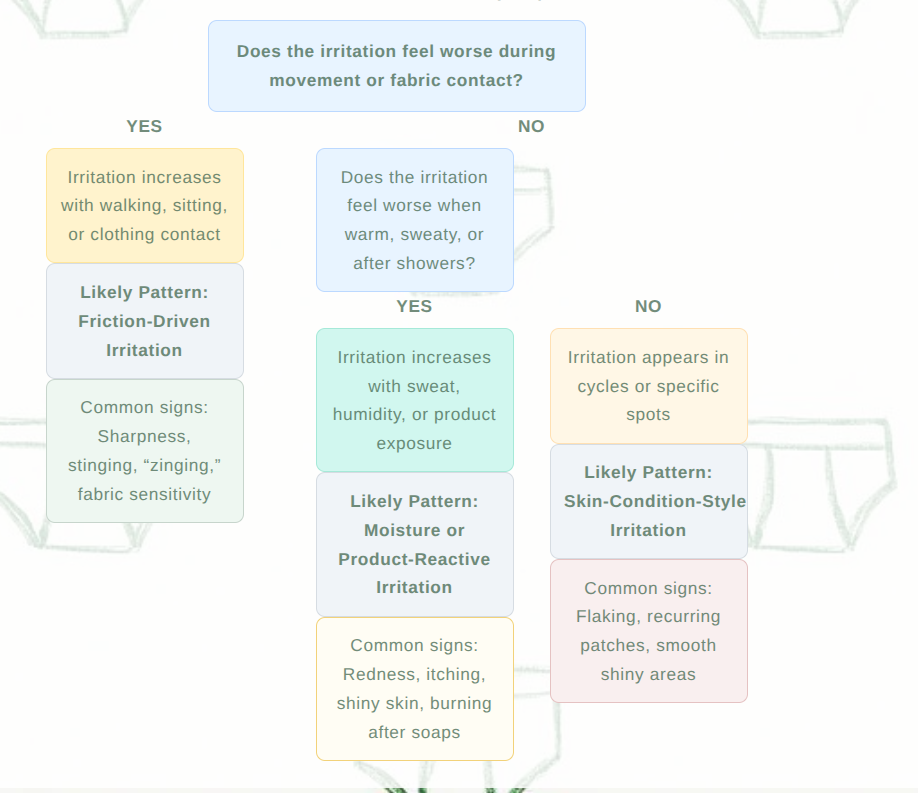
After Walking
Sharpness or stinging where fabric rubs most. Often improves once movement stops or friction is reduced.
After Sex or Masturbation
Temporary burning, rawness, or over‑sensitivity. Usually settles once the skin has time to recover.
After Sweating
Redness, stickiness, or itching, especially in warm or humid conditions or under the foreskin.
After Showering
Burning or dryness when scented soaps or strong body washes are used on or near the glans.
Random Flare‑Ups
Irritation that appears for a few days, then fades. Often linked to subtle changes in products, weather, or activity.
Specific Spots
The same small area becomes irritated repeatedly. May reflect a local friction point or skin‑condition‑style pattern.
E. 3‑Day Irritation Pattern Self‑Check
Not a diagnosis — just a simple way to notice what your skin reacts to most.
| Day | What You Felt | What You Were Doing | What It Most Resembles |
|---|---|---|---|
| Day 1 | Redness, stinging | Long walk, tighter underwear | Friction‑driven irritation |
| Day 2 | Itching, shiny skin | Warm day, more sweat, new soap | Moisture / product‑reactive pattern |
| Day 3 | Same small patch flaring | No major changes, mild activity | Skin‑condition‑style pattern |
If the same pattern keeps showing up — for example, friction‑driven or moisture‑reactive — small changes in fabrics, products, and support layers often make a noticeable difference. If symptoms steadily worsen, feel very different from your usual pattern, or cause concern, checking in with a healthcare professional is a responsible next step.

Irritation Pattern Decoder: What Your Symptoms Tend to Mean
Common Glans Irritation Patterns (What You See & What You Feel)
Glans irritation shows up in different ways depending on the cause — friction, moisture, dryness, soaps, condoms, lubricants, or skin conditions. These symptom patterns are commonly reported by men and can help you understand what type of irritation you may be experiencing. This section is descriptive, not diagnostic, and focuses on everyday patterns rather than medical conditions.
Surface Changes (What You See)
Redness: Often appears after friction, sweat, or product exposure.
Dryness: Skin may look dull, rough, or slightly cracked after washing.
Peeling or flaking: Common with dryness, friction, or mild skin irritation.
Shiny skin: The glans may appear smooth or glossy during irritation cycles.
Sensations (What You Feel)
Itching: Often linked to dryness, sweat, or product reactions.
Burning: Common after soaps, lubricants, or friction-heavy activity.
Stinging: May occur when the skin is dry, irritated, or recently rubbed.
Post‑sex or post‑masturbation irritation: Friction can leave the glans reactive for hours.
Context‑Based Irritation (When It Happens)
Sweat irritation: Stickiness increases friction and redness during movement.
Soap or product irritation: Scented or harsh products can cause burning or dryness.
Underwear irritation: Seams, texture, or synthetic fabrics can trigger discomfort.
Foreskin‑related irritation: Moisture imbalance or trapped sweat may cause redness or itching.
Practical Comfort Strategies & Low‑Friction Support
Glans irritation often improves when friction, moisture, dryness, or product reactions are reduced. These non‑medical strategies are commonly reported to help men manage flare‑ups, prevent irritation during daily movement, and stay more comfortable throughout the day.
Reduce Friction
Choose smooth, soft fabrics that glide instead of catching on the skin.
Avoid rough seams, mesh liners, or textured materials that increase drag.
Use supportive underwear to limit bouncing or shifting during movement.
Add a low‑friction layer on high‑irritation days to prevent direct rubbing.
Why a Dedicated Layer Helps
The glans is highly reactive to friction, especially during irritation cycles.
Even soft underwear can create drag when the skin is dry, warm, or sensitive.
A smooth, protective layer reduces rubbing during walking, sitting, and daily movement.
Helpful for both circumcised and uncircumcised men experiencing flare‑ups.
Balance Dryness & Moisture
Dryness can make the glans feel sharp or abrasive during contact.
Moisture (sweat, humidity, trapped dampness) can cause redness or itching.
Change out of damp clothing sooner, especially after workouts.
Use gentle, fragrance‑free products to avoid dryness‑related irritation.
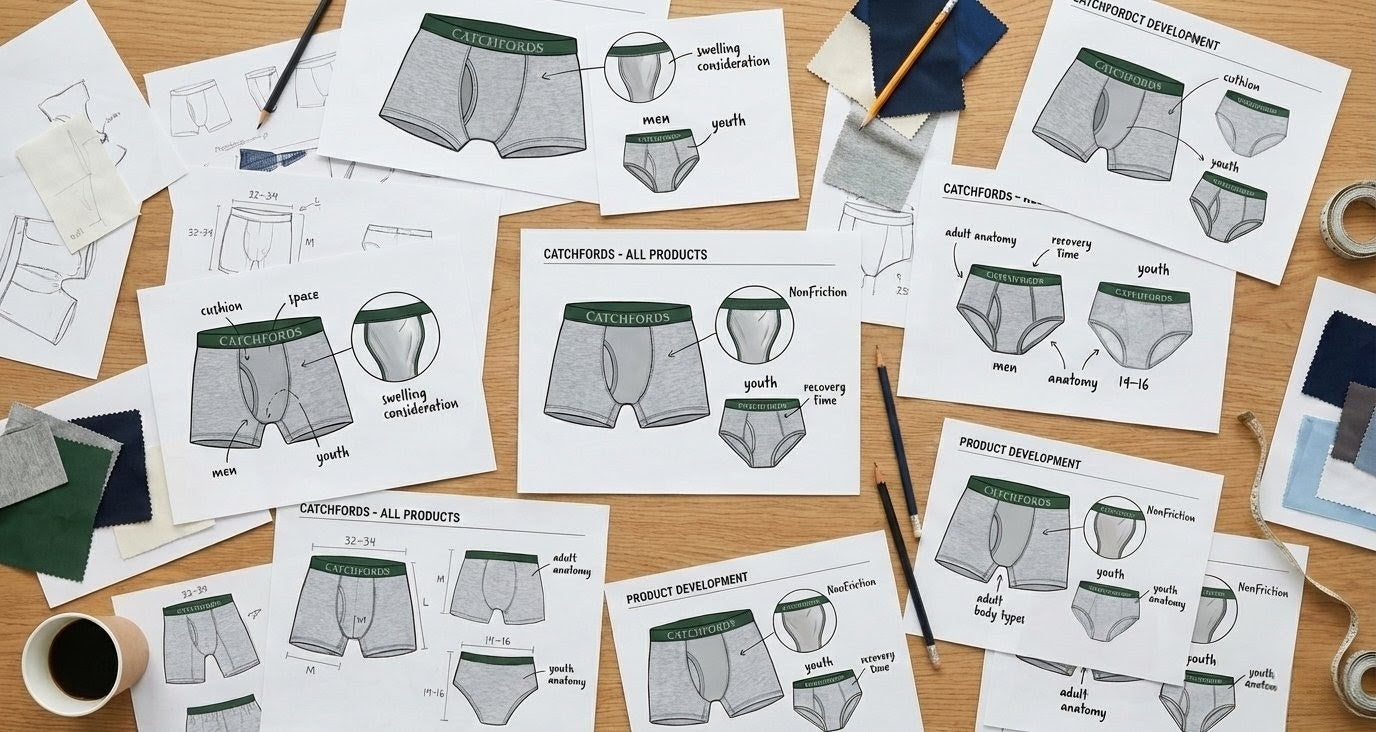
Catchfords Recovery Briefs
Designed for men who experience friction‑related glans irritation or sensitivity.
Provides a soft, low‑friction barrier between the glans and clothing.
Breathable, supportive, and reusable — a comfort solution, not a medical device.
Many men use a 2‑pack for flare‑ups, long walking days, or high‑friction activities.
Movement & Daily Activity
Take shorter steps or adjust stride on days when irritation is higher.
Sit down slowly to avoid sudden fabric contact against the glans.
Plan ahead for long walking days, commutes, or exercise sessions.
Use breathable layers to reduce heat buildup during activity.
Gentle Product Choices
Switch to fragrance‑free soaps, detergents, and body washes.
Avoid warming, flavored, or heavily scented lubricants.
Try non‑latex condoms if irritation appears after sex.
Rinse thoroughly after showering to avoid residue‑related irritation.
Catchfords exists — to restore dignity when you feel exposed.
Our Nonfriction™ insert gently cushions sensitive skin, creating a protective barrier against clothing. It supports recovery and helps you return to life free from embarrassment, irritation, or soreness.
When to Consider Seeing a Healthcare Professional
Most glans irritation comes from everyday factors like friction, dryness, sweat, or product reactions. These patterns often improve with simple adjustments. However, there are times when checking in with a healthcare professional can provide clarity or rule out other causes.
- Redness or irritation that steadily worsens instead of improving with reduced friction.
- New swelling, pain, or discomfort that feels different from your usual pattern.
- Persistent irritation that doesn’t improve after adjusting soaps, fabrics, or moisture levels.
- Unusual discharge, bleeding, or strong odor that isn’t related to friction or dryness.
- Recurring irritation in the same spot that doesn’t respond to everyday comfort strategies.
- Sudden changes in appearance that feel out of character for your skin.
A healthcare professional can help rule out other causes and provide reassurance. Many men find that even a brief check‑in offers peace of mind and helps them understand their symptoms more clearly.
Frequently Asked Questions
Why is my glans red or irritated?
Redness is one of the most common irritation patterns. It often comes from friction, sweat, dryness, or reactions to soaps, detergents, condoms, or lubricants. Many men experience temporary redness after walking, exercise, or product changes.
What causes itching on the glans?
Itching can appear when the skin is dry, irritated by sweat, or reacting to scented soaps or detergents. It can also occur when moisture is trapped under the foreskin. Itching alone does not automatically indicate infection.
Why does the glans burn after showering?
Burning after showering is commonly linked to scented soaps, body washes, or leftover residue. The glans is highly sensitive to fragrances and detergents, and even mild products can cause temporary stinging or dryness.
Is peeling or flaking normal?
Yes. Peeling often happens when the skin becomes dry or irritated from friction, heat, or product exposure. It usually improves once the trigger is reduced and the skin has time to settle.
Why does the glans look shiny or smooth during irritation?
Shiny skin is a common irritation pattern. It can appear when the surface becomes inflamed, over‑hydrated, or mildly irritated. Many men notice this during sweat‑heavy days or after using certain soaps or lubricants.
Why does it sting after sex or masturbation?
Friction can leave the glans temporarily reactive. When the skin is dry or sensitive, even normal activity can cause stinging afterward. This usually improves once the skin settles and friction is reduced.
Does sweat make irritation worse?
Yes. Sweat makes the glans sticky, increasing friction during movement. Heat and humidity can also amplify redness, itching, or burning, especially during walking or exercise.
Can soap or detergent really cause irritation?
Absolutely. The glans reacts strongly to fragrances, dyes, and detergents. Even small amounts of residue on underwear or skin can cause burning, dryness, or redness.
Why does underwear cause irritation?
Seams, texture, and fabric type all matter. Rough or synthetic materials can create micro‑irritation, especially when the skin is dry or warm. Supportive, low‑friction fabrics tend to feel more comfortable.
Is irritation different for circumcised vs. uncircumcised men?
Yes. Circumcised men often experience friction‑related irritation, while uncircumcised men may notice moisture‑related irritation under the foreskin. Both patterns are common and usually respond to simple adjustments.
Why does my irritation come and go?
Many men experience cycles of irritation. Heat, sweat, dryness, fabric type, and activity level can all influence how reactive the glans feels on any given day. Fluctuation is extremely common.
Could this be balanitis?
Some irritation patterns can resemble balanitis, but many everyday triggers — friction, sweat, dryness, or product reactions — can look similar. If symptoms persist, worsen, or feel unusual for you, a healthcare professional can help rule out other causes.
Can irritation happen even if it’s not an STD?
Yes. Most glans irritation is not related to STDs. Everyday factors like friction, dryness, sweat, and product reactions are far more common causes.
Why does irritation appear after sex but not always?
Irritation depends on friction, lubrication, duration, and skin dryness. Some days the skin is more reactive than others, which is why symptoms can appear inconsistently.
Can a low‑friction layer help with irritation?
Many men report noticeable relief when using a smooth, low‑friction fabric layer. It doesn’t treat irritation — it simply reduces rubbing and helps the skin settle during flare‑ups.
We undertsand that everyone’s issues can be particular and unique. Each person experiences their recovery differently.

Talk to your doctor to see what treatment options are best for you.
There are large communities of men willing to share their experiences and incites, who have gone through it too. Catchfords included.