

Penis Head Hurts in Underwear: Understanding Sensitivity, Rubbing Pain & Post‑Circumcision Discomfort
In one sentence:
Many people experience sharp, raw, or overly sensitive discomfort at the tip of the penis when it rubs against underwear — especially after circumcision — and this guide explains why it happens, why it varies so much between individuals, and how to reduce friction during daily movement.
Searches like “penis head hurts in underwear,” “tip feels too sensitive in clothes,” or “rubbing pain when walking” are extremely common. This type of sensitivity can appear after circumcision, after friction, or simply from everyday contact with fabric. For some, it feels like burning or stinging; for others, it feels raw, exposed, or sharply reactive when the tip touches underwear. This page explains the anatomy behind that sensitivity, why it happens, and why the experience can vary so widely between youth, teens, and adults.
Why the Tip of the Penis Is So Sensitive
The tip of the penis — the glans — contains one of the highest concentrations of sensory nerve endings anywhere on the body. From birth, the foreskin naturally covers and protects this surface, keeping it shielded from friction, fabric, and daily movement. When the foreskin is removed or retracted more often, the glans becomes exposed to direct contact that it was never designed to experience continuously.
This sudden exposure is the core reason many people search for terms like “penis head hurts in underwear,” “penis head rubbing pain,” or “tip feels too sensitive to touch.” The surface is thin, delicate, and highly reactive — and when it meets fabric, seams, or movement, the sensation can feel sharp, electric, or abrasive.
Key anatomical reasons sensitivity happens:
- High nerve density: The glans is packed with sensory receptors, making it extremely responsive to touch, pressure, and friction.
- Foreskin protection from birth: The glans is normally shielded from fabric and movement, so exposure feels intense at first.
- Sudden contact after circumcision: Without the foreskin, the glans rubs directly against underwear throughout the day.
- Dryness increases reactivity: Air exposure can make the surface feel rough, sharp, or “too sensitive.”
- Fabric drag: Even soft materials can create friction that feels like burning or stinging.
These anatomical factors explain why some people adapt quickly while others continue to feel discomfort for weeks, months, or longer. The experience is highly individual — and completely common.
Common phrases people use to describe this sensitivity:
- “The penis tip feels raw or exposed.”
- “It hurts when my penis touches underwear.”
- “My penis feels like burning or stinging from contact.”
- “Walking makes the tip of my penis hurt more.”
- “My penis is too sensitive to touch fabric.”
How Long Sensitivity Commonly Lasts After Penis Exposure or Circumcision
Typical self‑reported timelines for sensitivity (approximate)
Sensitivity at the tip of the penis can improve quickly for some people, while others notice discomfort that lasts for months or longer. These ranges reflect common self‑reported timelines from individuals describing friction‑based sensitivity after circumcision or increased exposure.
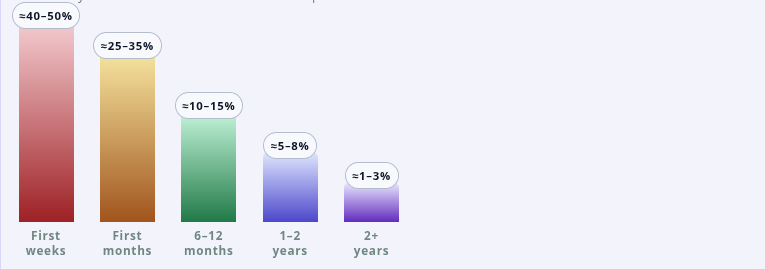
These ranges are illustrative and based on common self‑reported experiences. Sensitivity varies widely depending on anatomy, age, activity level, and how the glans adapts to friction over time.
Why the Penis Tip Hurts in Underwear: The Real Mechanisms Behind Sensitivity
Many people search for phrases like “penis head hurts in underwear,” “penis head rubbing pain,” or “tip feels too sensitive after circumcision.” These sensations are extremely common and usually come from a combination of exposure, friction, dryness, and nerve responsiveness. This section breaks down the most common mechanisms behind clothing‑related sensitivity.
Quick Overview:
- Sudden exposure: The glans loses lifelong foreskin protection.
- Movement friction: Walking, sitting, and bending increase rubbing.
- Fabric irritation: Seams, cotton texture, and tight waistbands cause drag.
- Hypersensitivity: Nerves recalibrate and may over‑respond during healing.
Sudden Exposure After Circumcision
Without the foreskin’s natural protection, the glans becomes exposed to air, fabric, and movement. This sudden change can make the surface feel raw, sharp, or overly sensitive during daily activity.
- No more foreskin protection.
- The surface dries out quickly.
- Nerves fire more intensely during contact.
- Fabric brushing can feel sharp or burning.
Common searches include “penis head hurts after circumcision,” “penis head rubbing pain after circumcision,” and “sensitive penis head weeks after circumcision.”
Friction From Walking, Sitting & Daily Movement
Movement is one of the biggest triggers for sensitivity. As underwear shifts, the glans experiences repeated micro‑friction that can feel sharp, stinging, or irritating.
- Walking increases fabric contact.
- Sitting creates pressure and drag.
- Bending changes the angle of friction.
- Underwear shifts throughout the day.
Common searches include “penis head hurts when walking,” “penis head friction pain,” and “penis head rubbing on underwear.”
Fabric Irritation From Clothing
Even soft fabrics can feel abrasive on a sensitive glans. Certain materials or construction details increase irritation during movement.
- Rough cotton or textured materials.
- Seams and stitching rubbing the tip.
- Mesh or synthetic blends causing drag.
- Tight waistbands increasing pressure.
Common searches include “penis head irritation from underwear” and “penis head pain from tight underwear.”
Hypersensitivity After Healing
As the glans adapts to exposure, nerves may temporarily become over‑responsive. This can cause burning, stinging, or sudden “zinging” sensations during movement or fabric contact.
- Nerves recalibrating after exposure.
- Over‑responsiveness to light touch.
- Burning or stinging sensations.
- Sharpness triggered by friction.
Common searches include “penis head burning in underwear” and “penis head stinging from friction.”
How Long Sensitivity Usually Lasts: Youth, Teens & Adults
Sensitivity timelines vary widely. Age plays a major role in how quickly the glans adapts to friction, how intense the sensations feel, and how long discomfort lasts. These patterns reflect common self‑reported experiences across different age groups.
Quick Overview
- Youth: Fastest adaptation; sensitivity fades quickly.
- Teens: More movement, sports, and friction.
- Adults: Longer adaptation; stronger initial hypersensitivity.
- All ages: Fabric, dryness, and activity affect comfort.
Youth: Quick Adaptation
Younger individuals typically adapt the fastest. Their nerves adjust quickly, and clothing‑related discomfort tends to fade sooner.
- Faster nerve adaptation.
- Shorter sensitivity window.
- Clothing discomfort common early on.
- Less friction awareness overall.
Teens: High Activity & Higher Awareness
Teens often experience more friction due to sports, movement, and daily activity. Emotional awareness can also make sensitivity feel more noticeable.
- More movement and sports.
- More friction from clothing.
- Higher emotional stress.
- Higher emotional stress.
Adults: Longer Adaptation Period
Adults tend to experience stronger initial hypersensitivity and a longer adjustment period. Daily clothing friction plays a larger role in discomfort.
- Longer adaptation period.
- More intense hypersensitivity early on.
- More friction from daily clothing.
- Greater variation between individuals.
Common searches include “penis head too sensitive after healing” and “can’t tolerate penis head touching anything.”
Everyone adapts differently
Sensitivity timelines are not fixed. Some adults adapt quickly, while some youth or teens may take longer. The most important factor is how the glans responds to friction, dryness, and daily movement over time.
Keratinization: How the Glans Adapts to Exposure Over Time
In one sentence:
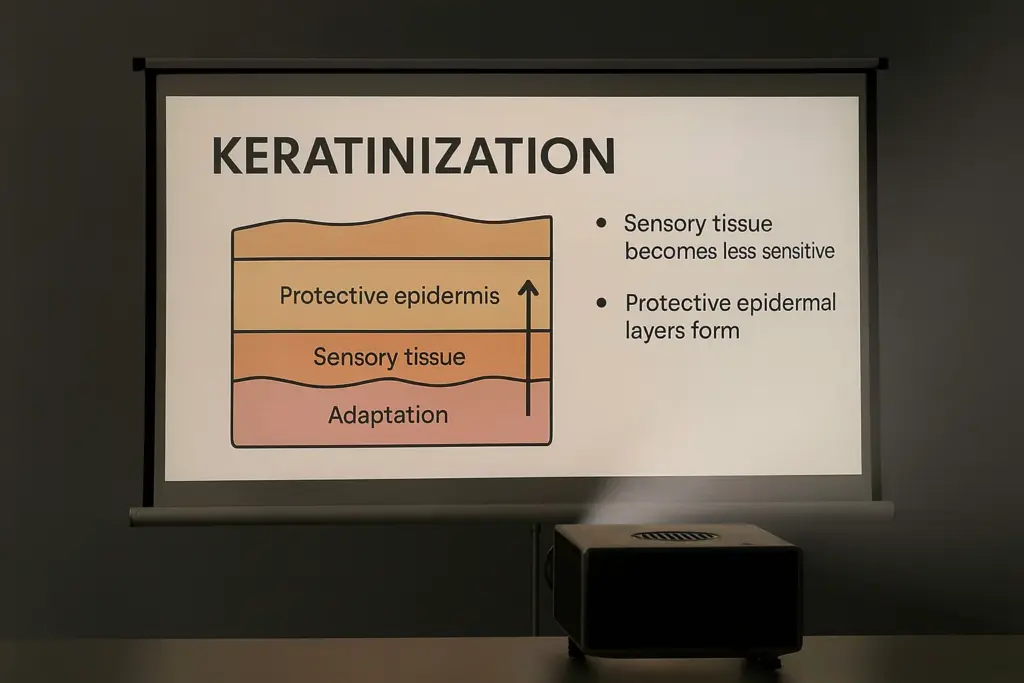
Keratinization is the natural process where the glans develops a thin, protective layer after increased exposure, which can temporarily increase sensitivity before helping the surface feel less reactive over time.
The glans is naturally soft, moist, and protected by the foreskin. When that protection is reduced or removed — such as after circumcision or increased exposure — the surface begins adapting to its new environment. One of the most important adaptation processes is keratinization: the gradual formation of a microscopic protective layer that helps reduce friction sensitivity over time.
What Keratinization Actually Is
Keratinization is a normal skin adaptation process. The surface of the glans begins forming a thin, protective layer of keratin — the same structural protein found in skin, hair, and nails. On the glans, this layer is extremely thin and not visible like a callus. Instead, it develops slowly and unevenly, and the timeline varies widely from person to person.
- The glans is naturally protected and moist before exposure.
- After circumcision or increased exposure, the surface begins adapting.
- A micro‑layer of keratin gradually forms to reduce friction sensitivity.
- The process is subtle and not visible to the eye.
- Everyone keratinizes at a different rate.
Why Keratinization Can Increase Sensitivity Before Reducing It
Many people expect sensitivity to decrease immediately after healing, but keratinization does not work that way. Early exposure often leads to dryness, which makes the surface feel sharper or more reactive. During this period, nerves may respond more intensely to friction, creating sensations like burning, stinging, or sudden “zinging.”
- Early exposure increases dryness and nerve responsiveness.
- The surface often becomes more sensitive before it becomes less sensitive.
- Keratinization is gradual — not immediate.
- Friction during this stage can feel sharp or abrasive.
- This explains searches like “penis head too sensitive after healing.”
Why Keratinization Timelines Vary Widely
Keratinization does not follow a universal timeline. Age, activity level, fabric exposure, and dryness cycles all influence how quickly the glans adapts. Some people develop a protective layer quickly, while others take longer or keratinize unevenly, leading to “patchy” sensitivity.
- Youth often keratinize faster.
- Teens fluctuate due to activity and dryness cycles.
- Adults keratinize more slowly and feel more friction.
- Some people keratinize minimally or unevenly.
- Individual variation is completely normal.
What Can Slow Keratinization
Certain daily factors can delay or interrupt the keratinization process. These are not harmful, but they can prolong sensitivity by repeatedly irritating the surface before it has time to adapt.
- Constant friction from clothing.
- Dryness cycles from air exposure.
- Heat and sweat increasing irritation.
- Rough fabrics or seams rubbing the surface.
- Overexposure without any protective barrier.
What Supports Keratinization
While keratinization is a natural process, certain comfort‑focused habits can help the surface adapt more smoothly. These approaches do not accelerate keratinization medically — they simply reduce friction and dryness, making the adaptation period more comfortable.
- Reducing friction during walking and daily movement.
- Maintaining a stable, low‑irritation fabric environment.
- Minimizing dryness from constant air exposure.
- Using softer, smoother materials against the skin.
- Providing consistent protection during movement.
Why this matters:
Many people find that comfort‑focused clothing choices make the keratinization period easier. Reducing friction and dryness allows the surface to adapt without repeated irritation, which can help sensitivity feel more manageable over time.
The Industry Got It Wrong
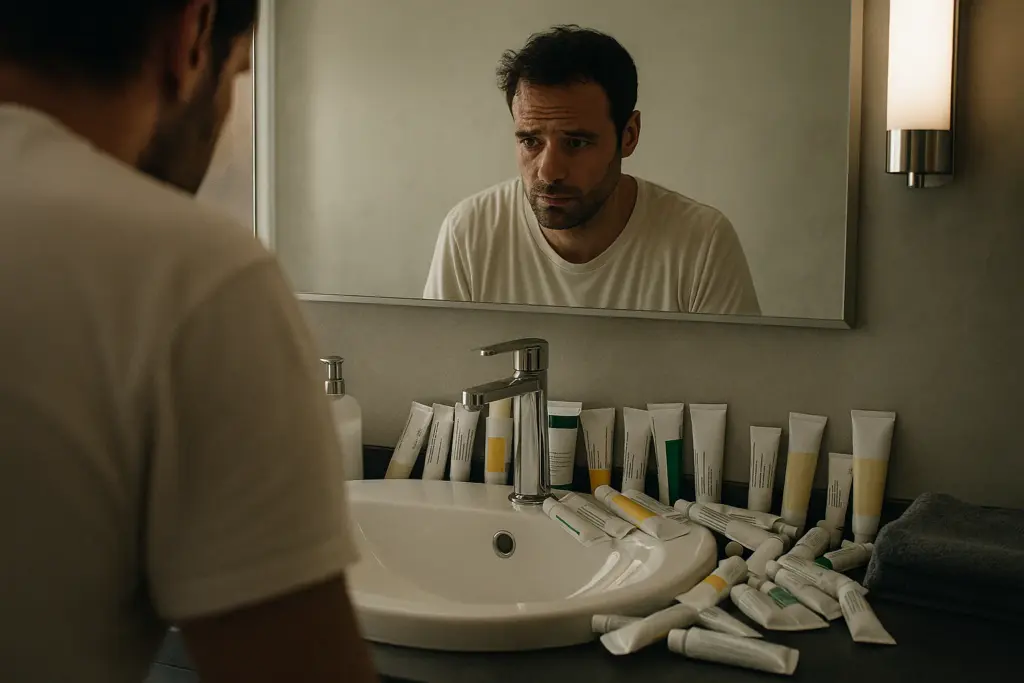
What they call “support” is actually Friction, Pain, and Embarrassment.
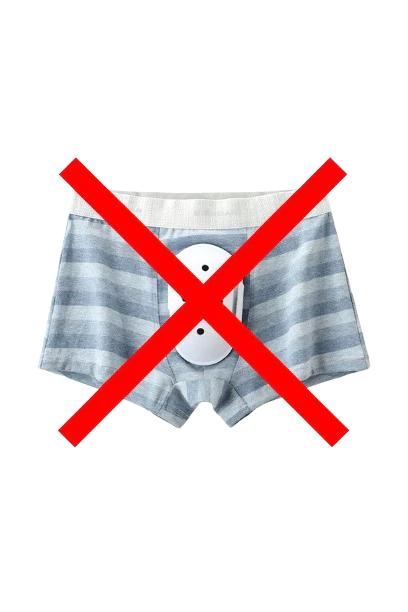
Stiff cotton. Rigid seams. A hard plastic cup that jabs the glans when it’s most sensitive. Every step becomes a wince. Every mirror check, a reminder that recovery wasn’t considered.
❌ No Textile Safety
❌ No Functional Support
❌ No Relief by Design
Common Sensitivity Patterns People Report
Many people describe clothing‑related sensitivity in simple, everyday language. These patterns are commonly reported and often appear during walking, sitting, or when fabric brushes against the tip.
- “My penis head feels raw.” – A frequent way people describe surface irritation or heightened sensitivity after friction.
- “The tip of my penis feels exposed.” – Increased awareness of the glans, especially after circumcision or new exposure to fabric.
- There’s a sharp rubbing pain at the head of my penis. – Movement or shifting fabric can create a sharp, friction‑based sensation.
- My penis head burns or stings when I try to move. – Often noticed during walking, exercise, or when seams press against the tip.
- I can’t handle fabric touching the head of my penis. – Even soft materials can feel abrasive when the surface is highly reactive.
- I can’t wear jeans the rubbing feeling is intense on my penis. – Heavier fabrics, seams, and pressure points commonly increase sensitivity.
Common search terms:
“penis head feels raw”
“penis head hurts in jeans”
“penis head pain from seams”
What these patterns reflect:
They often relate to friction, dryness, and fabric contact rather than a specific diagnosis.
Reassurance:
Ces descriptions sont largement rapportées et reflètent généralement la façon dont une peau sensible réagit à la friction quotidienne.
Why Some People Hurt More Than Others
Not everyone experiences the same level of discomfort. Differences in anatomy, healing, skin characteristics, and daily habits all influence how strongly the glans reacts to clothing and movement.
- Nerve density differences. – Some individuals naturally have more responsive sensory receptors, which can increase sensitivity.
- Healing differences. – The way tissue adapts and recovers varies widely between individuals and over time.
- Skin dryness. – Dryness increases friction and can make the surface feel sharper or more reactive to touch.
- Clothing type. – Fabric texture, seams, and tight waistbands can significantly change how comfortable things feel.
- Activity level. – Walking, bending, and sports increase movement‑based friction throughout the day.
- Circumcision technique. – Different techniques can result in different exposure patterns, which may influence sensitivity without implying any problem.
- Personal sensitivity baseline. – Some people simply have more reactive skin or stronger sensory responses in general.
This section normalizes variation:
Two people can have similar circumstances but very different comfort levels — both experiences are valid.
Key idea:
Sensitivity is shaped by many overlapping factors, not just one cause.
Reassurance:
Differences in sensitivity usually reflect natural variation in anatomy, healing, and daily friction, not a personal failing.
The Emotional Side: Embarrassment, Anxiety & Privacy
Sensitivity in clothing is not just physical. Because it involves a private area, many people feel embarrassed, anxious, or isolated, even though these experiences are common.
- People rarely talk about this. – The topic feels private, which can make normal sensations feel more worrying or confusing.
- It affects confidence. – Ongoing discomfort can make people feel distracted, self‑conscious, or less at ease in daily life.
- It affects movement. – Walking, sitting, or bending may be adjusted to avoid discomfort, changing how natural movement feels.
- It affects daily comfort. – Clothing choices, activities, and routines may all be influenced by how sensitive the area feels.
- It can feel isolating. – Many people assume they are the only one dealing with this, even though it is widely reported.
Common search terms:
“penis head hurts when touching anything”
“penis head discomfort during daily movement”
Why this matters:
Recognizing the emotional side helps people feel less alone and more comfortable seeking practical, comfort‑focused solutions.
You’re not alone:
Many people experience clothing‑related sensitivity and feel unsure how to talk about it. Normalizing these feelings can reduce anxiety and make it easier to focus on practical comfort strategies.
What Can Help Reduce Clothing‑Related Sensitivity
When searches like “penis head irritation from fabric” or “penis head rubbing pain” keep showing up, the common thread is almost always friction. While everyone’s experience is different, many people find that small, comfort‑focused changes to fabric, fit, and daily movement can make sensitivity more manageable without trying to “treat” anything medically.
Sensitivity-Reducing Options
- Softer Fabrics: Choosing smoother, low‑texture materials can reduce the feeling of drag against the surface.
- Reduced Friction: A stable, low‑friction layer between the skin and outer clothing often makes walking and sitting more comfortable.
- Stable Support: Gentle support that keeps movement controlled can limit sudden rubbing or shifting.
- Moisture‑Balanced Environment: Avoiding extremes of dryness or sweat can help reduce burning or stinging sensations.
- Avoiding Seams And Mesh: Keeping seams, stitching, and mesh away from the most sensitive areas can prevent hot‑spot irritation.
These approaches do not change anatomy or replace medical care — they simply focus on reducing the rubbing, pressure, and fabric contact that often make symptoms feel worse during daily life.
NonFriction Recovery Underwear: A Comfort Layer During Adaptation
For people who feel, “my penis head hurts in underwear,” “penis head rubbing pain,” or “penis head sensitive in clothes,” a dedicated low‑friction layer can act as a practical comfort tool during the adaptation period. NonFriction recovery underwear is designed specifically around friction, privacy, and stable support — not as a treatment, but as a way to make everyday movement less reactive.
How NonFriction recovery underwear is positioned:
- A Comfort Tool: Built to prioritize day‑to‑day comfort for people who feel every brush of fabric.
- A Friction‑Reducing Layer: Creates a smoother interface between the glans and outer clothing to reduce rubbing pain.
- A Privacy‑Protecting Garment: Offers discreet coverage so sensitivity can be managed quietly under regular clothes.
- A Stabilizing Support: Helps limit unnecessary movement that can trigger sharp or burning sensations.
- A Way To Reduce Rubbing Pain: Especially for those who notice discomfort in jeans, seams, or tighter outfits.
- A Helper During The Adaptation Period: Supports comfort while the surface gradually adapts to exposure and daily friction.
For many people, the goal is simple: if friction is the main trigger, using a soft, low‑friction, privacy‑protecting layer during walking, sitting, or long workdays can make sensitivity feel less overwhelming. It does not diagnose, treat, or cure anything — it just reduces the rubbing that often turns a manageable sensation into a constant distraction.
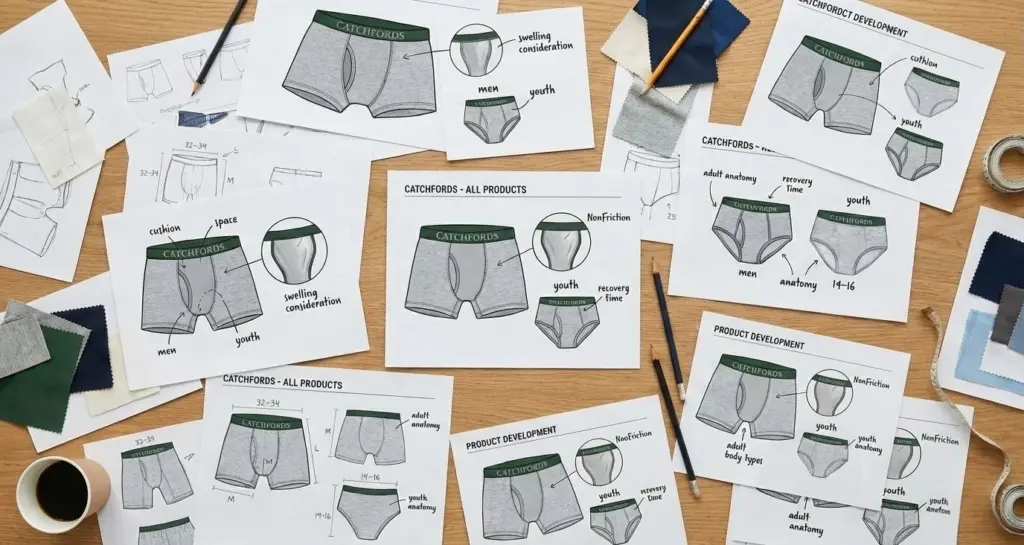
Catchfords exists — to restore dignity when you feel exposed.
Our Nonfriction™ insert gently cushions sensitive skin, creating a protective barrier against clothing. It supports recovery and helps you return to life free from embarrassment, irritation, or soreness.
Frequently Asked Questions
Why does the tip of my penis feel sensitive in clothing after a procedure?
After circumcision or increased exposure, the glans is no longer protected by the foreskin. This can make it more reactive to friction, dryness, and fabric contact during daily movement.
Is it normal for the glans penis to feel raw or exposed?
Yes. Many people describe a raw or exposed sensation, especially when the surface becomes dry or when clothing rubs against it. This is a common part of the adaptation process.
Why does fabric cause sharp or rubbing pain, at the head of my penis?
The glans contains a high concentration of sensory receptors. When exposed, even soft fabrics can create friction that feels sharp, especially during walking or sitting.
Can sensitivity increase before it improves?
Yes. Early exposure often leads to dryness and nerve over‑responsiveness. Many people feel more sensitive before the surface gradually adapts and becomes less reactive.
Why does g;ans penis sensitivity come and go throughout the week?
Fluctuations are common. Heat, sweat, dryness, fabric texture, and activity level can all influence how reactive the area feels on any given day.
Does sweat make penis irritation worse?
Sweat increases friction by making the surface tacky. This can lead to sharper sensations during walking, exercise, or long periods of movement.
Why does dryness make the area feel more sensitive?
Dryness increases surface friction. When the glans loses moisture, fabric contact can feel more abrasive, leading to temporary flare‑ups.
How long does it take for penis sensitivity to settle?
Timelines vary widely. Some people adapt within weeks, while others notice sensitivity for months. Age, activity level, clothing type, and individual skin characteristics all play a role.
Is smothering the penis with petroleum jelly(Vaseline) helpful?
Petroleum jelly can create a temporary barrier on the skin, but it is not always practical or comfortable for daily use. It is not water‑soluble, which means it can be difficult to wash off completely and may require repeated scrubbing. As it wears away during the day, it can become sticky, attract lint or fabric fibers, and lose its protective effect. Many people also find that being fully coated in an oily layer for long periods feels unpleasant, especially since it often needs frequent reapplication to maintain any benefit.
Why does walking feel paralyzing and triggers the most pain?
Walking creates repetitive, rhythmic friction between the glans and fabric. This movement is one of the most common triggers for sharp or reactive sensations.
Is it normal to feel overly sensitive in certain fabrics?
Yes. Jeans, seams, mesh, and textured materials can increase friction. Many people find that smoother fabrics feel more comfortable during the adaptation period.
Can a specialised low‑friction underwear help reduce discomfort?
Many people report that using NonFriction underwear reduces rubbing and makes recovery comfortable early on. While not offering treatment, the fabrics create a barrier between skin and conventional abrasive textiles.
What type of underwear is most comfortable during sensitivity?
Supportive, smooth, NonFriction underwear is often preferred. Catchfords Recovery Briefs were designed specifically to reduce fabric/skin drag providing stable post-procedure support.