



Why These Procedures Are Often Confused (The Real Reason Behind the Uncertainty)
Many people feel confused when comparing circumcision and frenuloplasty because the symptoms often overlap. Tightness, discomfort during movement, or pain during erections can come from the foreskin, the frenulum, or both — and without a clinical exam, it’s nearly impossible to tell which structure is responsible. This overlap leads many individuals to assume circumcision is the only option, when in reality, frenulum‑focused procedures may directly address the root cause. Understanding that these symptoms can originate from different anatomical structures helps explain why the decision feels so unclear at first.
Why this decision can feel overwhelming
Choosing between adult circumcision and frenuloplasty is a common point of confusion for people exploring different approaches to foreskin or frenulum‑related concerns. Both options are well‑known and widely discussed, but they address different aspects of anatomy and can lead to different day‑to‑day experiences.
If you’ve noticed tightness, sensitivity, or challenges with movement or comfort, it’s completely understandable to feel uncertain about which direction to explore. Many people don’t have a clear sense of how circumcision and frenuloplasty differ until someone walks them through it — and even then, the explanation can sometimes feel brief or incomplete.
This guide aims to offer a clearer, more approachable overview by outlining:
- What each approach generally involves and how it relates to the foreskin or frenulum
- The types of concerns people commonly mention when learning about each option
- How the overall experiences are often described in broad, everyday terms
- Why frenulum‑focused procedures are sometimes explored when the main issue relates to tightness in that area
- How to think through these topics so you can have a more informed conversation with a qualified professional
By the end, you’ll have a more grounded understanding of what circumcision and frenuloplasty each involve, helping you feel better prepared for a conversation with a specialist — whether that means exploring an option, taking time to observe how things feel, or simply seeking another perspective.
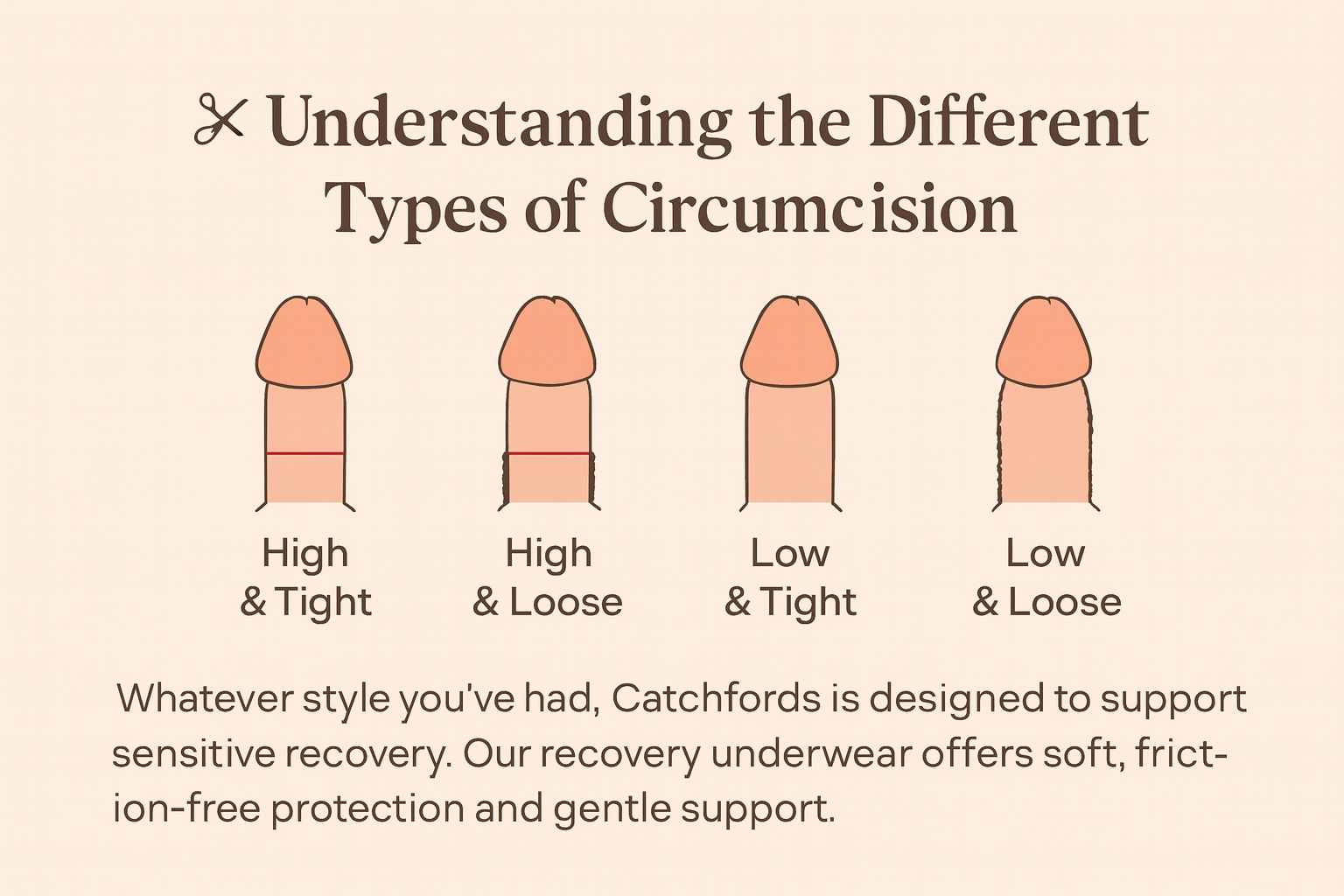
When Frenuloplasty Isn’t Enough (And Why Some Surgeons Recommend Circumcision Instead)
While frenuloplasty is a targeted solution, it isn’t always the right fit. If the foreskin itself is tight, scarred, inflamed, or difficult to retract even after the frenulum is released, surgeons may recommend circumcision or a partial circumcision. This isn’t about being “aggressive” — it’s about addressing the full picture. Some individuals have both a short frenulum and a tight foreskin, and treating only one structure may not fully resolve the issue. Understanding these scenarios helps set realistic expectations and prevents frustration if a surgeon suggests a broader approach.
Circumcision is sometimes recommended not because of tightness alone, but because of repeated irritation, inflammation, or scarring that affects the foreskin’s long‑term function. Conditions like recurrent balanitis, chronic micro‑tears, or long‑standing phimosis can make the foreskin unpredictable or uncomfortable even after frenulum‑focused procedures. In these cases, circumcision becomes a way to prevent recurring problems rather than simply treating a single symptom. This broader context helps individuals understand why circumcision may be suggested even when the frenulum is part of the issue.
Frenuloplasty
Frenuloplasty is a different approach. Rather than changing the foreskin itself, it focuses on the small band of tissue underneath, often discussed when people experience tightness or limited movement in that area. The procedure is generally described as adjusting this band to create a more comfortable range of motion while keeping the foreskin in place.

Sometimes both approaches are discussed together, with attention given to both the foreskin and the band of tissue underneath. In general educational contexts, people are encouraged to explore which area feels most relevant to their own experience — the skin at the tip, the band beneath it, or a combination of both — and to speak with a qualified professional for clarity.
What Each Approach Generally Involves
What Is Adult Circumcision?
Adult circumcision is commonly described as an approach that changes how the foreskin sits or functions. In general educational contexts, it’s explained as the removal of the foreskin — the fold of skin that naturally covers the tip of the penis. Adults often explore this option for a variety of personal, cultural, or health‑related reasons.
People usually learn about circumcision when they’re exploring concerns related to how the foreskin moves, feels, or responds in everyday situations. Educational materials often note that the process involves removing this outer fold of skin and closing the area with stitches that dissolve on their own over time. The change is permanent, and the tip of the penis remains uncovered afterward.
Circumcision is often discussed when the foreskin itself is the main area someone wants to understand or address.
What Is Frenuloplasty?
Frenuloplasty is described as a more focused approach. Instead of changing the foreskin, it relates to the small band of tissue underneath, which naturally varies from person to person. Some people explore this option when they’re curious about tightness or limited movement in that specific area.
In general explanations, frenuloplasty is described as a method that adjusts how this band sits or moves while keeping the foreskin in place. It’s often portrayed as a simpler, more targeted approach compared to circumcision, and many people describe the overall experience as more straightforward.
Frenuloplasty is typically discussed when the band of tissue underneath the foreskin feels like the main area of interest.
Key Differences in Anatomy, Goals, and General Experience
Anatomy Involved
- Circumcision: Involves removing the foreskin
- Frenuloplasty: Involves adjusting the frenulum while keeping the foreskin
Primary Focus
- Circumcision: Often explored when the foreskin itself feels tight, restrictive, or difficult to manage
- Frenuloplasty: Often explored when the band underneath feels short or limiting
General Outcome
- Circumcision: Creates a permanent change where the tip remains uncovered
- Frenuloplasty: Keeps the natural structure while changing how the band moves
General Recovery Experience
- Circumcision: Commonly described as involving more swelling and a longer overall settling‑in period
- Frenuloplasty: Often described as quicker and less involved
Commonly Discussed For
- Circumcision: Situations where the foreskin feels tight, scarred, or difficult to move
- Frenuloplasty: Situations where the band underneath feels short or restrictive
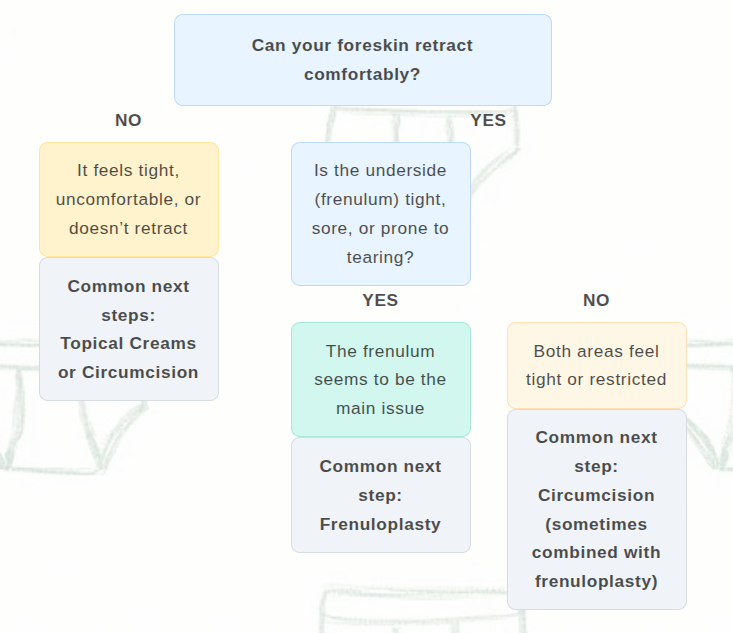
Clinical Pathway: Which Procedure Aligns With Your Symptoms
What Your Body Actually Faces After These Procedures
Circumcision and frenuloplasty are straightforward for surgeons — the real challenge is everything that happens afterward.The skin in this area is newly exposed, highly sensitive, and reacts to every step you take, every piece of clothing you wear,and every nighttime erection you didn’t ask for. Even when discomfort is low, the tissue can be sensitive to friction, pulling, and accidental contact.
That’s why clinicians emphasize the environment around the area just as much as the procedure itself. In the early days, the region benefits from stability, low friction, and protection from rubbing or movement. Regular underwear doesn’t provide that — in fact, it often creates the exact issues men describe during this period.
This isn’t about “speeding up recovery.” It’s about creating a low‑irritation environment so the area feels supported and protected while it naturally settles. A proper support garment helps reduce the everyday triggers that make this phase uncomfortable, which is why men who prepare for the realities of the postoperative environment often describe a much smoother day‑to‑day experience.


Circumcision vs. Frenuloplasty — At a Glance
| Issue / Symptom | Circumcision Helps | Frenuloplasty Helps |
|---|---|---|
| Tight foreskin that doesn’t retract | ✔️ | ✖️ |
| Discomfort when pulling the foreskin back | ✔️ | ✖️ |
| Recurring irritation or infections under the foreskin | ✔️ | ✖️ |
| Foreskin tearing or areas of scarring | ✔️ | ✖️ |
| Downward pulling or tightness during erections | ✖️ | ✔️ |
| Frenulum tearing or sensitivity | ✖️ | ✔️ |
| Preference to keep the foreskin | ✖️ | ✔️ |
| Both foreskin and frenulum concerns | Sometimes | Sometimes |
Who Performs These Procedures
Circumcision and frenuloplasty are both performed by urologists — doctors who specialize in the urinary and genital systems. These procedures are part of their routine surgical work, and many urologists perform them regularly. Some family doctors or general surgeons offer circumcision as well, but frenuloplasty is usually done by a urologist because it involves a more detailed understanding of the frenulum and how it relates to erections.
What matters most isn’t the type of clinic — it’s the surgeon’s experience with adult cases. Adult circumcision and adult frenuloplasty differ from childhood procedures, and choosing someone who frequently treats adults helps ensure clearer expectations and a smoother overall experience.
Most men start with a simple consultation. You describe your symptoms, the doctor examines the foreskin and frenulum, and they explain which structure is contributing to the issue. From there, the decision becomes much clearer.
How to Talk to a Doctor About This
Most men worry they won’t know what to say, but doctors hear these concerns every day. You don’t need medical language — you just need to describe what you feel. The simplest approach is to explain when the problem appears: when you pull the foreskin back, when you’re erect, or when the underside feels tight or strained. That’s usually enough for a urologist to understand whether the issue is the foreskin, the frenulum, or both.
You can also mention if you’ve had tearing, bleeding, infections, or if you avoid sex because you’re worried it will hurt. These aren’t embarrassing details — they’re exactly the information a doctor uses to determine which procedure fits your situation. A short conversation and a quick exam are often all it takes for them to explain what’s causing the problem and what options are available.
The goal isn’t to use perfect terminology. It’s simply to be honest about what’s happening so they can guide you toward the right next step.
Micro‑FAQ
Can I fix this without surgery
Sometimes — if the issue is mild tightness. But if there’s tearing, scarring, or a short frenulum, creams and stretching usually don’t change the underlying structure.
How do I know if it’s the foreskin or the frenulum
If the discomfort is at the tip when pulling back, it’s often the foreskin. If the discomfort is underneath during erections, it’s often the frenulum. A quick exam confirms it.
Is this common
Very. Most men simply don’t talk about it. Urologists see these concerns regularly.
Does age matter
Not really. Men in their teens, 20s, 30s, 40s, and beyond get these procedures. What matters is the symptoms, not the age.
Can both procedures be done at once
Yes. If both the foreskin and frenulum are contributing to the issue, they’re often treated in the same operation.
How long do I need support garments
Longer than most people expect. Even when discomfort is low, the area stays sensitive to friction and movement for several weeks.