


Frenulum Recovery Guide: Healing Timeline, Stitches, Swelling & Aftercare
In one sentence:
Recovering from frenuloplasty — or a similar frenulum procedure such as a frenectomy — is usually smooth, but the underside stitches can feel tight, sensitive, or “tuggy.” This guide explains what’s normal and how to stay comfortable during healing.
Frenulum procedures such as frenuloplasty (reshaping and lengthening the frenulum) and frenectomy (removing the frenulum entirely) are effective treatments for a tight or repeatedly tearing frenulum. Because the frenulum sits on the underside of the glans — an area rich in nerve endings and natural tension — recovery can feel more noticeable than people expect. This guide explains the full healing timeline, what sensations are normal, and how to reduce friction and irritation during recovery.
What the Frenulum Does
The frenulum is the thin, flexible band of tissue on the underside of the glans. It helps guide the movement of the foreskin and contributes to stability and sensation. When it is the right length, the skin moves comfortably during daily activity, hygiene, and erections.
When the frenulum is too short or tight (a condition known as frenulum breve), it can cause:
- A pulling or “tugging” sensation during movement or erections.
- Downward bending of the penis when the frenulum is under tension.
- Small tears that heal with scar tissue, making the area even tighter.
- Pain or discomfort during intimacy.
A frenuloplasty gently lengthens or reshapes this tissue, while a frenectomy removes it entirely. Both procedures aim to restore comfortable movement and prevent repeated tearing.
Frenuloplasty vs. Frenectomy (Quick Comparison)
- Frenuloplasty: Reshapes and lengthens the frenulum; preserves tissue; most common option.
- Frenectomy: Removes the frenulum; used when the tissue is heavily scarred or repeatedly tearing.
- Recovery: Nearly identical — same stitches, same swelling patterns, same 4–6 week healing timeline.
Why Frenulum Recovery Feels Unique
Even though frenuloplasty and frenectomy are minor procedures, recovery can feel surprisingly noticeable. This is because the frenulum sits in a location where the skin naturally stretches, bends, and moves throughout the day — even when you’re not aware of it.
Three reasons recovery feels different:
- High sensitivity: The underside of the glans contains dense nerve endings, so even mild swelling or stitches can feel amplified.
- Natural tension: Erections place direct stretch on the frenulum area, which can make stitches feel tight or “pulling.”
- Friction from clothing: Standard underwear can rub against the incision, especially during the first 1–2 weeks.
These sensations are normal and expected — and they improve steadily as the stitches soften and dissolve.
How Long Frenuloplasty or Frenectomy Recovery Takes
Most people heal enough to return to normal daily activities within 7–10 days, with full recovery typically taking 4–6 weeks. Whether you had a frenuloplasty or a frenectomy, the healing process is nearly identical: stitches dissolve on their own, swelling fades, and sensitivity gradually settles.
At a glance:
- Days 1–3: Swelling, tenderness, and tightness are common.
- Days 4–7: Stitches soften; movement becomes more comfortable.
- Week 2: Most stitches dissolve; sensitivity decreases.
- Week 3–4: Tugging sensations fade; swelling mostly gone.
- Week 5–6: Full return to normal activities, including intimacy.
Healing varies from person to person, but most people notice meaningful improvement every few days.
Recovery Timeline: Day‑by‑Day & Week‑by‑Week
Healing after a frenuloplasty or frenectomy follows a predictable pattern. Most people notice steady improvement every few days. This timeline breaks recovery into simple stages so you always know what’s normal.
Quick Overview
- Days 1–3: Swelling, tightness, tenderness.
- Days 4–7: Stitches soften; movement easier.
- Week 2: Most stitches dissolve; sensitivity drops.
- Week 3–4: Tugging fades; swelling mostly gone.
- Week 5–6: Full return to normal activities.
Days 1–3: The Immediate Post‑Op Phase
This is the most sensitive stage. Swelling and tightness peak early, and the stitches feel firm or “pokey.”
- Swelling peaks within 48 hours.
- Mild spotting or oozing is normal.
- Stitches feel tight and may rub slightly.
- Walking is fine; sudden movements may sting.
Supportive underwear helps reduce friction and discomfort during this stage.
Days 4–7: Stitches Begin to Soften
By the end of the first week, most people feel noticeably better. Swelling settles and movement becomes easier.
- Stitches soften and irritate less.
- Bruising fades; incision looks cleaner.
- Tugging during erections still common.
- Clothing friction becomes more noticeable.
Week 2: Dissolving Stitches & Reduced Sensitivity
Most dissolvable stitches begin to fall out or dissolve this week. The incision may look uneven as they release — this is normal.
- Sharp sensations decrease significantly.
- Most people return to work or school.
- Remaining stitches may feel loose or “stringy.”
- Swelling continues to reduce.
Week 3–4: Settling Tissue & Final Healing
The incision is mostly healed. Any remaining stitches dissolve, and the skin begins to feel more natural.
- Tugging sensations fade or disappear.
- Swelling is minimal or gone.
- Incision line becomes smoother.
- Light exercise usually comfortable.
Week 5–6: Full Recovery
The tissue has regained strength, and most people can resume all normal activities, including intimacy.
- Skin movement feels natural again.
- No more pulling or sharp sensations.
- The incision continues to fade over months.
If healing feels slow
Some people take a little longer to heal, especially if the frenulum was heavily scarred or had repeated tears before surgery. Mild swelling or sensitivity lasting 6–8 weeks can still be normal.
If pain increases instead of decreases, or if swelling worsens after the first week, it’s worth checking in with your doctor.
Dissolvable Stitches: What’s Normal
Dissolvable stitches behave differently from person to person. Most soften and fall out on their own, but some dissolve slowly, and a few may need a quick trim by a doctor. These are the three most common outcomes.
Stitches dissolve normally
Soften around days 4–7.
Small pieces fall out naturally.
Incision smooths out by week 3.
Stitches dissolve slowly
One or two stitches linger longer.
Ends may feel “pokey” during movement.
Still considered normal healing.
Stitches need removal
Stitch remains firm after week 4–5.
Feels sharp or catches the skin.
Often men first moisten, then gently pull and slide them out manually, otherwise your Doctor trims it in seconds.
Days 1–3: Stitches feel tight
Days 4–7: Stitches soften
Week 2: Many fall out
Week 3: Most are gone
Week 4–5: Any remaining should be loose
If a stitch is still sharp or irritating after week 4–5, or looks stuck under the skin, a quick check‑in with your doctor is helpful. Most people never need this — the stitches simply soften and disappear on their own.
Erections During Recovery
Erections can feel tight or sharp in the early stages of healing. This tension is expected — the stitches are holding the area still while it heals, and the sensation improves quickly once they begin to soften.
What Normal Erections Feel Like
Tight stretching along the underside.
Brief sharpness when the erection starts.
Settles quickly as the erection goes down.
Improves noticeably after week two.
Uncomfortable (Still Normal)
Sudden sharpness during night erections.
A stitch poking or scratching the skin.
One side feeling tighter than the other.
Tiny spots of blood in week one.
When to Get It Checked
Bleeding that continues after the erection ends.
A stitch visibly tearing with fresh blood.
Severe pain that doesn’t settle afterward.
Swelling that worsens after week one.
Swelling, Bruising & Lymphatic Fluid
The appearance of the penis changes a lot during the first two weeks of healing. Swelling, bruising, and lymphatic fluid are all normal responses — and they often look worse than they feel.
Swelling
Peaks around days 2–4.
Often uneven or lopsided.
Skin may look puffy or balloon‑like.
Improves steadily after the first week.
What’s Normal
Swelling that peaks early and slowly improves.
Bruising that changes color over time.
A small, firm lymphatic lump near the incision.
Yellowish fluid that is not foul‑smelling.
Bruising
Common along the underside and sides.
Color shifts from purple → blue → yellow.
May spread downward due to gravity.
Usually fades by week two.
What’s Not Normal
Swelling that suddenly worsens after week one.
Bruising that becomes darker instead of lighter.
Thick, foul‑smelling discharge.
Redness spreading outward with heat or fever.
Lymphatic Fluid
Clear or slightly yellow fluid.
Can form a soft or firm “lump.”
Often mistaken for infection.
Resolves naturally over 1–3 weeks.
Pain, Sensitivity, Tugging & What to Wear
During the first 1–2 weeks of recovery, it’s normal to feel a mix of tightness, sharpness, and sensitivity around the underside of the glans. The frenulum area contains dense nerve endings and naturally stretches during movement and erections, so even mild swelling or stitches can feel amplified. Clothing and support play a major role in how comfortable this stage feels.
In one sentence: Most discomfort comes from tension on the stitches — not from anything going wrong — and the right support can dramatically reduce pain, rubbing, and tugging.
Pain
Pain after a frenulum procedure is usually mild to moderate. It often feels like a sharp pinch when the area stretches, followed by a dull ache that settles quickly. Most people notice the sharpness decrease significantly once the stitches begin dissolving around days 4–7.
- Sharp “pinch” when the skin stretches.
- Dull ache after movement or erections.
- More noticeable at night or first thing in the morning.
Sensitivity
The underside of the glans is naturally sensitive, and swelling makes this even more noticeable. Light contact from clothing, water, or movement can feel sharper than expected during the first week.
- Heightened sensitivity along the incision line.
- Stinging when the area rubs against fabric.
- Improves quickly once swelling settles.
Tugging Sensations
Tugging is one of the most common sensations during recovery. It happens because the stitches temporarily hold the skin in place while the tissue heals. Erections, walking, and sitting can all create a brief pulling feeling.
- A pulling or stretching feeling during movement.
- More noticeable during erections.
- Settles as stitches soften and dissolve.
When to get it checked:
- Pain that gets worse instead of better after day 3–4.
- Severe pain that doesn’t settle once an erection goes down.
- Redness spreading outward with heat or fever.
- A sudden increase in swelling after the first week.
What to Wear During Recovery
Clothing makes a bigger difference than most people expect. The underside of the penis is sensitive, the stitches sit in a high‑movement area, and friction from regular underwear can slow healing or make discomfort feel sharper. Choosing the right support during the first 1–2 weeks can dramatically improve comfort.
In short:
- You want support, not compression.
- You want soft fabric, not rough seams.
- You want minimal movement, not loose swinging.
- You want reduced friction, not rubbing or sticking.
Why Support Matters
After a frenulum procedure, the area is sensitive to movement. Even small shifts during walking, sitting, or sleeping can create a tugging sensation on the stitches. Supportive underwear keeps the penis in a stable position, reducing friction and preventing downward pulling during erections.
What to Avoid
- Loose boxers: allow too much movement and cause rubbing.
- Thick cotton: traps moisture and sticks to the incision.
- Center seams: can press directly on the healing area.
- Compression shorts: too tight in the early days.
The ideal choice: Soft, supportive briefs that hold everything comfortably in place without squeezing. They reduce friction, prevent downward tugging during erections, and keep swelling more controlled.
Why Conventional Underwear Doesn’t Work
Standard underwear was never designed for frenulum recovery. Cotton fabrics rub against the underside of the glans, especially when swelling is present, and this friction can make sensitivity, stinging, and tugging feel significantly worse. Even soft fabrics can cling to the incision as moisture builds throughout the day.
- Swelling increases contact between the underside and fabric.
- Cotton fibers drag across the healing frenulum area.
- Stitches can catch on textured materials during movement.
- Loose underwear allows downward pulling during erections.
A DEDICATED RECOVERY GARMENT FOR FORESKIN AND FRENULUM PROCEDURES HAD NEVER EXISTED — CATCHFORDS WAS CREATED TO FILL THAT GAP.
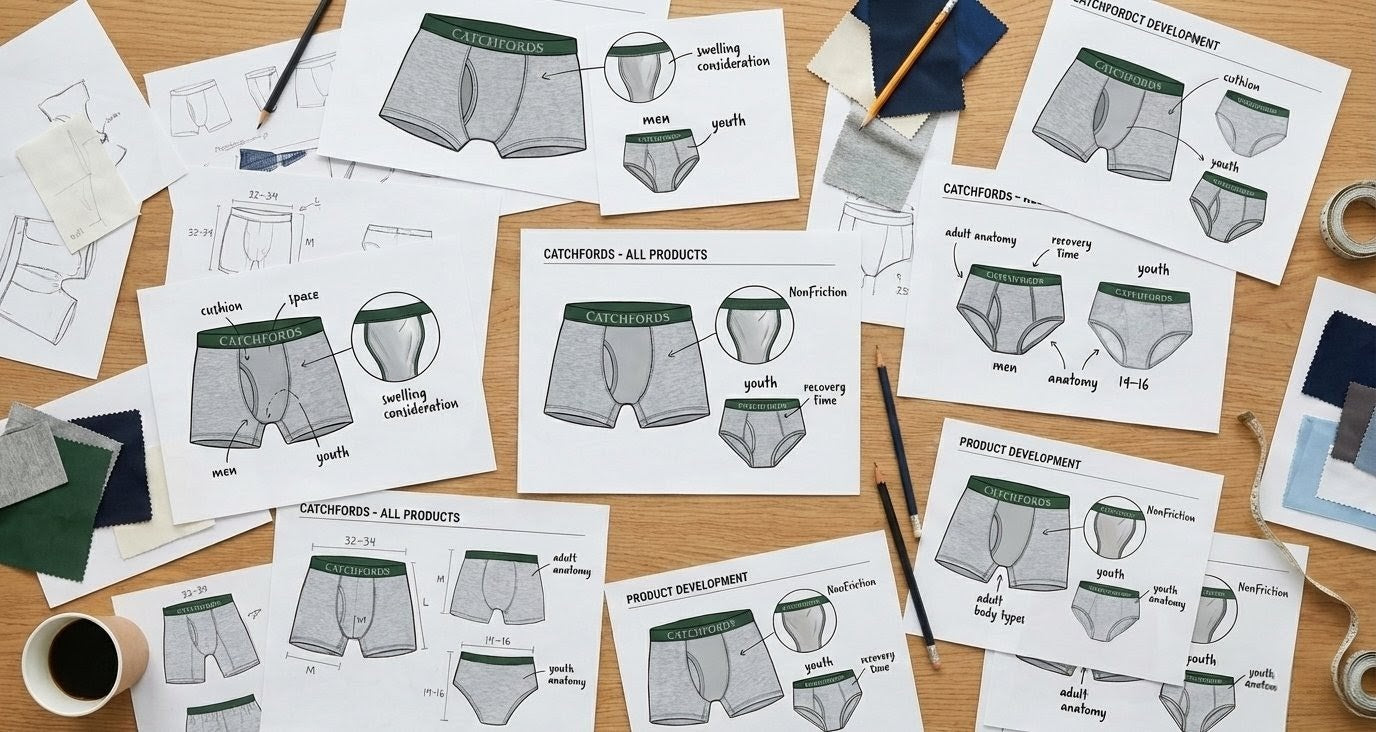
Catchfords briefs were engineered to solve the exact problems men face during the first 1–2 weeks of healing — especially friction, stitch‑catching, and underside sensitivity.
The NonFriction Pouch/Liner (What Makes It Different)
The underside of the glans — where the frenulum sits — is the most sensitive part of recovery. This is where swelling collects, where stitches are placed, and where friction hurts the most. The NonFriction Textiles were developed to protect this exact zone.
- Zero‑friction underside pouch/panel: prevents rubbing against the healing frenulum.
- Stitch‑safe surface: engineered to splinter against stitches instead of catching.
- Glide‑smooth contact: reduces stinging from fabric drag during movement.
- Swelling‑friendly design: prevents the “ballooning” area from sticking to cotton.
This is the first garment designed around the realities of frenulum recovery — unlike the insulting Jock-Strap devices found on bargain websites. It keeps the underside protected, reduces irritation, and minimizes the tugging sensations that happen when fabric pulls against the incision.
Why this matters:
- Less friction = less pain and sensitivity.
- No stitch‑catching = fewer sharp “pulling” moments.
- Better support = fewer nighttime discomfort spikes.
- Protected underside = smoother, calmer healing.
With this foundation in place, the next section introduces Catchfords Recovery Briefs — built specifically for frenulum procedures and designed to make the first 1–2 weeks and beyond, dramatically more comfortable.
Catchfords exists — to restore dignity when you feel exposed.
Our Nonfriction™ insert gently cushions sensitive skin, creating a protective barrier against clothing. It supports recovery and helps you return to life free from embarrassment, irritation, or soreness.
Frequently Asked Questions
How long does swelling usually last?
Swelling typically peaks around days 2–4 and then improves steadily. Most swelling is gone by the end of week two.
Why does the underside feel so sensitive?
The underside of the glans contains dense nerve endings. Swelling and stitches amplify this sensitivity during the first week.
Why do erections hurt during recovery?
Erections stretch the healing tissue and briefly pull on the stitches. The sensation settles once the erection goes down.
When do stitches dissolve?
Most stitches soften around days 4–7 and dissolve by week two. Small remnants may linger a bit longer.
Is yellow fluid normal?
Yes — clear or slightly yellow lymphatic fluid is common and can form a soft or firm lump near the incision.
Why does it look worse on day 3?
Swelling and bruising peak early. Day 3 often looks worse than day 1, but this is normal and improves quickly afterward.
Can I shower normally?
Yes — gentle showering is fine. Avoid scrubbing the area and pat dry instead of rubbing.
When can I resume sexual activity?
Most people resume sexual activity around 4–6 weeks, once the incision is healed and sensitivity has settled.
What if a stitch comes loose?
A single loose stitch is usually harmless. If there’s persistent bleeding or a visible tear, contact your doctor.
Is uneven swelling normal?
Yes — swelling often collects more on one side. This is common and not a sign of a problem.
Why does friction make everything feel worse?
Cotton fabrics drag across the healing underside, increasing stinging and tugging sensations — especially when swelling is present.
What underwear should I wear?
Supportive briefs with minimal friction are ideal. This is why Catchfords developed the first recovery garment specifically for frenulum procedures — to protect the underside, prevent stitch‑catching, and reduce irritation during the most sensitive stage of healing.
We undertsand that everyone’s issues can be particular and unique. Each person experiences their recovery differently.

Talk to your doctor to see what treatment options are best for you.
There are large communities of men willing to share their experiences and incites, who have gone through it too. Catchfords included.