

Frenulum Tears: What They Are, Why They Happen & Common Experiences
In one sentence:
A frenulum tear is a small split in the thin band of tissue beneath the glans, often caused by sudden stretching, friction, or tightness, and is known for feeling sharper than expected due to the area’s sensitivity.
A frenulum tear occurs when the frenulum—the small, elastic band of tissue connecting the underside of the glans to the foreskin—stretches beyond its limit. Because this tissue contains many nerve endings, even a small tear can feel intense or alarming. Tears can happen during everyday movement, sports, or sexual activity, and while they often look dramatic, most people describe them as short‑lived but uncomfortable. This page focuses on general information, comfort considerations, and when people typically seek medical guidance.
What the frenulum does
The frenulum helps guide the movement of the foreskin and contributes to overall sensitivity. Its elasticity varies from person to person, and some individuals naturally have a shorter or tighter frenulum. Because the tissue is thin and richly innervated, sudden stretching or friction can lead to a small tear that feels sharper than expected.
Common situations where tears occur
Frenulum tears can occur in a wide range of everyday scenarios. Many people report a sudden sting followed by brief bleeding, often during moments of unexpected tension or friction. Below are common patterns—not causes or diagnoses—described by individuals who have experienced a tear.
Sudden stretching
Rapid movement during sports or physical activity
Unexpected tension on the foreskin
Accidental bending or abrupt motion
Friction & irritation
Dry skin or low lubrication during sexual activity
Rubbing from tight clothing or athletic gear
Existing sensitivity or mild inflammation
Most Common Situations Where Frenulum Tears Occur
Approximate self‑reported patterns from men describing frenulum tears
Frenulum tears can happen in a variety of everyday situations. These estimates reflect common patterns men report when describing how a tear occurred — often involving sudden stretching, friction, or existing tightness. Experiences vary widely, and these ranges are illustrative rather than clinical.
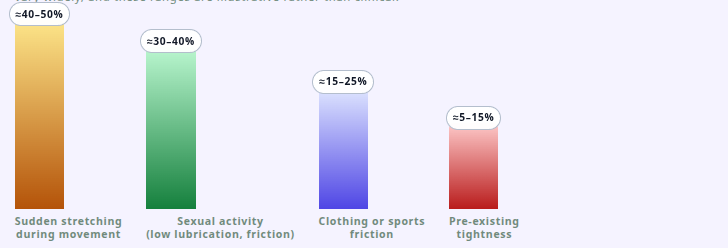
These percentages are illustrative and based on common self‑reported experiences from men describing frenulum tears. They are not diagnostic, and individual situations vary.

What People Typically Notice After a Frenulum Tear
A frenulum tear is small, but the area is sensitive — which means the experience can feel far more dramatic than the size of the tear itself. Most people describe a sudden sting, brief bleeding, and a wave of hypersensitivity that makes clothing contact uncomfortable. This section explains the sensations people commonly report, why the area feels so reactive, and how friction becomes the main barrier to normal movement.
Quick Overview
- Sudden sting: Most people describe a sharp, surprising sensation at the moment of the tear.
- Brief bleeding: The frenulum is thin and vascular, so even small tears may look dramatic.
- Heightened sensitivity: Clothing contact becomes the main source of discomfort.
- Movement hesitation: Walking, bending, and sitting may feel awkward or protective.
- Emotional reaction: Surprise, embarrassment, or anxiety are extremely common.
- Friction becomes the enemy: The tear itself is small — the sensitivity is what disrupts daily life.
The Sensitivity Spike
After the initial sting fades, the most noticeable issue is hypersensitivity. Even soft fabric can feel sharp or abrasive. This is why many people describe the hours and days after a tear as “fine mentally, but not functional physically.” The tear is small — the sensitivity is what stops you.
- Walking becomes slow and protective.
- Underwear seams feel exaggerated.
- Moisture or sweat increases irritation.
- Daily tasks like sitting, bending, or getting in and out of a car feel awkward.
- A low‑friction garment helps reduce the “every step hurts” effect.
When People Usually Seek Medical Guidance
Most frenulum tears heal without intervention, but people often seek reassurance — not because the tear is severe, but because the area is sensitive and the experience can be alarming. The following patterns reflect when individuals typically reach out to a clinician for clarity or peace of mind.
- Bleeding that seems to last longer than expected.
- Repeated tearing in the same spot.
- Concerns about infection or unusual irritation.
- Questions about whether their frenulum is naturally tight.
- Discomfort that interferes with daily movement.
- Curiosity about long‑term options if tears happen frequently.
The Functional Impact
The tear itself is small — the disruption comes from friction sensitivity. People often feel ready to return to work, school, or routine, but clothing contact stops them. This creates a short period of “non‑functional time” where you’re not sick, but you’re not mobile either. Reducing friction helps restore normal movement sooner.
- You feel fine, but clothing contact is the barrier.
- Daily tasks become slow and protective.
- Confidence drops because the area feels exposed.
- A low‑profile garment helps restore functional mobility.
Passive Protection: Designed for Sensitive Days
A comfort‑focused garment supports movement without drawing attention to the area. It reduces friction, prevents abrupt fabric contact, and helps you move more naturally during the most sensitive days — without looking like recovery gear.
- Invisible under clothing.
- No rigid outline.
- No adjustments or straps.
- Supports movement without pressure.
- Designed for the days when sensitivity is the main barrier.

Types & Locations of Frenulum Tears
Frenulum tears tend to occur in predictable locations and follow recognizable patterns. While every body is different, people consistently describe similar types of tears and similar sensations depending on where the tear occurs. This table organizes the most common experiences so readers can understand what they’re noticing without guessing.
| Type or Location | What it looks like | What people commonly report |
|---|---|---|
| Distal tear (near the glans) | A small split at the upper end of the frenulum, closest to the glans. | Often the most sensitive location; even light fabric contact can feel sharp or “electric.” This is the most commonly reported tear. |
| Mid‑frenulum tear | A split along the middle portion of the frenulum. | Usually caused by sudden stretching. Sensitivity is moderate, and movement may feel “tight” for a few days. |
| Proximal tear (near the shaft) | A tear at the lower end of the frenulum, closer to the shaft skin. | Less common. Sometimes associated with a naturally tight frenulum. Sensitivity is noticeable but less intense than distal tears. |
| Surface split | A thin, shallow line on the surface of the frenulum. | Brief sting, brief bleeding, and quick sensitivity. Often described as “small but sharp.” |
| Partial‑thickness tear | A deeper split involving more of the frenulum’s thickness. | More dramatic bleeding and more prolonged sensitivity. Clothing friction becomes the main barrier to movement. |
| Full‑length tear | A tear that runs along most or all of the frenulum. | Rare. Often leads people to seek evaluation due to the amount of bleeding and the sudden loss of tension in the area. |
Key takeaway:
The location and depth of a frenulum tear influence how sensitive the area feels afterward. Distal tears tend to feel the sharpest, while deeper tears create more prolonged friction sensitivity — which is why comfort‑focused, low‑friction support can make such a meaningful difference during recovery.

Short‑Term Comfort, Daily Living & Privacy After a Frenulum Tear
A frenulum tear is small, but the area is sensitive — which means friction, moisture, and movement can feel exaggerated for a few days. Most people describe a short period where clothing contact becomes the main barrier to comfort. This section explains the practical steps people take to stay comfortable, how daily routines shift temporarily, and why privacy matters so much during recovery.
- Reducing friction: The most important short‑term comfort factor is minimizing rubbing from fabric. Soft, smooth materials and low‑friction underwear help prevent the “sharp” sensation people feel when the area brushes against clothing.
- Gentle cleaning: Many people prefer rinsing with water only. Harsh soaps, scrubbing, or scented products can increase sensitivity. Patting dry — not wiping — is commonly described as more comfortable.
- Movement adjustments: Walking may feel protective for a day or two. People often avoid long strides, sudden bending, or tight clothing until sensitivity decreases.
- Moisture management: Sweat can increase irritation. Breathable fabrics and avoiding prolonged dampness help keep the area comfortable.
- Privacy & emotional comfort: A frenulum tear can feel embarrassing or stressful, especially for teens or young adults. Many people prefer discreet solutions that don’t draw attention or require explanation.
Common short‑term adjustments:
Wearing softer underwear, avoiding tight pants, rinsing gently with water, reducing friction during walking, and choosing breathable fabrics.
Emotional & privacy considerations:
Teens and adults often want recovery to remain private. Low‑profile garments help maintain dignity without announcing that anything happened.
Helpful context:
Most discomfort after a frenulum tear comes from friction, not the tear itself. Small changes in clothing, hygiene, and movement can make the biggest difference — and discreet, comfort‑focused support helps people return to normal routines with confidence.
Recurrent Frenulum Tears & Long‑Term Comfort
Most frenulum tears heal without issue, but some people experience repeated tearing in the same spot. This can happen because of natural tightness, friction patterns, or the way the tissue healed after a previous tear. Recurrent tears often lead people to ask long‑term questions about comfort, mobility, and whether a clinician should evaluate the area.
Repeated tearing in the same location
Many people notice that once the frenulum tears in one spot, that area becomes more prone to reopening. This is often due to the way the tissue heals — slightly tighter, slightly thinner, or more reactive to stretching.
Naturally tight frenulum (short frenulum)
Some individuals naturally have a shorter or less elastic frenulum. When tension builds during movement or intimacy, the tissue may tear more easily, especially if lubrication is low or friction is high.
Sensitivity that lingers after a previous tear
Even after the skin closes, the area may remain sensitive for a while. Clothing friction, sweat, or sudden movement can irritate the healing tissue, making another tear more likely.
Questions about long‑term options
People with frequent tears often ask clinicians about long‑term comfort solutions — whether the frenulum is naturally tight, whether stretching is appropriate, or whether a minor procedure might help reduce recurrence.
Insight:
Recurrent tears are less about the size of the tear and more about the sensitivity that follows. The area becomes reactive, making friction the main barrier to normal movement. This is why many people look for ways to protect the area during healing and reduce irritation during daily life.
Where comfort matters most:
People dealing with repeated tears often describe the same challenge — they feel mentally ready to return to work, school, or routine, but clothing contact stops them (especially for circumcised males, whose frenulum, if preserved, is always exposed). A low‑friction, supportive garment helps reduce irritation during healing and provides discreet comfort during the days when sensitivity is highest. This becomes especially important for anyone considering long‑term solutions or waiting for a clinician’s evaluation.
Recovery, Aftercare & Day‑to‑Day Comfort
A frenulum tear is small, but the area is sensitive — which means friction, moisture, and movement can feel exaggerated for a few days. Many people focus on reducing rubbing, keeping the area clean, and choosing clothing that doesn’t irritate the healing tissue.
What to expect during healing
Sensitivity is usually highest in the first few days. The area may feel sharp, reactive, or “zingy” when fabric brushes against it. Most people describe steady improvement as the tissue settles and friction decreases.
Managing movement and friction
Walking, bending, and clothing seams can irritate the healing spot. A low‑friction layer helps reduce rubbing and makes daily movement feel more manageable while the area calms down.
Keeping the area clean
Many people prefer rinsing gently with warm water and patting dry. Avoiding harsh soaps or scrubbing helps prevent additional irritation. Clean, breathable fabric against the skin can support comfort during this stage.
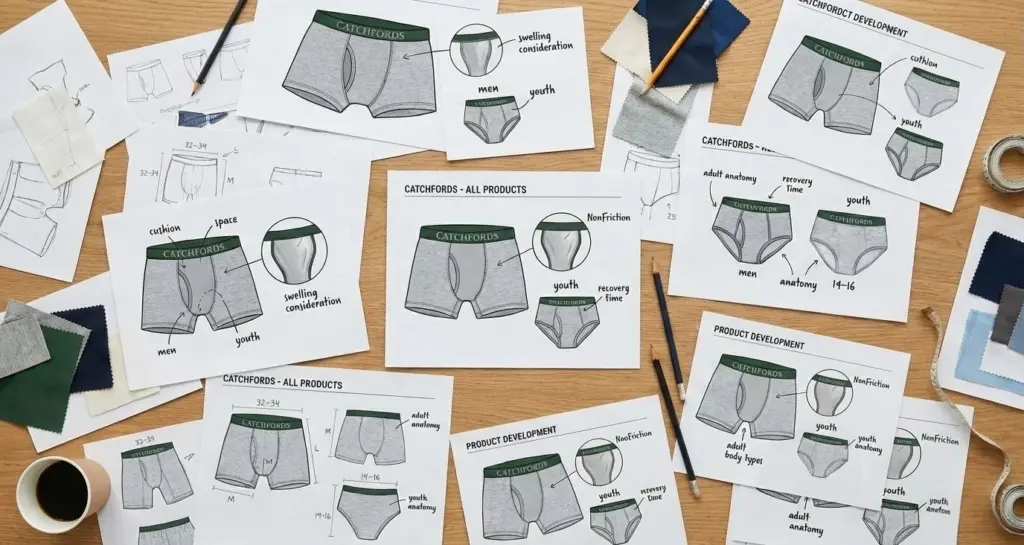
A low‑friction recovery brief can make a meaningful difference during the first few days after a tear. Many people find that smoother fabric and a stable fit help reduce irritation and support comfortable movement while the area heals. NonFriction™ recovery briefs become even more important if your clinician recommends moving forward with a frenulum corrective procedure.
Catchfords exists — to restore dignity when recovery feels exposed.
Our Nonfriction™ insert gently cushions sensitive skin, creating a protective barrier against clothing. It supports recovery and helps you return to life free from embarrassment, irritation, or soreness.
Frequently Asked Questions
Is a frenulum tear common?
Yes. Many men experience at least one frenulum tear in their lifetime. The tissue is thin and highly sensitive, so even a small stretch or moment of friction can cause a brief split.
Why does a small tear feel so sharp or intense?
The frenulum contains many nerve endings. Even a tiny split can create a sudden, sharp sensation followed by lingering sensitivity, especially when fabric touches the area.
How long does sensitivity usually last?
Most people describe a few days of heightened sensitivity. The tear itself is small — friction from clothing is what prolongs discomfort. Reducing rubbing helps the area feel normal sooner.
Why does the same spot keep tearing?
Once a tear occurs, the tissue may heal slightly tighter or thinner, making it more reactive to stretching. This is why recurrent tears often happen in the exact same location.
Does the location of the tear matter?
Yes. Tears closer to the glans (distal tears) tend to feel the most sensitive because that area has the highest nerve density. Mid‑frenulum and proximal tears are usually less intense but still reactive to friction.
Is bleeding normal?
Brief bleeding is commonly reported. The frenulum is thin and vascular, so even small tears can look dramatic. People usually describe the bleeding as short‑lived.
When do people usually seek medical guidance?
People often reach out if the tear keeps reopening, if bleeding seems prolonged, if the area looks unusually irritated, or if they’re concerned about natural tightness or long‑term comfort.
Can a frenulum tear heal on its own?
Most do. The main challenge isn’t the tear itself — it’s avoiding friction while the area settles. Many people focus on gentle cleaning and reducing rubbing during the first few days.
Does sweat or moisture make sensitivity worse?
Yes. Sweat increases stickiness and friction, which can make the area feel sharper or more irritated during walking or exercise. Breathable fabrics help reduce this effect.
Can a low‑friction layer really help during recovery?
Many people report that a smooth, low‑drag fabric layer makes a noticeable difference. It doesn’t change the tear — it simply reduces rubbing so daily movement feels more manageable. This is especially relevant for circumcised men, whose preserved frenulum remains constantly exposed to fabric and movement.
What underwear works best after a frenulum tear?
Supportive, low‑friction briefs are ideal. They help prevent the sudden “zing” sensation caused by fabric catching on the area. Many people use them during the first few days or whenever sensitivity flares.
Do recurrent tears mean I need a procedure?
Not necessarily. Some people explore long‑term options if tears happen frequently, but many simply manage sensitivity with better friction control. A clinician can explain whether evaluation is appropriate based on your situation.