


Preputioplasty: A Foreskin‑Preserving Treatment for Phimosis
In one sentence:
Preputioplasty widens a tight foreskin without removing it, offering a fast‑healing, minimally invasive alternative to circumcision for children, teens, and adults.
What is preputioplasty?
Preputioplasty is a surgical technique used to treat phimosis while preserving the foreskin. Instead of removing tissue, the surgeon makes small, controlled incisions in the tight ring of the foreskin and closes them in a way that gently widens the opening. This restores comfortable retraction while maintaining the foreskin’s natural appearance and function.
The procedure is quick (usually 10–20 minutes), has a high success rate, and typically involves far less discomfort and downtime than circumcision. It is a preferred option for patients who want a conservative, tissue‑sparing approach.
Who is preputioplasty for?
Preputioplasty is recommended for individuals with persistent foreskin tightness who want to avoid circumcision. It is commonly chosen by:
- Children with phimosis that has not improved with time or topical treatments
- Teens experiencing painful retraction, ballooning, or tearing
- Adults with discomfort during erections, hygiene challenges, or recurrent inflammation
- Anyone who prefers a foreskin‑preserving alternative to circumcision
For many patients, preputioplasty provides the ideal balance: effective treatment with minimal disruption to appearance, sensation, or daily life.
Approximate outcomes after preputioplasty
Most patients experience a successful, long‑lasting improvement in foreskin mobility. A small percentage may have minor healing issues, and a very small number may eventually require circumcision.
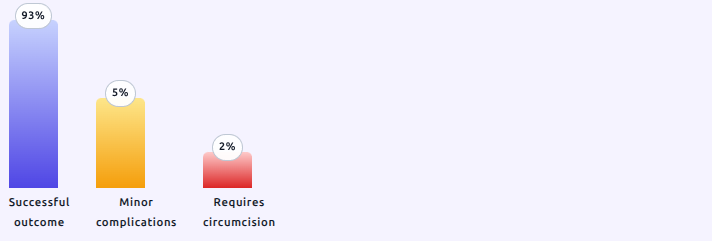
These values are illustrative. Outcomes vary by age, anatomy, and provider experience.
How the Preputioplasty Procedure Works
Preputioplasty is a short, minimally invasive technique that widens a tight foreskin without removing it. These points outline the most common steps in a simple, medically neutral way.
Main Steps of the Procedure
Small incisions are made in the tight ring to release tension and allow the opening to widen.
Side‑to‑side closure gently expands the opening while keeping the foreskin intact and natural‑looking.
Dissolving stitches are used for comfort and disappear on their own as the area heals.
Quick procedure — usually 10–20 minutes, with minimal downtime compared to circumcision.
What This Technique Achieves
These outcomes reflect the purpose of preputioplasty.
Relieves tightness without removing skin
Preserves natural appearance
Improves mobility and comfort
Short recovery with dissolving stitches
Overall Goal
- Widen the foreskin safely and comfortably.
- Maintain full function and sensation.
- Provide a quicker, gentler alternative to circumcision.
Benefits of Preputioplasty
Preputioplasty offers a conservative, foreskin‑preserving approach to treating phimosis. These points highlight the most commonly described advantages of the procedure.
Preserves the foreskin
The foreskin remains intact, maintaining natural appearance, sensation, and function. This is the main reason many patients choose preputioplasty over circumcision.
High success rate
Most patients achieve full, comfortable retraction after healing. The procedure is effective for both children and adults with persistent tightness.
Faster and more comfortable recovery
Because no tissue is removed, swelling and discomfort are typically lower, and daily activities can resume sooner compared to circumcision recovery.
Minimal cosmetic change
Once healed, the foreskin typically looks natural with little to no visible scarring. This makes the procedure appealing for patients who value a conservative approach.
For many patients, preputioplasty provides the ideal balance of effectiveness, comfort, and preservation.
Risks, Recovery, and Aftercare
Preputioplasty typically heals smoothly, but understanding the expected risks, the normal recovery timeline, and the most supportive aftercare practices can make the process feel calmer and more predictable.
Risks & Limitations
Most risks are mild and temporary. These are the commonly described considerations:
Mild swelling, redness, or irritation during early healing
Small, fine scars that typically fade over time
Temporary sensitivity or tightness during early retraction
Rare recurrence of foreskin tightness
A very small chance of needing circumcision later
Recovery Timeline
Days 1–3: Mild swelling and sensitivity are common. Warm water rinsing helps keep the area clean and comfortable.
Days 4–7: Stitches soften, and gentle retraction becomes easier. Most people return to normal daily activity.
Weeks 2–4: Swelling continues to settle. Foreskin mobility improves, and most discomfort fades.
Weeks 4–6: Final cosmetic results appear. Comfortable, full retraction is typical for most patients.
Aftercare Essentials
Gentle daily rinsing
Warm water rinsing keeps the area clean without irritating the incision. Avoid direct soap on the site.
Soft, supportive underwear
A gentle, stable layer reduces friction from clothing and movement during early healing.
Avoid pulling or force
Retraction should be gentle and only as comfortable. Forcing movement can irritate healing tissue.
Pause sexual activity
Teens and adults should avoid sexual activity until cleared by a clinician to prevent irritation or tearing.
With realistic expectations and gentle care, most patients experience a smooth, predictable recovery.

Preputioplasty vs Circumcision: What’s the Difference?
Both procedures treat tightness, but they differ in invasiveness, recovery, and long‑term outcomes. This comparison makes the differences clear at a glance.
Preputioplasty
Preserves the foreskin
Shorter recovery and less swelling
Lower discomfort during healing
Natural appearance maintained
Small chance of tightness returning
Circumcision
Removes the foreskin permanently
Longer recovery and more swelling
Higher discomfort early on
Appearance changes permanently
Eliminates recurrence risk
When to See a Specialist After Preputioplasty
Most preputioplasty recoveries progress smoothly, but some changes deserve a check‑in. These points describe the situations where people most often seek reassurance or medical review.
Rapidly Increasing Swelling
Swelling should slowly improve. Swelling that increases quickly, becomes very firm, or spreads outward is worth evaluating.
Tip: A quick check‑in can rule out irritation or early infection and guide next steps.
Redness That Spreads or Feels Warm
Mild redness is normal early on. Redness that spreads, feels warm, or appears with thick discharge should be assessed.
Normal vs not: Early redness is common — spreading redness deserves a closer look.
Retraction Becoming Painful Again
Retraction should gradually become easier. If it becomes painful again after improving, it may reflect irritation, swelling, or early recurrence of tightness.
Retraction should trend toward easier, not harder. New pain is worth checking.
Stitches Dissolving Too Quickly
Dissolving stitches often loosen earlier than expected, especially as swelling decreases. A few coming out is normal; several at once or visible separation should be reviewed.
When to check in: A few loose stitches are common — multiple or a widening gap deserve review.
When in Doubt
If something feels unusual or changes suddenly, a brief check‑in can provide reassurance and help keep recovery on track.
A soft, low‑friction recovery brief can help reduce irritation, protect dissolving stitches, and make daily movement more comfortable during circumcision or frenulum healing. It doesn’t replace medical care — it simply provides gentle protection when clothing is needed.
Catchfords exists — to restore dignity when recovery feels exposed.
Our Nonfriction™ insert gently cushions sensitive skin, creating a protective barrier against clothing. It supports recovery and helps you return to life free from embarrassment, irritation, or soreness.
Preputioplasty FAQs
How long does preputioplasty take to heal?
Most people experience noticeable improvement within 1–2 weeks. Full comfort and mobility typically return by 4–6 weeks as swelling settles and stitches dissolve naturally.
Will the foreskin look normal after healing?
Yes — preputioplasty is designed to preserve the foreskin’s natural appearance. Once healed, most people report a normal look with minimal or barely visible scarring.
Can tightness come back after preputioplasty?
Recurrence is uncommon but possible. Gentle retraction during recovery, once cleared by a clinician, helps maintain the improved opening and reduces the chance of tightness returning.
Is preputioplasty painful?
Most people describe mild discomfort for a few days. Because no tissue is removed, recovery is typically easier and less painful than circumcision.
When can normal activities resume?
Light activity usually resumes within a few days. More sensitive activities — such as sports or sexual activity — should wait until a clinician confirms healing, typically around 4–6 weeks.
What if a stitch falls out early?
Dissolving stitches often loosen earlier than expected. A single stitch coming out is usually normal. Multiple stitches loosening at once or visible separation should be reviewed by a clinician.
We undertsand that everyone’s issues can be particular and unique. Each person experiences their recovery differently.

Talk to your doctor to see what treatment options are best for you.
There are large communities of men willing to share their experiences and incites, who have gone through it too. Catchfords included.