

Understanding Glans & Foreskin Symptoms:
Redness, Burning, Swelling & More
In one sentence:
Many glans and foreskin sensations—such as redness, burning, swelling, yellow film, or tenderness—are common, often temporary, and can appear after showering, intercourse, friction, or during normal healing after a procedure.
People frequently search for changes in color, sensitivity, or texture involving the glans or foreskin. These sensations can appear in everyday situations or during recovery after a foreskin or frenulum procedure. This page explains what people commonly notice, why these sensations may appear, and how individuals often stay comfortable—without diagnosing or replacing medical guidance.
What this page covers
This guide focuses on the most searched glans and foreskin sensations, including redness, burning, swelling, yellow film, bleeding, and general tenderness. Each section explains what the sensation often feels like, common everyday contexts, and post-procedure context, where it may appear, and comfort‑first approaches people frequently use. If a change is persistent, unclear, or accompanied by a rash or irritation, checking with a clinician can provide clarity and reassurance.
Why the glans and foreskin are sensitive areas
The glans and foreskin contain highly responsive nerve endings and thin, delicate skin. Because the area is naturally moist and protected, even small changes in friction, hygiene, or exposure can create noticeable sensations. Activities like walking, showering, intercourse, or wearing tight clothing can temporarily change how the area feels. Sensations can also appear during normal healing after a foreskin or frenulum procedure.
Why sensations show up easily:
The skin here is thin, moisture levels change quickly, and friction from clothing or movement can create noticeable shifts in sensitivity—even during normal daily routines.
In summary: Glans and foreskin sensations such as redness, burning, swelling, yellow film, bleeding, and tenderness are common and often related to friction, dryness, moisture, exposure, or normal healing.
Most Searched Glans & Foreskin Symptoms
Relative search interest across common glans and foreskin sensations
People search for certain sensations far more often than others. Redness and burning dominate global search behaviour, followed by swelling, yellow film, bleeding, and general tenderness. These levels reflect search interest, not medical prevalence.
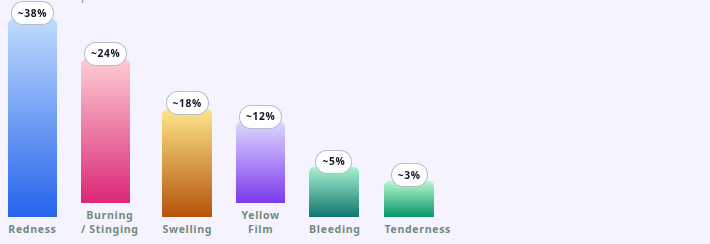
These values are approximate and based on relative search interest across common symptom queries, not clinical rates.
Common Glans & Foreskin Sensations
These are the sensations people most often search for. This chart summarizes how each one typically feels so readers can quickly identify what they’re experiencing without guessing.
| Sensation | What it often feels like |
|---|---|
| Redness | Flushed or patchy color change; often after showering, friction, or product exposure. |
| Burning / Stinging | Warm, sharp, or tingling sensation; commonly noticed after washing or when the glans is exposed. |
| Swelling / Puffiness | Fullness or tightness around the glans or foreskin; may follow movement, friction, or moisture imbalance. |
| Dryness / Peeling | Tight, flaky, or sensitive skin; often linked to over‑washing or cold weather. |
| Itching | Mild tickle or urge to scratch; common with sweat, detergents, or dry skin. |
| Tightness / Pulling | Snug or stretching sensation; often noticed during erections or when the skin is dry. |
| Yellowish Film / Buildup | Thin film from natural oils or moisture; also appears during normal healing. |
Key takeaway:
Most sensations have simple explanations. Understanding how they typically feel helps people interpret changes without unnecessary worry.
Situations That Can Make Sensations More Noticeable
Sensations involving the glans or foreskin often feel stronger in certain situations. These contexts don’t necessarily indicate a problem — they simply make the area more reactive.
Quick Overview
- Stress or fatigue increasing nerve sensitivity.
- Dehydration making urine feel sharper.
- Cold weather reducing skin tolerance.
- Long travel days with heat and moisture buildup.
- Sports: sweat + friction + compression wear.
- Sexual activity causing temporary micro‑irritation.
- Post‑procedure inflammation heightening awareness.
- Extended sitting trapping heat and moisture.
When Sensations Become More Pronounced
When symptoms intensify, people often assume something serious is happening. In reality, several factors can make sensations feel stronger. These are examples clinicians commonly consider — not diagnoses.
- Skin conditions: eczema, dermatitis, psoriasis, lichen sclerosus, allergic reactions.
- Inflammation: balanitis‑type irritation, chemical exposure, post‑friction inflammation.
- Infections: yeast overgrowth, bacterial imbalance, urethral irritation, prostatitis‑related burning.
- Mechanical causes: minor frenulum tears, micro‑tears, tight foreskin, healing adhesions.
- Urethral factors: concentrated urine, urethral inflammation, post‑ejaculatory soreness.
What These Sensations May Lead To
Most sensations settle on their own, but ongoing irritation can create secondary issues. These patterns reflect what people commonly report when discomfort continues.
- Skin: worsening redness, cracking, thickening, increased sensitivity.
- Foreskin: tightness, swelling, recurring micro‑tears.
- Urethra: sharper burning during urination, lingering soreness.
- Healing: slower recovery if irritated areas reopen.
- Comfort: difficulty with movement, hygiene avoidance, increased worry.
A Note on Clarity
Because the area is sensitive and the range of possibilities is broad, many people seek reassurance even when symptoms are mild. Understanding the landscape helps people decide when to monitor and when to check in.
Post‑Procedure Symptoms & Sensations
Many people misinterpret early sensations because the area is sensitive and healing changes feel more intense than they actually are. These are the commonnly reported patterns after glans or foreskin procedures.
- Redness & Flushing: A warm or pink appearance is extremely common. Increased blood flow during healing means even mild friction can make the color deepen temporarily.
- Swelling or Puffiness.: A balloon-like swelling often peaks within 48–72 hours around the incision or frenulum, making the tissue feel tighter than usual.
- Burning or Stinging.: Common when urine touches healing tissue, when the area dries out, or when the glans is newly exposed to the air.
- Yellowish Tissue or Film (Fibrin).: A soft yellow layer is a normal part of wound healing. It is not pus; it’s a natural bridge that forms as skin closes.
- Hypersensitivity.: The area may feel overly reactive — even soft fabric can feel sharp if the glans is newly exposed or nerves are sensitized by swelling.
- Tightness and Itching.: As stitches dissolve and scar tissue begins to remodel, it is normal to feel a tugging sensation or a light itch.
The Physiology (Why it happens):
Blood flow → Redness/Warmth
Inflammation → Swelling/Puffiness
Fibrin → Yellow film (Normal)
Tissue tension → Pulling sensation
Common Patterns:
Symptoms usually peak on days 2–3.
Erections may cause brief spotting.
Itching often means healing is accelerating.
Urination burn is usually from swelling.
Note on Recovery:
Most early sensations have simple physiological explanations. Understanding that yellow tissue, brief spotting, and temporary tightness are part of the normal “healing arc” helps reduce unnecessary worry during the first week.
Why Friction Makes Symptoms Feel Worse
Newly sensitive tissue reacts strongly to rubbing, seams, and fabric movement. Even light contact can exaggerate redness, burning, or swelling — especially during the first days of healing or when the glans is newly exposed.
- Fabric Movement = Repeated Irritation.: Regular underwear shifts with every step, causing micro‑rubbing that can make normal symptoms feel sharper or more intense.
- Seams and Elastic Create Hotspots.: Raised stitching, edges, and waistbands can press against swollen or sensitive areas, increasing warmth, redness, or stinging.
- Dry Fabric Amplifies Burning.: When the glans or incision area dries out, even soft cotton can feel abrasive, making burning sensations more noticeable.
- Exposure Increases Sensitivity.: If the glans is newly exposed, contact with clothing can feel sharp or electric, especially during the first week.
What People Often Try:
Holding fabric away from the area
Using makeshift padding or gauze
Switching to looser clothing
Going without underwear temporarily
Why It’s Not Ideal:
Fabric still shifts during walking
Gauze sticks when dry
Loose clothing still brushes the area
No support → more movement, not less
Where Specialized Recovery Wear Helps:
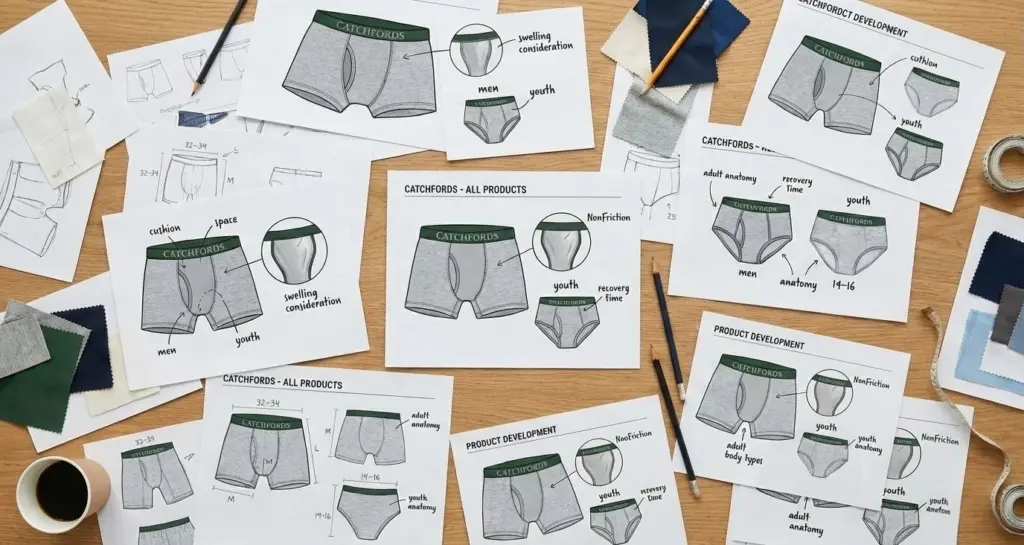
Many people look for underwear designed to reduce friction, limit fabric movement, and keep sensitive tissue comfortably supported. A stable, non‑abrasive pouch can make early sensations feel more manageable during the healing period.
Catchfords exists — to restore dignity when recovery feels exposed.
Our Nonfriction™ insert gently cushions sensitive skin, creating a protective barrier against clothing. It supports recovery and helps you return to life free from embarrassment, irritation, or soreness.
When to Monitor vs. When People Often Seek Guidance
Many glans and foreskin sensations are short‑lived and linked to friction, dryness, exposure, or normal healing. Others feel unclear or persist longer than expected, which is when people commonly decide to check in with a clinician. The patterns below are based on what people often report — they are not diagnoses or rules.
Patterns People Commonly Monitor
Mild redness that fades after reducing friction, changing underwear, or adjusting hygiene products.
Light swelling or puffiness that improves over a few days, especially after a known trigger.
Burning or stinging that eases when urine is less concentrated or when the area stays protected.
Yellowish tissue or film that appears during normal wound healing without strong odor or spreading pain.
Itching that settles with less sweat, gentler washing, or avoiding new products.
Post‑procedure tightness or tugging that gradually softens as healing progresses.
Patterns Where People Often Seek Guidance
Redness that keeps expanding, becomes very intense, or is paired with significant pain or cracking.
Swelling that worsens instead of easing, or makes it difficult to retract or move the foreskin.
Burning with urination that persists, intensifies, or is accompanied by discharge or systemic symptoms.
Yellow or green discharge, strong odor, or fluid that looks different from normal healing tissue.
Any sudden change that feels out of proportion, is hard to explain, or creates ongoing worry.
Important context:
Only a clinician can assess individual symptoms. This page is designed to describe common patterns and comfort‑focused approaches, not to diagnose or replace medical advice. Many people feel more at ease using gentle hygiene, reducing friction, and choosing supportive, non‑abrasive underwear while they monitor how sensations change over time.
Frequently Asked Questions
Why does the glans or foreskin suddenly look red?
Redness is one of the most searched sensations. It often appears after friction, showering, intercourse, or exposure to new products. Increased blood flow and thin skin make color changes more noticeable than in other areas.
What causes burning or stinging after washing or urinating?
Burning commonly appears when the area is dry, newly exposed, or slightly irritated. Urine can feel sharper when the skin is sensitive or when swelling narrows the urethral opening. Many people notice improvement with gentle washing and reduced friction.
Is swelling around the glans or foreskin normal?
Mild puffiness is frequently reported, especially after friction, heat, moisture buildup, or a recent procedure. Swelling often peaks within 48–72 hours and gradually settles as inflammation decreases.
What is the yellow film I’m seeing — is it pus?
A soft yellow layer is often fibrin — a normal part of healing tissue. It can look alarming but is different from pus. It typically appears during the early healing phase and gradually fades as the skin closes.
Why does clothing suddenly feel sharp or irritating?
When the glans is newly exposed or the skin is inflamed, even soft fabric can feel abrasive. Movement, seams, and dryness amplify sensitivity, which is why many people switch to low‑friction, stable underwear during this period.
Can friction really make symptoms feel worse?
Yes. Micro‑rubbing from regular underwear, seams, or movement can intensify redness, burning, and swelling. Sensitive tissue reacts strongly to repeated contact, especially during healing or after a long day of moisture and heat.
Are these sensations always a sign of a problem?
Not necessarily. Many sensations are linked to friction, dryness, sweat, exposure, or normal post‑procedure healing. People often monitor symptoms that improve with reduced irritation or gentler care.
When do people usually seek guidance?
People often check in when redness spreads, swelling worsens, burning persists, discharge appears, or symptoms feel out of proportion. Seeking reassurance is common and doesn’t mean something serious is happening.
Why do symptoms feel stronger after sex, sports, or long days?
Heat, sweat, friction, and compression wear all increase sensitivity. Sexual activity can create temporary micro‑irritation. Long sitting or travel traps moisture, making the area more reactive.
Can specialized underwear help with sensitivity or healing comfort?
Many people prefer underwear designed to reduce friction, limit fabric movement, and keep the area supported. A stable, non‑abrasive pouch can make redness, burning, and swelling feel more manageable during recovery or daily activity.