


Circumcision Techniques for Teens & Adults:
Methods, Precision & Cosmetic Outcomes
In one sentence:
Teen and adult circumcision uses a small set of surgical techniques — such as sleeve resection, Shang Ring, dorsal slit with excision, and laser‑assisted approaches — each offering different levels of control, efficiency, and cosmetic detail depending on the situation.
Circumcision in teens and adults is a structured surgical procedure performed with anesthesia, controlled removal of foreskin, and suturing or tissue glue. Compared with infant methods, these approaches emphasize precision, comfort, and predictable cosmetic planning.
This guide outlines the most widely used techniques worldwide — in clear, non‑graphic language — so you can understand how each method works, why a surgeon may choose it, and what kind of cosmetic appearance it often aims to achieve.
How common is each circumcision technique?
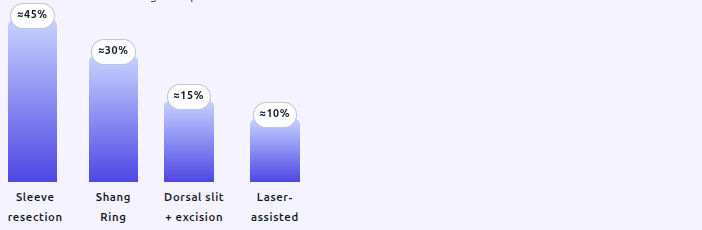
Approximate use of circumcision techniques (teens & adults)
Technique popularity varies by region, surgeon training, and whether the goal is medical, cosmetic, or both. These estimates reflect broad global patterns rather than exact measurements.


What counts as a circumcision technique?
A circumcision technique is more than just “how the foreskin is removed.” It refers to the overall surgical approach — how the skin is marked, how it’s cut, how bleeding is managed, and how the remaining skin is shaped and closed. These choices can influence healing, comfort, and the cosmetic style that develops.
The technique guides the outcome.
Some methods offer detailed cosmetic control, while others emphasize speed, standardization, or reduced bleeding. Understanding the differences can help you discuss which approach aligns with your goals.
How the foreskin is removed
Excision‑based: Sleeve resection, dorsal slit + excision
Device‑based: Shang Ring
Energy‑based: Laser‑assisted cutting
Each method affects how much control the surgeon has over symmetry, tension, and scar placement — all of which contribute to the cosmetic appearance.
How the skin is closed
Sutures: Common for adults
Tissue glue: Used in select cases
No closure: Shang Ring (the device manages this)
Closure technique can influence swelling, comfort, and how smooth the scar appears once healed. It plays a meaningful role in the long‑term look.
How bleeding is controlled
Direct cautery: Often used in sleeve resection
Clamp compression: Shang Ring
Laser sealing: Laser‑assisted methods
Effective bleeding control can help maintain a clear surgical field and support a more predictable cosmetic process, especially in adult procedures.
How much cosmetic control it offers
High control: Sleeve resection
Moderate control: Laser‑assisted
Standardized: Shang Ring
Some techniques allow surgeons to adjust the final “looseness” or “snugness” with fine‑tuned precision. Others create a more uniform, standardized appearance.
In short: A circumcision technique is the combination of cutting method, device choice, closure method, and cosmetic planning. These elements work together to shape the final appearance — not just the removal of foreskin.
A quick look at how each technique feels in real life
Before diving deeper, here’s a high‑level snapshot of what each method is like — not the surgical details, but the general experience people often describe. Think of this as the “vibe check” for each technique.
Sleeve Resection
Often chosen for its detailed control over shaping and scar placement, offering a refined cosmetic approach.
Feels like: a tailored, custom‑planned result.
Shang Ring
A fast, standardized option with minimal bleeding and no sutures. The ring typically stays on for about a week.
Feels like: simple, efficient, predictable.
Dorsal Slit + Excision
Commonly used when the foreskin is very tight. The initial opening improves visibility before tissue is removed.
Feels like: practical, medically focused.
Laser‑Assisted
Creates clean incision edges and may reduce bleeding. Closure is still completed with sutures.
Feels like: modern, precise, streamlined.

How the techniques actually differ
Even though all techniques remove the same tissue, the overall experience can feel different. The pace of early healing, how swelling shows up, day‑to‑day comfort, and the level of cosmetic control all relate to the method a surgeon uses.
Healing speed
Sleeve resection is often described as settling into its early healing phase smoothly, with swelling that tends to follow a consistent pattern.
Shang Ring moves through its early stages in a fairly structured way, with a clear shift once the ring comes off.
Dorsal slit + excision can vary depending on how tight the foreskin was beforehand and how the tissues respond.
Laser‑assisted methods may show a quicker early phase because the laser seals small vessels during the cut.
Swelling patterns
Sleeve resection tends to create even, symmetrical swelling that gradually settles.
Shang Ring keeps most swelling around the device, which makes it straightforward to monitor.
Dorsal slit + excision can look uneven at first because of the initial slit, but this typically evens out as things settle.
Laser‑assisted techniques may show less early swelling since the laser reduces small‑vessel bleeding during the cut.
Cosmetic control
Sleeve resection gives surgeons the most room to fine‑tune snugness, symmetry, and scar placement.
Shang Ring produces a clean, consistent look with less customization built into the method.
Dorsal slit + excision offers a practical, reliable result, with cosmetic detail depending on the surgeon’s approach.
Laser‑assisted methods create crisp incision edges, while the overall cosmetic direction remains similar to traditional excision techniques.
In short: Sleeve resection offers the most adjustability, Shang Ring is streamlined and predictable, dorsal slit is often chosen for very tight foreskin, and laser‑assisted methods can reduce early swelling while following the same general structure as standard surgical approaches.
The Four Main Circumcision Techniques (Clear, Simple Overview)
Teen and adult circumcision uses a few well‑established techniques. Each removes the same tissue, but the experience, early settling, and cosmetic control can differ. This overview breaks down the four main methods used worldwide.
Techniques covered:
- Sleeve Resection
- Shang Ring
- Dorsal Slit + Excision
- Laser‑Assisted
Sleeve Resection: A highly controlled technique where the foreskin is removed in a smooth circular “sleeve.” This gives the surgeon detailed control over symmetry, tension, and scar placement. Early settling tends to follow a steady pattern, and the cosmetic finish is often very polished.
Often chosen for:
People with cosmetic goals, symmetry preferences, or those considering revision.
Shang Ring: A device‑based method using two rings that gently clamp the foreskin. The ring stays on for about a week and doesn’t require sutures. The cosmetic style is consistent, and the early phase tends to feel very structured.
Often chosen for:
People wanting a quick, standardized procedure with a straightforward early recovery.
Dorsal Slit + Excision: A practical approach often used when the foreskin is too tight to retract beforehand. The slit opens the tissue first, followed by controlled removal and suturing. The early appearance can look uneven at first but settles as the tissues relax.
Often chosen for:
Tight foreskin, scarring, or situations where retraction isn’t possible beforehand.
Laser‑Assisted Circumcision: A laser replaces the scalpel for the cutting step, sealing small vessels as it works. This can create clean incision edges and a tidy early appearance. The rest of the procedure — removal and closure — follows the same structure as traditional excision.
Often chosen for:
People who prefer a modern approach with crisp incision edges and a tidy early phase.
Cosmetic Outcomes & Choosing the Right Technique
Each technique removes the same tissue — but they differ in snugness, symmetry, scar placement, and how the skin settles. Below is a clear, structured breakdown to help you compare them.
Snugness
Sleeve resection offers the most adjustability. Shang Ring follows a standardized pattern. Laser‑assisted is similar to sleeve with crisp incision edges. Dorsal slit offers less fine‑tuning.
Scar placement
Sleeve allows very deliberate placement. Shang Ring creates an even, uniform line. Laser produces sharp edges. Dorsal slit may look uneven early on before settling.
Symmetry
Sleeve offers the most room for symmetry work. Shang Ring is consistent by design. Laser resembles sleeve in overall balance. Dorsal slit typically evens out as swelling settles.
Early appearance
Sleeve often looks smooth early on. Shang Ring changes noticeably once the ring is removed. Laser tends to look clean from the start. Dorsal slit can look uneven at first.
Which technique fits your goals?
Often chosen for cosmetic goals: Sleeve resection
Often chosen for a streamlined process: Shang Ring
Often chosen for tight foreskin: Dorsal slit + excision
Often chosen for crisp incision edges: Laser‑assisted
Often chosen for revisions: Sleeve resection
Often chosen by people wanting a simple, predictable process: Shang Ring
Why the Right Underwear Matters During Recovery
The right underwear can make the recovery period feel calmer and more manageable. It helps cut down on friction, limits unnecessary movement, and keeps the area supported as everything settles.
The Initial 7–14 days:
This is when steady support makes the biggest difference. A stable, low‑movement fit helps the area feel more comfortable and reduces the rubbing that can make the early days feel sensitive. Many people say that consistent support makes everyday activities easier to navigate.
Snug, not tight
Enough structure to limit unwanted movement, without squeezing or creating pressure points.
Breathable fabric
Helps keep the area dry and reduces irritation from heat and moisture buildup.
Stable pouch support
Minimizes rubbing and accidental contact — two of the most common sources of discomfort during recovery.
All‑day comfort
Reduces the need for constant adjusting, helping the area feel more settled throughout the day.
Catchfords exists — to restore dignity when you feel exposed.
Our Nonfriction™ insert gently cushions sensitive skin, creating a protective barrier against clothing. It supports recovery and helps you return to life free from embarrassment, irritation, or soreness.

We undertsand that everyone’s issues can be particular and unique. Each person experiences their recovery differently.

Talk to your doctor to see what treatment options are best for you.

There are large communities of men willing to share their experiences and incites, who have gone through it too. Catchfords included.