


(and what Real Men Say Helps)
Recovering from circumcision is already uncomfortable during the day—but for many men, nighttime is the hardest part. Across forums, the same themes come up again and again: sensitivity, underwear pain, fear of nighttime erections, and the simple struggle of trying to get a few hours of uninterrupted sleep.
Below is a breakdown of what men consistently report, paired with practical tips that actually come from lived experience.
🌙 Why Nighttime Feels So Much Harder Than Daytime
During the day, men can distract themselves with movement, work, and routine. At night, everything slows down — and suddenly every sensation feels amplified. The body is still healing, the mind is more aware of discomfort, and the quiet makes every twinge feel louder. Many men describe nighttime as the moment when recovery becomes real: the sensitivity, the swelling, the fear of pulling stitches, and the unpredictability of erections all collide in the dark. It’s not just physical discomfort — it’s the emotional weight of wanting rest but feeling like the body won’t cooperate. Nighttime erections are normal—even when you’re healing. But when the skin is tight, swollen, or stitched, they can feel sharp, stretching, or downright scary. “I can’t sleep because erections wake me up.”
What men say helps:
🔘 Side‑sleeping to reduce pressure
🔘 Deep breathing when an erection wakes you
🔘 Waiting 30–60 seconds for it to subside before moving
🔘 Reminding yourself it’s temporary (most say 7–14 days)
One man put it perfectly:
“I’d wake up twice a night from the pain, breathe through it, and go back to sleep. It didn’t last long.”
Limited time offer
Explore Our Collection
Browse premium recovery briefs built for comfort, support, and confidence.

🧠 Why Nighttime Erections Feel So Intense
Nighttime erections are a normal part of sleep cycles, but during recovery they can feel like the body is working against you. The stretching sensation can be sharp, sudden, and alarming, especially when the incision is fresh. Men often describe waking up in a panic, unsure whether they’ve damaged anything. The truth is that the fear is often worse than the physical event itself. Over time, the body adapts, the tissue softens, and the intensity fades — but in the early days, the experience can feel overwhelming and isolating.
🩹 Why Glans Sensitivity Peaks at Night: “My glans is too sensitive to touch anything.” Oof.
Around day 4–10, many men describe the glans as electric, burning, or sandpaper‑sensitive. Even soft underwear can feel unbearable.
Common coping strategies:
🔘 A thick clump of Vaseline🔘 Gauze all day, and night
🔘 Micropore tape to position the penis upward
🔘 Snug briefs to keep everything from moving around
One guy summed it up:
“Underwear was a nightmare. Snug briefs held things together, but I couldn’t bare the contact.”
The glans is exposed to air, fabric, and movement in a way it never was before, and nighttime magnifies that sensitivity. When men lie still, the glans has more direct contact with underwear or bedding, and even the softest fabric can feel abrasive. Many describe the sensation as electric or burning — not because something is wrong, but because the nerves are adjusting to a new environment. This phase is temporary, but it can feel endless when you’re exhausted and just want to sleep without flinching.
🧵 3. “I’m 3 weeks in and still can’t wear boxers.”
This is extremely common. Many men report that even after the incision heals, the tip stays sensitive for weeks—especially when fabric rubs against it.
One man said his turning point was:
“When the frenulum stitches finally fell off. Everything changed after that.”
Until then, most rely on:
🔘 Lubrication
🔘 Patience (the least fun part)

😴 Why Finding a Sleeping Position Feels Impossible
Men often cycle through every position — back, side, stomach — only to find that each one creates a different kind of discomfort. Sleeping without underwear can feel too exposed, but sleeping with regular underwear can feel too abrasive. Gauze shifts during the night, and loose boxers allow too much movement. The frustration isn’t just physical; it’s emotional. When sleep becomes a nightly battle, recovery feels heavier, and patience wears thin. This is why so many men describe the first two weeks as the hardest part of the entire healing process.
This is the question almost every man asks.
The pattern is clear:
🔘 Sleeping free = too much friction
🔘 Sleeping in regular underwear = too much rubbing
🔘 Sleeping with gauze = too bulky or shifts at night, also hurts
Most men end up choosing the “least bad” option and just endure it.
But the truth is: Almost no one has 3 weeks to stay home and recover. And almost no one sleeps well when the glans is exposed to friction all night.
🧠 The Emotional Toll of Sleep Deprivation
Lack of sleep affects everything: mood, patience, confidence, and the ability to cope with discomfort. Men often report feeling irritable, anxious, or discouraged — not because healing is going poorly, but because exhaustion magnifies every worry. When you’re tired, it’s easy to catastrophize: “What if this never gets better?” “What if I damaged something?” “Why is this taking so long?” These thoughts are common, and they’re a natural response to being in pain while also being sleep‑deprived.
🧵 Why Comfort Layers Matter More Than People Realize
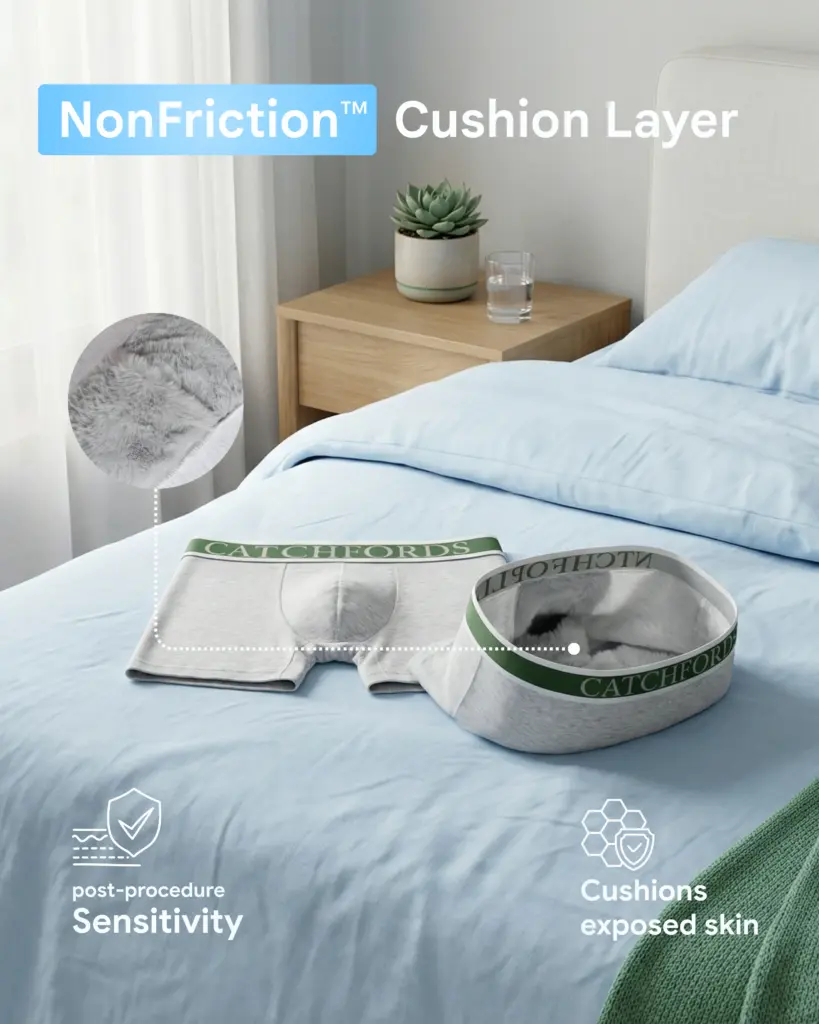
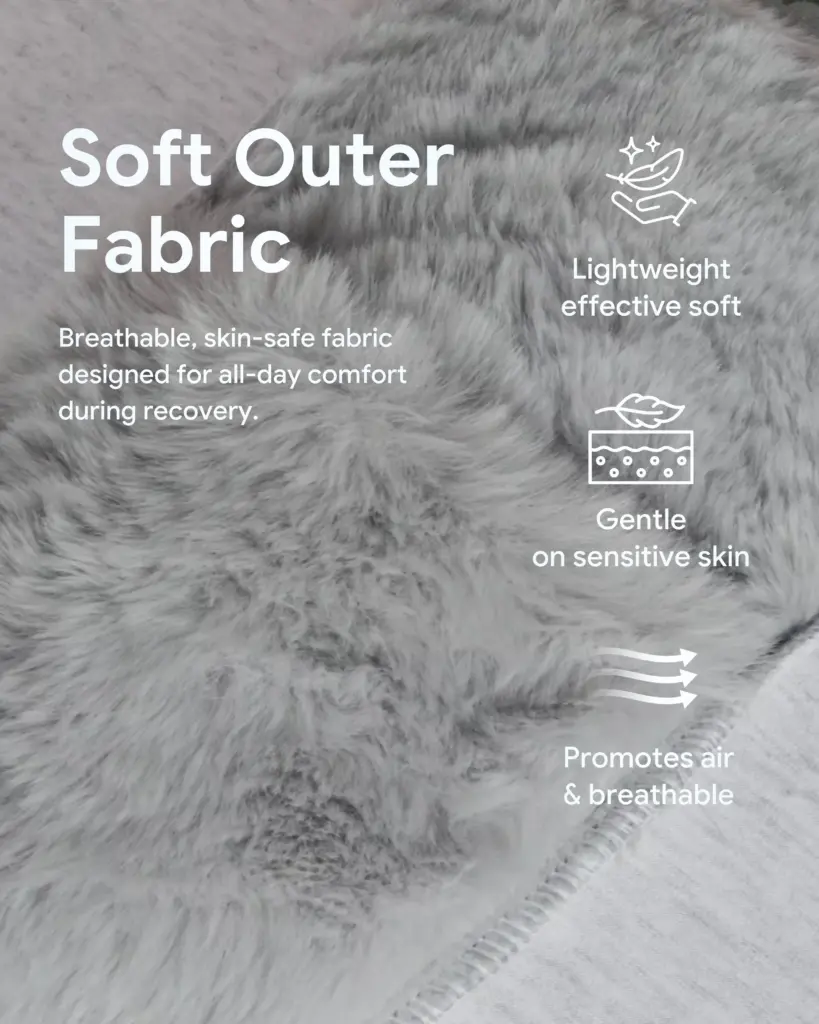
During the day, men can adjust their clothing, shift positions, or take breaks. At night, they need stability — something that keeps the area protected without rubbing or sticking. Standard underwear isn’t designed for this stage of healing. The seams, the fabric texture, and the movement all work against sensitive tissue. A soft, non‑friction lining creates a calmer environment, reducing the micro‑irritations that keep men awake. It doesn’t replace medical care, but it supports the lived experience of recovery — the part that determines whether someone sleeps or lies awake counting the hours.
This is exactly why we created Catchfords NonFriction Recovery Briefs—designed specifically for the sensitivity phase that every man talks about but no one prepares for.
With Catchfords, you get:
🔘 Supportive lift that keeps the penis stable during sleep
🔘 Soft, recovery‑grade fabric that may help with overstimulation
🔘 Comfortable nighttime wear (minus the erections—those are unavoidable, but at least they won’t rub)
🔘 Enough comfort to return to normal routines long before the 3‑week mark most men mention
Whether you’re on hour 3, day 3, or week 3, the right underwear can make the difference between a sleepless night and a manageable one.
🌟 The Bigger Picture
Sleeping after circumcision isn’t just about finding the right position. It’s about navigating fear, sensitivity, and the emotional strain of wanting rest while your body is still adjusting. Men deserve honesty about how challenging this phase can be — and reassurance that it does get better. The sensitivity fades. The erections become less painful. The glans adapts. And sleep slowly returns. Recovery is a journey, and nighttime is simply one of the steepest hills along the way.
If you’re recovering now—or preparing for surgery—Catchfords is built to give you the comfort men wish they had during those first sensitive weeks.
👉 Support your Recovery with Catchfords → Men’s Briefs