

🙏 Difficulty in Patience
Most recovery stories are told in past tense. “It was rough, but I got through it.” “I didn’t expect the swelling, but it faded.” “The sensitivity was intense.”
But what happens when the pain doesn’t fade? When the swelling lingers, the scar burns, and the hypersensitivity makes walking feel like punishment?
This isn’t a retrospective. It’s a present-tense reality for many men—especially those recovering from adult circumcision due to medical necessity, not cultural ritual. And it deserves space.
🌫️ The Middle Months: Where Most Men Lose Hope
The first week after circumcision is intense, but predictable. The second week is uncomfortable, but expected. By week six, most men assume they should be “turning the corner.” But month four? That’s the part no one warns you about. It’s the phase where the wound is closed, the stitches are gone, and the scar looks stable — yet the discomfort remains. You’re technically healed, but not functionally comfortable. This mismatch between appearance and sensation is what breaks men. It creates a sense of betrayal: If everything looks fine, why doesn’t it feel fine? This is the emotional terrain of delayed recovery — the part that rarely gets discussed in clinics or pamphlets.
🧬 When Nerves Take Their Time
One of the most misunderstood parts of adult circumcision recovery is the way nerves recalibrate. The glans has spent decades protected by the foreskin, shielded from friction, airflow, and temperature shifts. When that protection is removed, the sensory system doesn’t simply adjust — it renegotiates. Some men experience rapid desensitization, while others feel every breeze, fabric shift, and movement as if the volume has been turned up too high. This isn’t a sign of damage or failure. It’s the nervous system doing slow, uneven work that doesn’t follow a predictable schedule. Healing nerves don’t care about averages; they care about adaptation, and adaptation takes time.
🔥 The Scar Line Paradox
Scar tissue has its own personality. It can feel numb in the morning and burning by evening. It can look calm but feel tight. It can soften in one area while stiffening in another. This unpredictability is normal, but rarely explained. Scar maturation can take up to a year, and during that time the tissue is constantly remodeling itself — thickening, thinning, smoothing, tightening, and loosening. When a doctor says “it looks normal,” they’re referring to the visual appearance. When a man says “it doesn’t feel normal,” he’s describing the functional reality. Both perspectives are valid, and both deserve acknowledgment.
🧩 The Isolation of Being the Outlier
Most recovery stories online fall into two categories: the men who healed quickly and the men who faced dramatic complications. The quiet middle — the men who aren’t in crisis but aren’t comfortable — rarely speak up. This creates a distorted sense of what “normal” looks like. If you’re four months in and still struggling, it’s easy to feel like the only one. You start to wonder if you’re unlucky, or doing something wrong, or somehow responsible for the delay. But the truth is simple: some bodies take longer. Some nerves take longer. Some scars take longer. You’re not an outlier — you’re just part of the group whose recovery curve is longer and less represented.
Limited time offer
Explore Our Collection
Browse premium recovery briefs built for comfort, support, and confidence.

🧠 The Unspoken Complexity of Adult Circumcision
For one man, the decision came after recurring balanitis. A low and tight cut, performed by a trusted urologist. Four months later, he’s still navigating:
🔘 Hypersensitivity that makes walking unbearable
🔘 Pain at the scar site and frenulum
🔘 Swelling that won’t subside
🔘 Tightness during ejaculation
🔘 A sense of isolation, frustration, and stalled healing
He’s consulted multiple specialists. Most say “it doesn’t look bad.” But when daily life—work, intimacy, movement—is disrupted, “not bad” doesn’t feel good enough.
🧭 When Doctors Say “It Looks Normal”
Few phrases frustrate men more than hearing a clinician say, “It looks normal.” Not because the doctor is wrong — the wound often does look healthy — but because the statement ignores the lived experience. Pain is real even when the scar looks tidy. Hypersensitivity is real even when the tissue is closed. Swelling is real even when it’s subtle. A good clinician acknowledges the gap between visual healing and functional healing. A great clinician validates it. When you’re still hurting months later, you don’t need reassurance that everything “looks fine.” You need someone who understands that healing is more than a photograph.
🌒 The Emotional Weight of “Still Hurting”
Delayed recovery carries a quiet emotional burden. It’s not dramatic enough to call a crisis, but persistent enough to shape your entire day. You start planning your movements, your clothing, your commute, even your social life around discomfort. You withdraw from intimacy because you don’t want to explain why things still hurt. You compare your progress to others and feel like you’re falling behind. This emotional fatigue is real, and it deserves space. Healing isn’t just physical — it’s psychological. And when the body takes longer than expected, the mind often suffers in silence.
💬 When Recovery Feels Like Regression
There’s a quiet grief in delayed healing. Not just physical pain, but the emotional toll of feeling stuck while others move on. Online forums are filled with quick recoveries. “Back to normal in two weeks.” “Sex again in a month.” But for some, the journey is longer. And lonelier.
🧣 Comfort Isn’t Just a Product—It’s a Posture
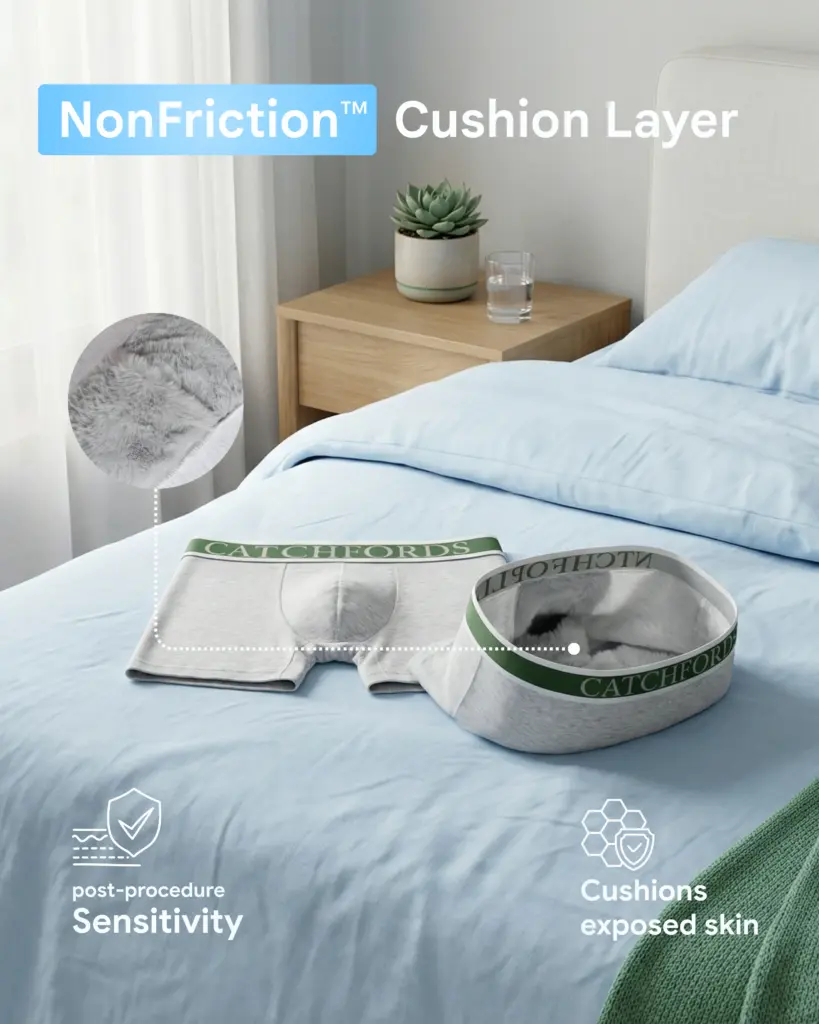
At Catchfords, we don’t offer medical advice. But we do offer comfort—discreet, friction-reducing, emotionally intelligent comfort. Our recovery-first designs are built for men who need softness without shame. Structure without pressure. Dignity without explanation.
Whether you’re four days or four months into healing, you deserve:
🔘 Underwear that protects, not provokes
🔘 Packaging that respects your privacy
🔘 Messaging that doesn’t minimize your pain
🩲 The Catchfords Role in the Middle Months
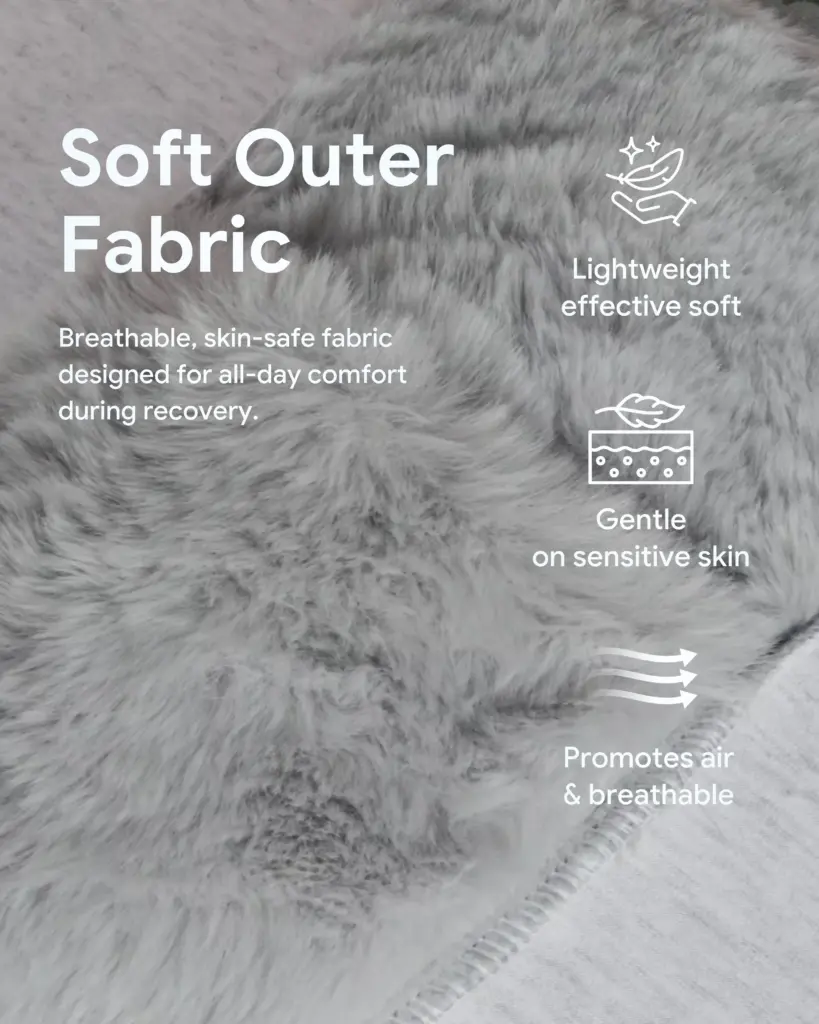
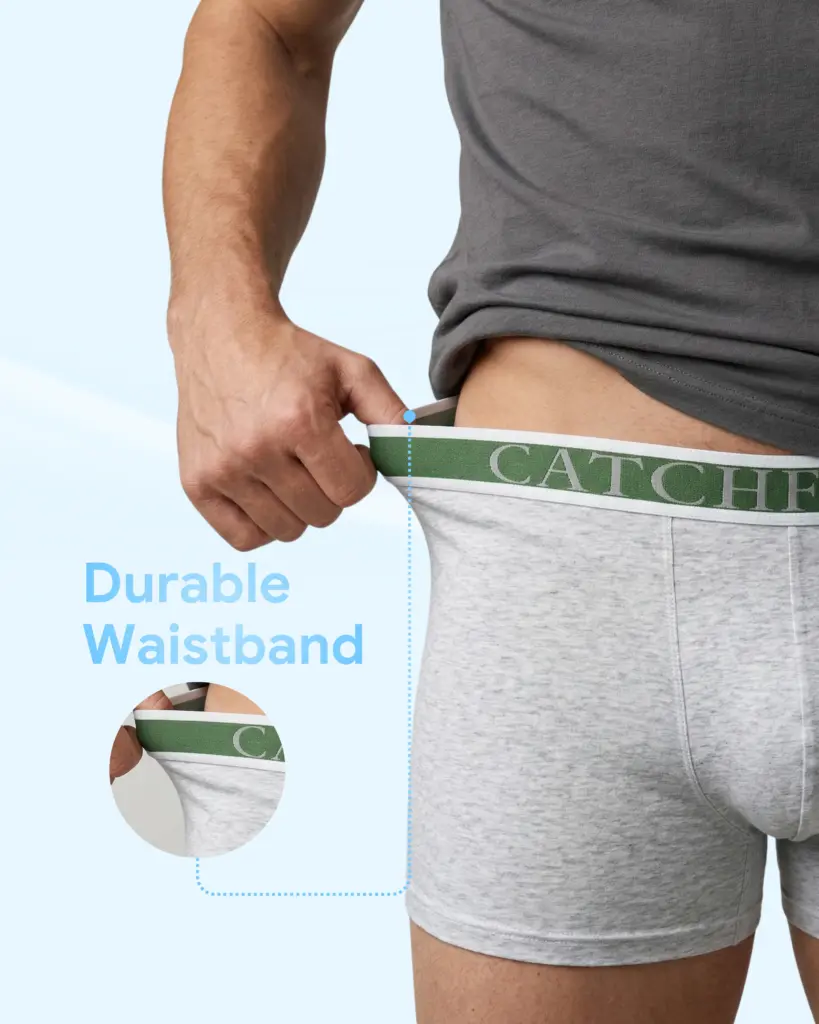
Catchfords wasn’t designed for the first 48 hours of recovery. It was designed for month four — the phase where friction becomes the enemy, where hypersensitivity disrupts daily life, and where cotton feels abrasive while synthetic blends feel suffocating. Our non‑friction liner creates a controlled environment that protects the glans without pressure, heat, or cling. It doesn’t accelerate healing — nothing truly does — but it makes the healing livable. It gives you the ability to walk, work, and move without bracing for pain. It restores dignity during a phase that often feels undignified, offering comfort when your body is still negotiating its new normal.
🌤️ To the Man Still in the Middle
If you’re four months in and still struggling, you’re not behind. You’re not weak. You’re not failing. You’re healing — just on a timeline that doesn’t match the internet’s highlight reel. Your body is doing slow, invisible work: recalibrating nerves, softening scar tissue, and adapting to a new reality. While that process unfolds, you deserve comfort, protection, and empathy — not pressure to “be fine already.” Your recovery is valid. Your frustration is valid. And your story matters, even if it’s still unfolding. If you’re reading this and nodding quietly, we see you. Your pain is valid. Your frustration is real. Your healing deserves patience, protection, and empathy.
And if you’re ready to share your story—anonymously or openly—we’re listening. Because healing isn’t linear. And silence doesn’t help anyone.
Support your Recovery with Catchfords → Men’s Briefs