

✂️ Types of Circumcision — and How Catchfords Supports Recovery
Circumcision is the surgical removal of the foreskin — the fold of skin covering the head of the penis. While often performed in infancy for cultural or religious reasons, adult circumcision is increasingly common for medical, personal, or aesthetic reasons. What many people don’t realize is that there are different types of circumcision techniques, each with its own style, healing profile, and visual outcome.
Whether you’ve recently undergone the procedure or are supporting a loved one through recovery, understanding these styles can help you choose the right support — including friction-free, discreet recovery underwear designed by Catchfords.
🌍 Why Circumcision “Types” Matter More Than People Realize
Most people assume circumcision is a single, uniform procedure — a simple removal of the foreskin with one predictable outcome. In reality, adult circumcision is a spectrum of techniques, styles, and surgical philosophies. The amount of inner foreskin removed, the placement of the scar line, the tightness of the remaining skin, and the surgeon’s preferred method all shape the final appearance and the recovery experience. These differences matter because they influence sensitivity, mobility, hygiene, and even how comfortable a man feels in his own body afterward. Understanding these variations isn’t about vanity; it’s about informed consent, realistic expectations, and choosing the right support during healing. For many men, learning the terminology — high, low, tight, loose — is the first time they’ve ever had language for what they’re experiencing.
🧩 How Anatomy Influences the Style You Receive
One of the most overlooked factors in circumcision style is the patient’s natural anatomy. The length of the foreskin, the elasticity of the shaft skin, the prominence of the frenulum, and even the shape of the glans all influence what style is realistically achievable. A man with naturally tight or short shaft skin may not be a candidate for a loose circumcision, while someone with a long foreskin may end up with a higher scar placement even if they requested a low cut. Surgeons often adjust the technique mid‑procedure to ensure proper healing and tension distribution. Understanding this helps men set realistic expectations: the final style is a blend of preference, anatomy, and surgical judgment — not a menu item you can choose with absolute precision.
🧠 Cultural vs. Medical Styles: Why They Look Different
Circumcision performed for cultural or religious reasons often follows a different aesthetic tradition than circumcision performed for medical necessity. Cultural circumcisions — especially those done in infancy — tend to be high and loose, preserving mobility and minimizing tension during growth. Medical circumcisions in adults, however, often lean low and tight, especially when treating phimosis, balanitis, or chronic irritation. This difference explains why adult circumcisions often look more “defined” or “structured” compared to childhood circumcisions. It also explains why adult recovery can be more intense: tighter cuts expose more tissue at once, increasing early sensitivity. Recognizing these differences helps men understand why their result may not resemble what they’ve seen in childhood examples.
🪞 The Comparison Trap: Wanting What You Saw on Someone Else
One of the quiet truths men rarely admit is how much comparison shapes their expectations of circumcision. It’s common — almost universal — to have an image in your mind of what you want the final result to look like. Maybe it was a partner’s, a friend’s in a locker room, a photo online, or even a medical diagram that looked clean, symmetrical, and effortless. That mental snapshot becomes the benchmark, and anything that deviates from it can feel disappointing, even if your healing is completely normal. What most men don’t realize is that circumcision outcomes vary dramatically based on anatomy, skin elasticity, frenulum structure, and the surgical style used. No two results ever look identical, because no two bodies start from the same place. The challenge isn’t achieving someone else’s outcome — it’s understanding your own. When men learn to evaluate their healing based on their anatomy rather than someone else’s, the anxiety softens. The envy fades. And the focus shifts from comparison to acceptance, which is where real confidence begins.
🌡️ How Circumcision Style Shapes Long‑Term Sensation
Different circumcision styles don’t just affect appearance — they influence long‑term sensation and sexual comfort. A tight cut exposes more of the glans permanently, accelerating keratinization and reducing hypersensitivity over time. A loose cut preserves more mobile skin, which can maintain a softer, more natural feel but may also retain some of the moisture‑trapping qualities of the foreskin. High cuts often feel smoother and more uniform, while low cuts maintain more natural texture. None of these outcomes are inherently better; they simply reflect different sensory profiles. Understanding this helps men choose a style that aligns with their comfort, lifestyle, and long‑term preferences — and helps them anticipate how their body will adapt in the months after surgery.
🧵 The Frenulum Factor: Tight, Removed, or Reconstructed
The frenulum — the small band of tissue on the underside of the penis — plays a major role in both circumcision style and postoperative sensation. Some men have a short frenulum (frenulum breve) that pulls uncomfortably during erections, making a frenuloplasty or frenulum removal part of the procedure. Others have a longer, more flexible frenulum that can be preserved. Removing the frenulum often results in a smoother, more uniform underside and can reduce tension during erections, but it also changes the sensory profile. Preserving it maintains more natural sensation but may influence how “tight” or “loose” the final result appears. This is why two men with the same circumcision style can have very different outcomes — the frenulum is a major variable.
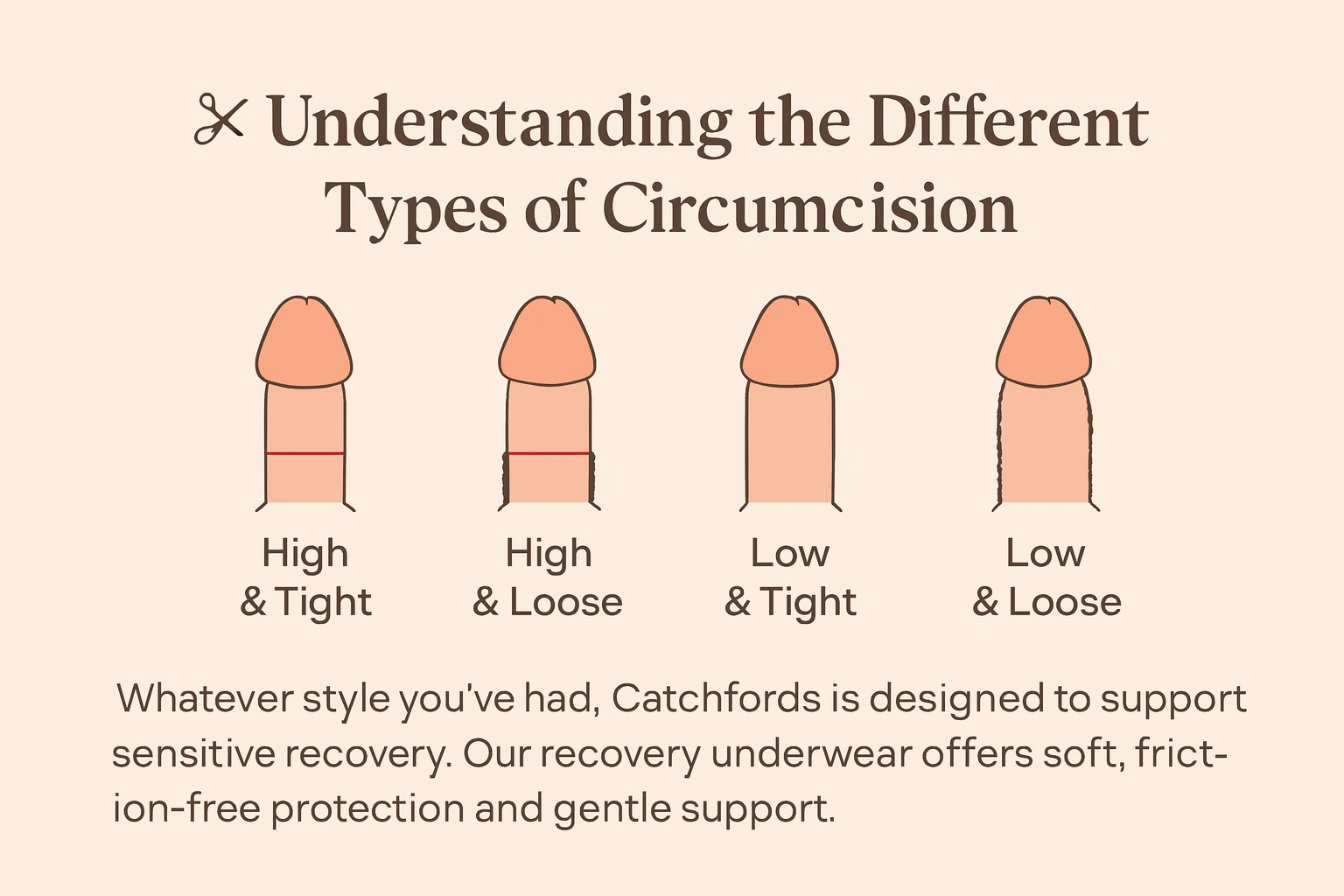
🔍 Common Circumcision Styles
1. High and Tight
🔘 Cut placed higher on the shaft, removing more inner foreskin
🔘 Results in a tighter, smoother appearance
🔘 Often chosen for aesthetic or hygienic reasons
2. High and Loose
🔘 High placement, but leaves more slack in the remaining skin
🔘 Allows for more mobility and comfort
🔘 May be preferred for those concerned about sensitivity
3. Low and Tight
🔘 Cut closer to the glans (head), with less remaining inner foreskin
🔘 Tighter result, often with a visible scar line near the corona
🔘 Common in medical circumcisions
4. Low and Loose
🔘 Minimal removal of foreskin, with a low cut and looser fit
🔘 Preserves more sensation and mobility
🔘 Often chosen for comfort or conservative removal
🧭 High vs. Low: What the Scar Placement Really Means
The terms “high” and “low” refer to where the circumcision scar sits on the shaft. A high cut places the scar farther from the glans, often removing more inner foreskin and leaving a smoother, more uniform appearance. A low cut places the scar closer to the corona, preserving more inner mucosal tissue and creating a more defined transition between the glans and the shaft. Neither is “better” — they simply reflect different surgical goals. High cuts tend to look cleaner and more symmetrical, while low cuts preserve more natural texture and sensation. The choice often depends on anatomy, medical need, and the surgeon’s technique. But for recovery, the distinction matters: high cuts often involve more swelling along the shaft, while low cuts concentrate sensitivity near the glans.
🔒 Tight vs. Loose: How Much Skin Should Remain?
“Tight” and “loose” describe how much mobility remains in the shaft skin after surgery. A tight circumcision removes more foreskin, leaving the skin taut even when flaccid. This can create a sleek, minimal look but may increase early sensitivity and tension during erections. A loose circumcision leaves more skin, allowing for easier movement and a gentler recovery, though some men feel it resembles an uncircumcised appearance. Surgeons often choose tightness based on medical necessity — for example, phimosis or chronic inflammation may require a tighter result. But for men choosing circumcision electively, understanding this spectrum helps them articulate what they want. Recovery underwear becomes especially important here: tight cuts need friction‑free support to prevent pulling, while loose cuts need gentle structure to avoid bunching and irritation.
🧪 Sleeve Resection vs. Dorsal Slit: Why Technique Shapes Healing
The sleeve resection method is the most common in adult circumcision because it offers precision and control. The surgeon removes the foreskin in a circular fashion, creating a clean, even scar line. Healing tends to be predictable, and the aesthetic outcome is often smoother. The dorsal slit, by contrast, is used when the foreskin is too tight to retract safely — such as in severe phimosis or emergency situations. It involves a vertical incision before the circular removal, which can lead to more swelling and a slightly different scar pattern. Understanding which method was used helps men anticipate their healing timeline. Sleeve resections often settle faster, while dorsal slit procedures may require more patience and more protection from friction during the first few weeks.
Limited time offer
Explore Our Collection
Browse premium recovery briefs built for comfort, support, and confidence.

🧬 Inner Foreskin: The Most Overlooked Factor
One of the biggest determinants of appearance and sensitivity after circumcision is the amount of inner foreskin removed. This tissue is thinner, more delicate, and more sensitive than the outer foreskin. Removing more of it creates a cleaner, tighter look but can increase early hypersensitivity. Preserving more of it results in a looser, softer appearance but may retain some of the moisture‑trapping qualities that led men to seek circumcision in the first place. Many men don’t realize this until after surgery — when they notice how much inner tissue remains or how close the scar sits to the glans. This is why surgeon communication is crucial, and why recovery underwear matters: inner foreskin is the tissue most prone to irritation, sticking, and friction during healing. Inner foreskin has a different color, texture, and sensitivity compared to outer foreskin. Some men have a pronounced color contrast between the two, which affects the visual outcome of high vs. low cuts. A high cut removes more inner foreskin, creating a more uniform color along the shaft. A low cut preserves more of this tissue, resulting in a two‑tone appearance that some men prefer and others don’t. This isn’t a flaw — it’s normal anatomy. But it’s one of the most common surprises men report after surgery. Understanding how much inner foreskin will remain helps set expectations for both appearance and sensitivity, and it also informs how much friction protection is needed during healing.
🌡️ How Style Influences Swelling and Sensitivity
Different circumcision styles produce different swelling patterns. High‑and‑tight cuts often cause swelling along the mid‑shaft, while low‑and‑loose cuts concentrate swelling near the glans. Some men experience a “donut swelling” effect — a puffy ring around the scar line — which is normal but uncomfortable. Sensitivity also varies: tight cuts expose more of the glans immediately, leading to intense early hypersensitivity, while loose cuts allow for a gentler transition. Understanding these patterns helps men avoid panic and choose the right support. Breathable, friction‑free underwear becomes essential for managing swelling without pressure and protecting the glans from overstimulation.
⚠️ The Fear of Losing Sensation: The Worry No One Says Out Loud
One of the most universal fears men carry into circumcision — especially in adulthood — is the fear of losing sensation. Even when the procedure is medically necessary, the mind fixates on a single terrifying question: What if I never feel the same again? This fear doesn’t come from vanity; it comes from uncertainty. The foreskin has been part of a man’s sensory identity for his entire life, and the idea of altering that can feel like stepping into the unknown. Many men imagine a worst‑case scenario where everything becomes numb or muted forever. But what most don’t realize is that sensation doesn’t disappear — it evolves. The early hypersensitivity gradually settles, the glans adapts, and the nervous system recalibrates in ways that feel more stable and less reactive. The fear is real, but the outcome is rarely what the imagination predicts. Understanding the biology behind nerve adaptation helps men replace panic with patience, and fear with a clearer sense of what healing actually looks like.
⚡ How Sensation Evolves Over Months — Not Days
One of the most misunderstood parts of circumcision recovery is how dramatically sensation changes over time. In the early weeks, the glans behaves like an overstimulated sensor — every touch, every shift of fabric, even the movement of air can feel sharp or electric. But as months pass, the nervous system begins to recalibrate. The exposed glans gradually develops a thin keratinized layer, reducing hypersensitivity without eliminating natural sensation. What many men don’t expect is that this process isn’t linear; some days feel calmer, others feel suddenly intense again. This fluctuation doesn’t mean something is wrong — it’s simply the nerves reorganizing themselves after years of being protected by the foreskin. By the three‑ to six‑month mark, most men describe their sensation as “normal but different,” a balance between reduced overstimulation and a new kind of steady, predictable sensitivity that feels more comfortable and less reactive. Understanding this timeline helps men stay patient and avoid panic when sensation shifts unexpectedly during recovery.
🛠️ Surgical Methods Used
🔘 Sleeve Resection: A circular cut removes the foreskin like a sleeve; offers precise results
🔘 Dorsal Slit: A vertical incision along the top of the foreskin; used in tight or emergency cases
🔘 Clamp Methods (Gomco, Mogen, Plastibell): Common in infant circumcision; use devices to crush and remove the foreskin with minimal bleeding
🩲 Why Catchfords Is Designed for Every Circumcision Style
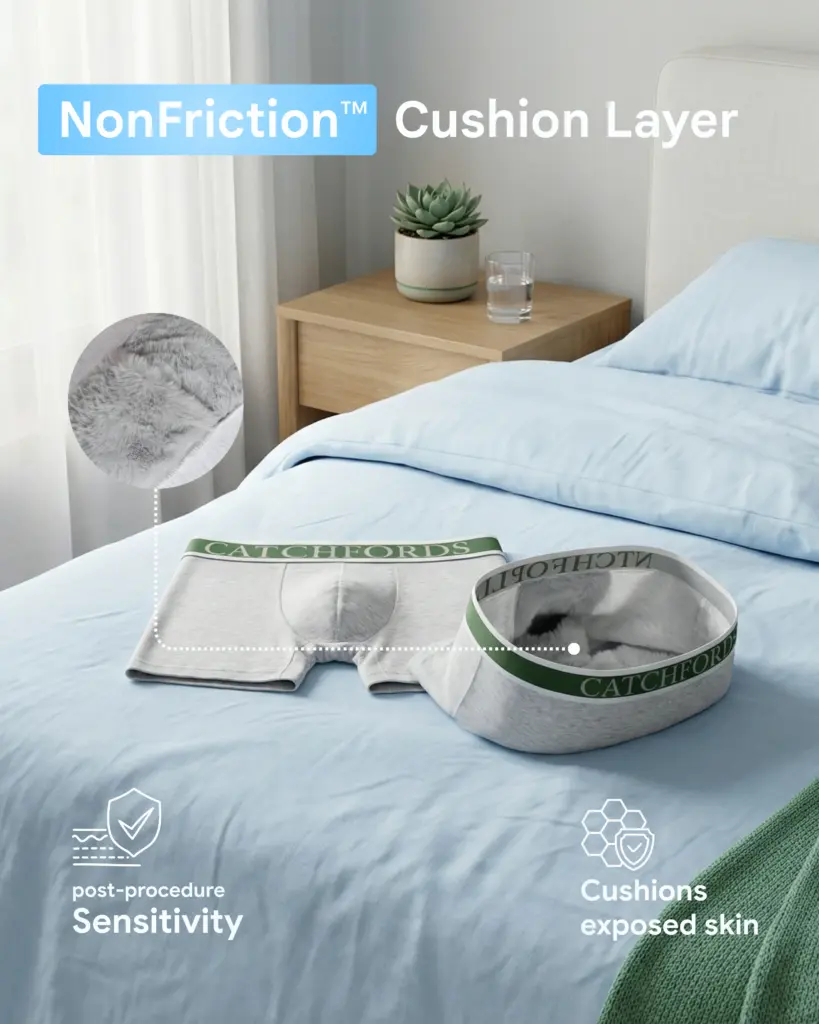
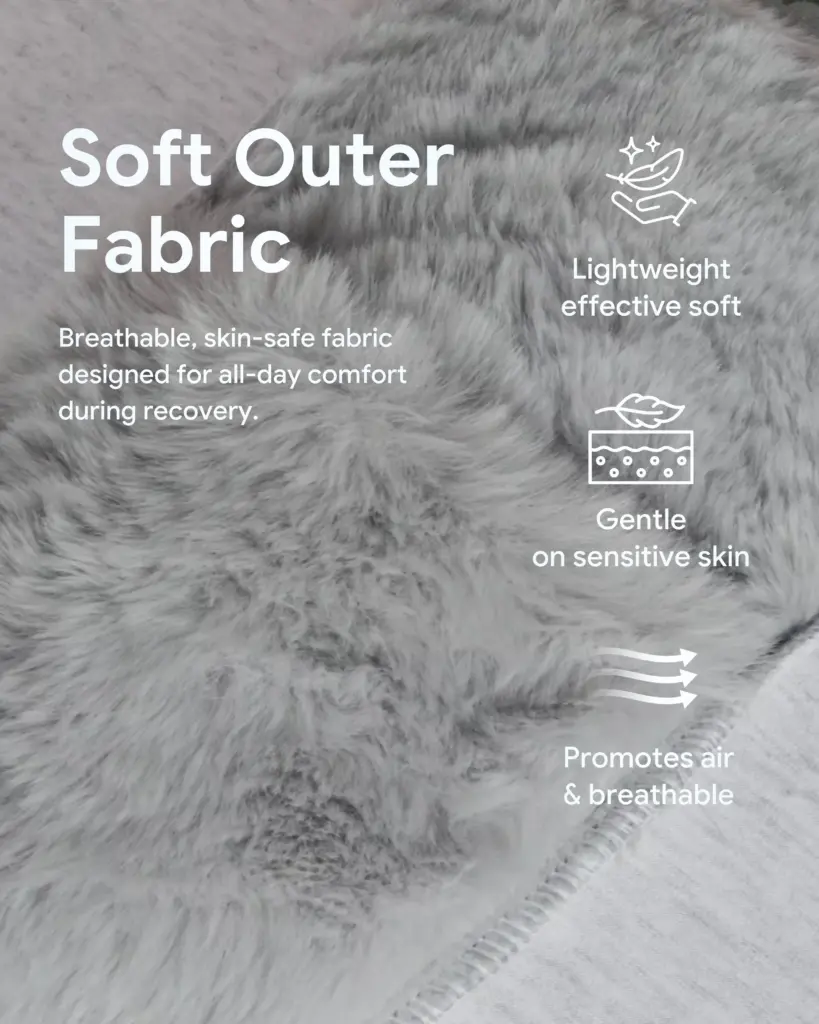
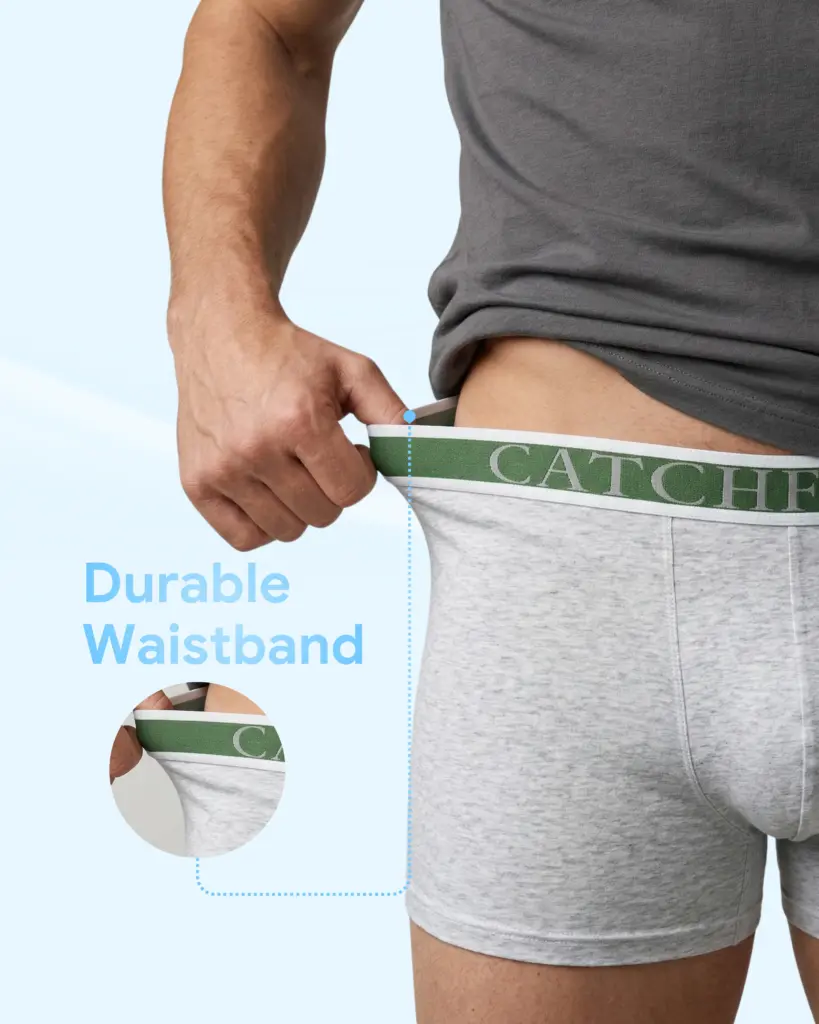
No matter the technique — high, low, tight, loose, sleeve, or dorsal slit — the early weeks of recovery share one universal truth: friction is the enemy. Regular underwear clings, rubs, and irritates healing tissue. Cotton traps moisture. Synthetic blends trap heat. And petroleum jelly is a messy workaround, not a solution. Catchfords recovery underwear eliminates the need for improvisation. The smooth, non‑friction interior protects the glans without sticking. The breathable structure prevents moisture buildup. The supportive design keeps swelling stable without squeezing. Whether a man has a high‑and‑tight cut or a low‑and‑loose one, the goal is the same: protect the healing tissue, reduce irritation, and restore dignity during a vulnerable time.
🧠 Why Understanding Your Circumcision Type Empowers You
Knowing your circumcision style isn’t about labels — it’s about agency. It helps you communicate clearly with your surgeon, understand your healing timeline, anticipate sensitivity, and choose the right recovery tools. It also helps you make sense of your body as it changes. Many men feel more confident and less anxious when they understand why their scar looks the way it does, why their swelling behaves a certain way, or why their sensitivity fluctuates. Knowledge turns confusion into clarity, and clarity turns recovery into something you can navigate with confidence instead of fear.
Understanding the type of circumcision you’ve had — or are considering — can help you:
🔘 Choose the right Catchfords recovery underwear for comfort and friction protection
🔘 Anticipate healing time and sensitivity
🔘 Communicate clearly with your doctor or partner
🔘 Feel more informed and in control of your body
Catchfords offers discreet, non-friction, breathable support designed for post-circumcision recovery — whether you’ve had a high-and-tight procedure or a low-and-loose style. Our fabric is soft, non-irritating, and designed to reduce friction, promoting more comfortable sleep and easier mobility.
Support your Recovery with Catchfords → Men’s Briefs